.avif)
The brands winning AI support aren't handing off faster. They're handing off less.
- 55% of AI-touched support tickets end in a human handoff
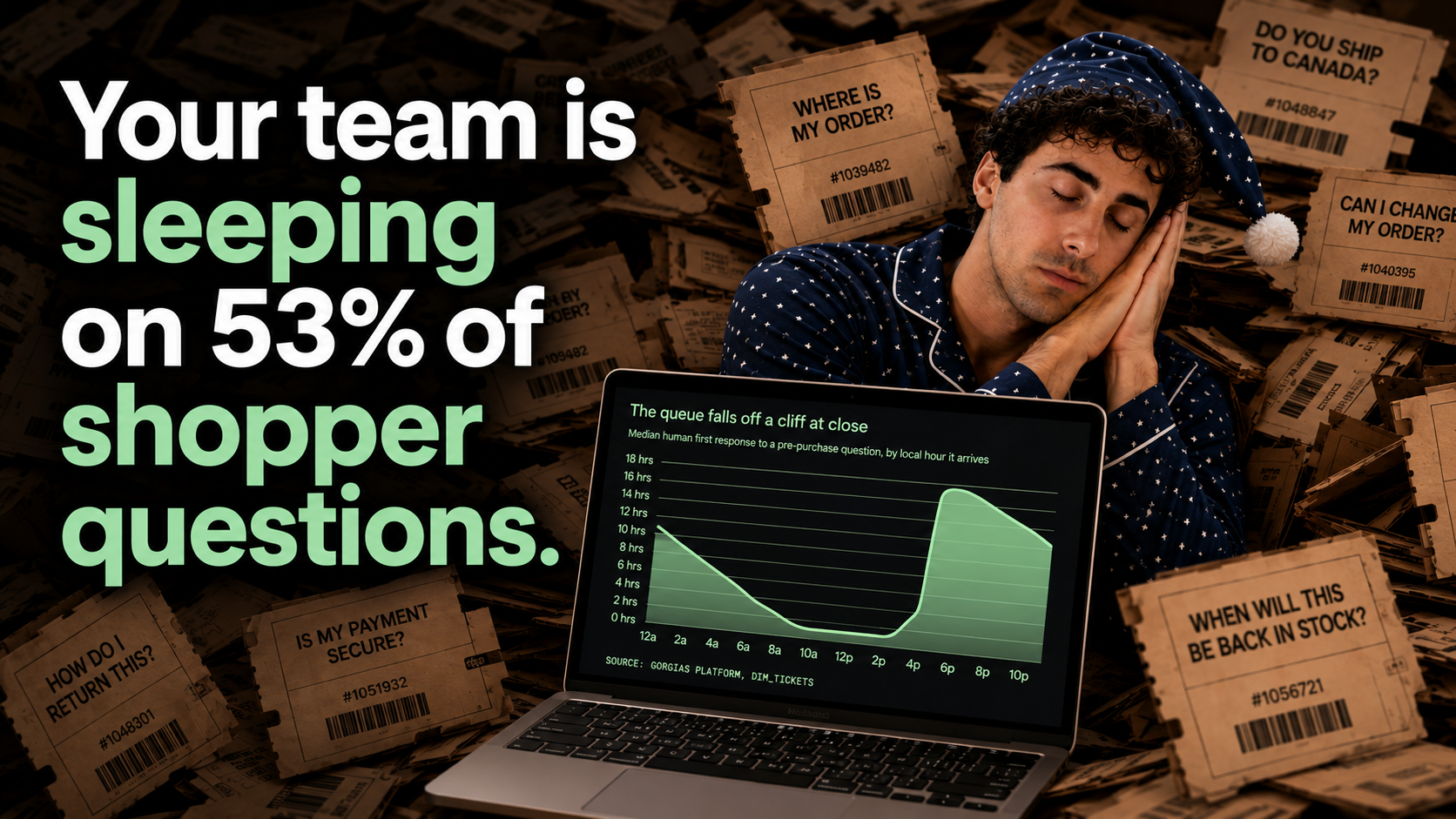
- 10hrs median shopper wait the moment a ticket crosses to a human
- 33% of handed-off tickets are abandoned and never receive a human response
The metric that matters
Most CX teams measure handover rate. That number tells you what your AI failed to do, not what your operation costs the shopper.
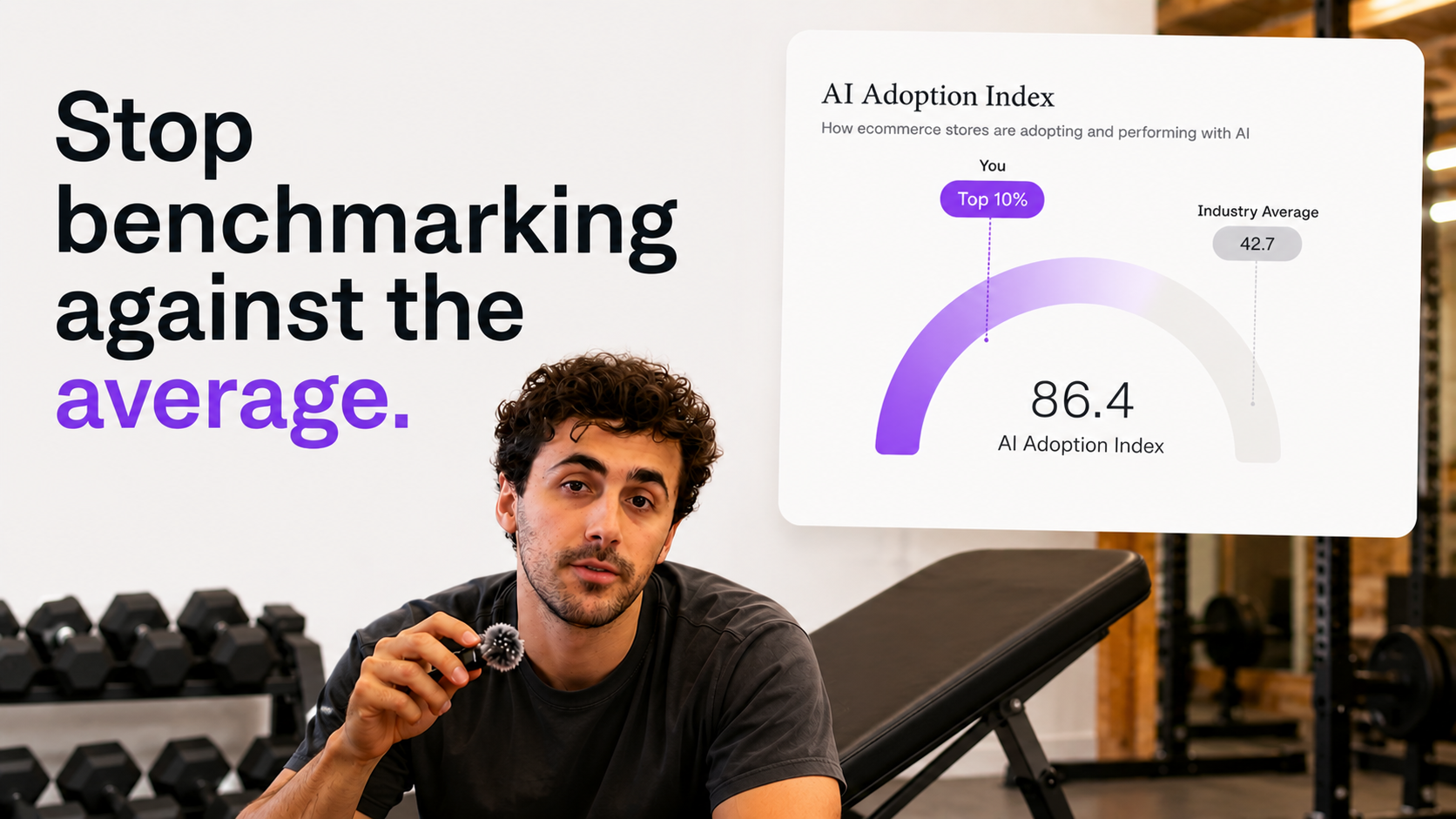
The metric that matters is the inverse: AI Resolution Rate, the share of AI-touched tickets that close end-to-end, no human required. Across Gorgias platform data, the median brand resolves 45% of AI-touched tickets end-to-end. The top quartile clears 65%. Every point of movement between those numbers removes a 10-hour wait, a 33% abandonment risk, and a CSAT hit.
It's also the only support metric that compounds. Faster response, lower cost-to-serve, higher CSAT, and lower headcount pressure all move with it.
It's also the only support metric that compounds. Faster response, lower cost-to-serve, higher CSAT, and lower headcount pressure all move with it.
The handoff tax
Every handoff is a tax. The shopper pays in waiting; the brand pays in abandonment, lower CSAT, and headcount.
The tax shows up the moment a ticket crosses the AI-to-human boundary:
(Look closely... AI Resolved is, yes, very fast)
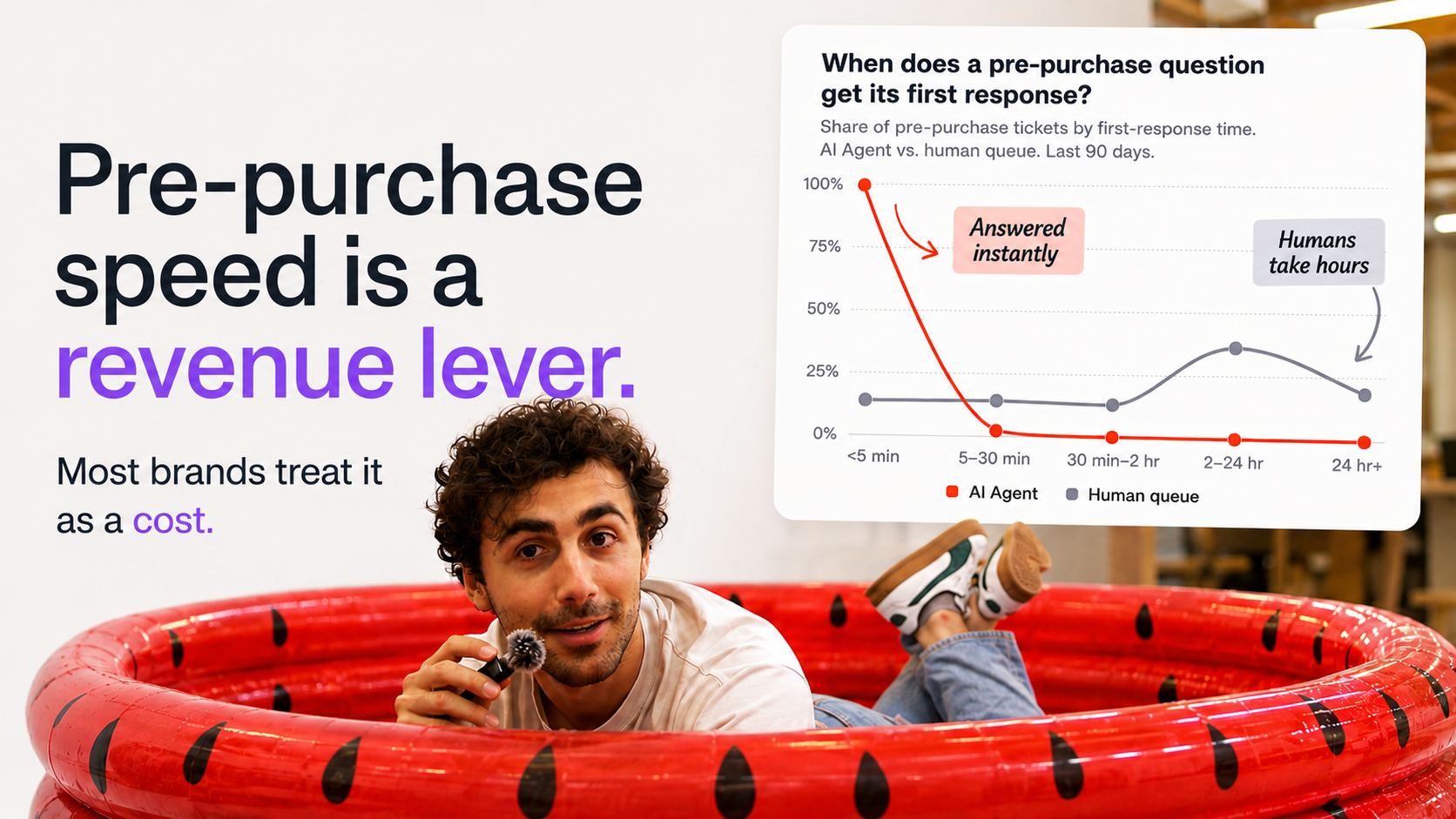
Tickets AI resolves end-to-end close in minutes, with no abandonment and CSAT roughly on par with human-resolved tickets in the same intent categories.
Why ops cannot fix this
Some teams will reach for an ops fix: faster pickup SLAs, dedicated handoff queues, better routing, more headcount. The data says ops can narrow the gap. It never closes it.
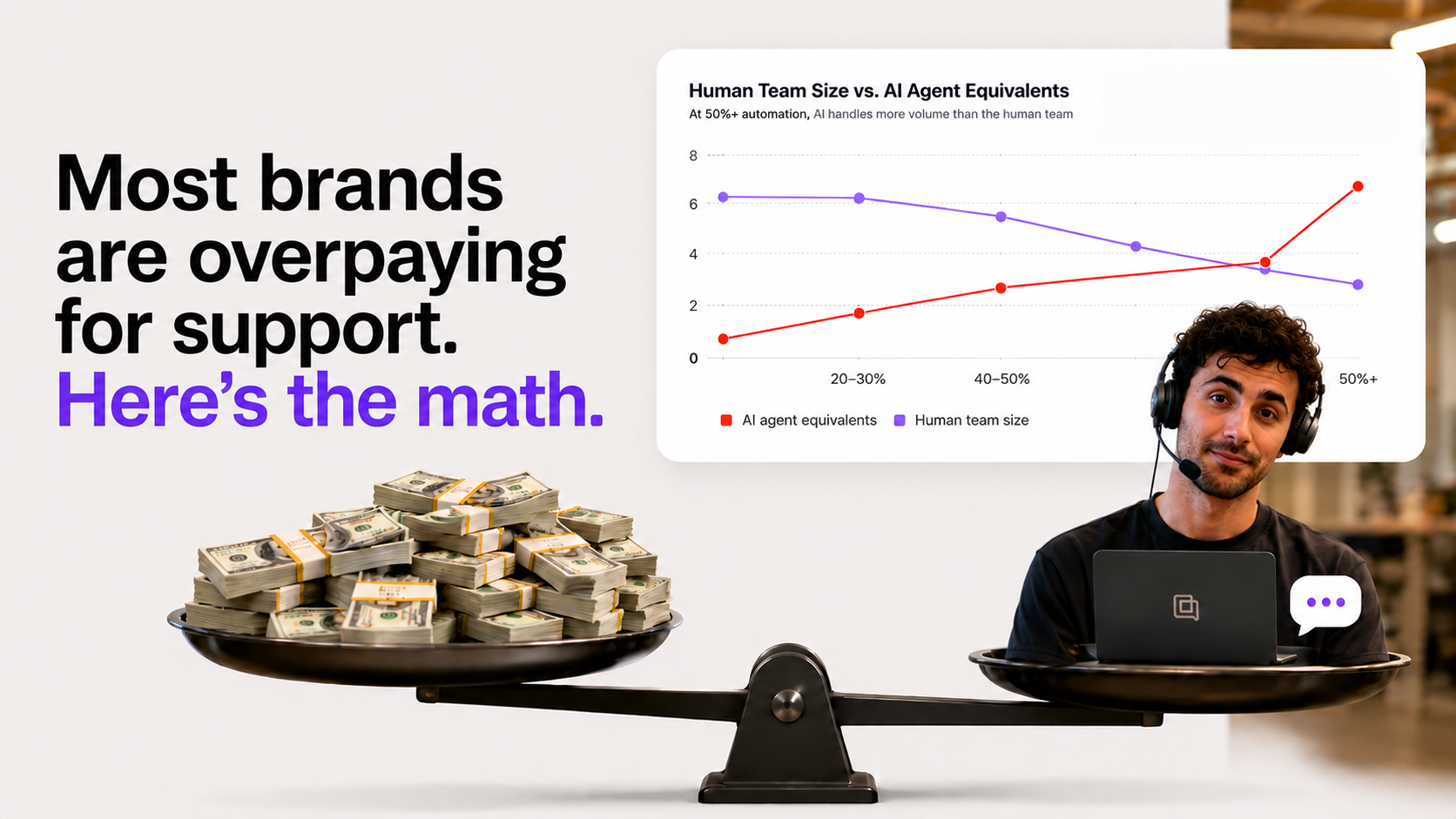
Even the best operators handover at 50%+, and they're roughly 60x slower than AI closing the same ticket end-to-end. The worst are 522x slower, with 87-hour resolution times and a CSAT of 4.10 versus 4.45 at the top.
Operational excellence narrows the tax; it never escapes it. The only exit is fewer handoffs.
Where automation is leaving money on the table
The handoff tax compounds unevenly across channels. The data shows exactly where end-to-end automation has the most room to grow.
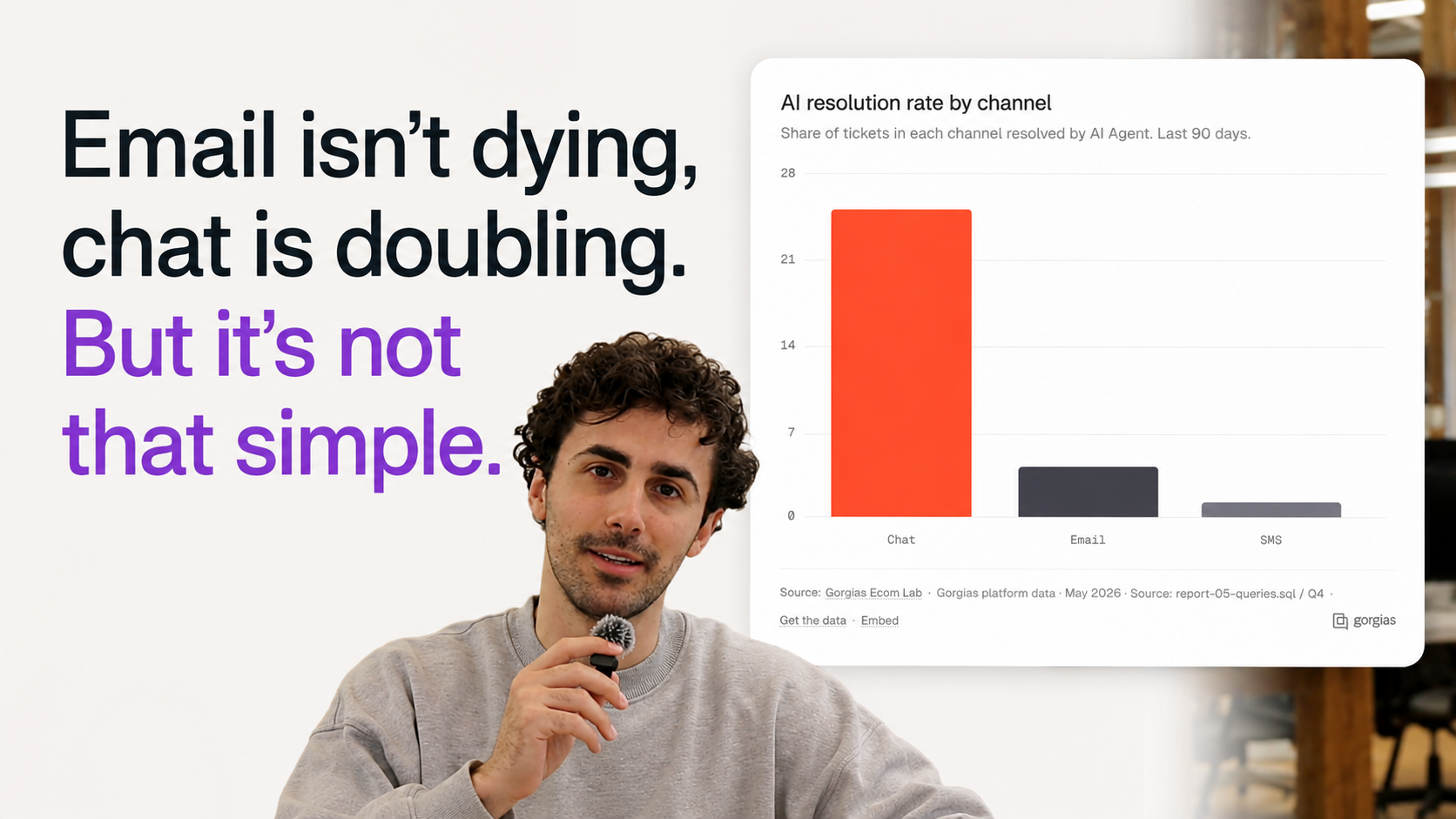
Contact form handoffs resolve 36 hours after handoff and abandon 42% of the time. Email handoffs resolve in 32 hours, abandon 30%. Chat resolves in 8 hours and abandons 13%, because real-time pressure forces a response.
The pattern is not a routing problem. It is the predictable cost of moving a ticket out of a channel where AI can resolve it. Contact form and email are the two channels where AI has the cleanest path to end-to-end resolution. They are also the two channels where handoffs disappear most often.
What separates 50% AI resolution from 70%
The brands at the top of the AI Resolution Rate distribution are not running smarter models. They are running broader automation surface area.
Four traits separate the top quartile:
- Broader intent coverage. AI is configured to handle the full top-20 intent list, not just the easiest 5–8.
- Action authority. AI can issue refunds, apply discount codes, modify subscriptions, and process returns within clearly defined guardrails. Brands that route every action to a human cap their resolution rate by design.
- Deep system integrations. Order, returns, subscription, and loyalty systems are wired in so AI can act, not just answer.
- A narrow escalation policy. Humans are reserved for judgment calls, not lookups. Escalation is a deliberate choice, not a default.
The brands hitting 70%+ AI Resolution Rate are not handing off less because their AI is better at deflecting. They are handing off less because the work that used to require a human now sits inside the AI's authority.
The escalation budget
Every brand has an escalation budget: the share of tickets that genuinely need a human's judgment, authority, or empathy. For most ecommerce brands, that budget is small. Maybe 20–30% of total volume.
The winners spend that budget only on those tickets. Everyone else is overspending it, blowing it on order status questions and policy lookups that AI could have closed in seconds.
If the gap between your current state and the top quartile is mostly automatable intents, your escalation budget is being wasted on the wrong work.
The bottom line
Stop measuring handover rate. Start measuring AI Resolution Rate.
The handoff is the tax. End-to-end resolution is the exit. The data is unambiguous: every handoff costs hours of wait, a one-in-three chance of abandonment, and a CSAT hit. No amount of ops investment closes that gap. The only way out is to hand off less in the first place.
The AI doing its job is not the moment a human takes over. It is the moment the conversation closes without one.
Methodology
Platform-level behavioral data from Gorgias merchants and AI Agent interactions, October 2025 through April 2026. Handoff resolution time measured from ticket creation to close for AI-touched tickets that ended in human handoff. Dead time measured as elapsed time between the last AI Agent message and the first human agent reply. Quartile analysis: accounts with 200+ AI-touched tickets in the observation window, median per-account AI Resolution Rate, double-median aggregation to control for long-tail stale tickets. Abandonment defined as handed-off tickets with no subsequent human agent message. AI Resolution Rate defined as the share of AI-touched tickets closed without a human agent message. Sales conversation conversion data covers Shopping Assistant interactions from July 2025 onward. Seasonal analysis uses calendar-month medians. Data as of April 2026.