





















FAQs
Frequently asked questions

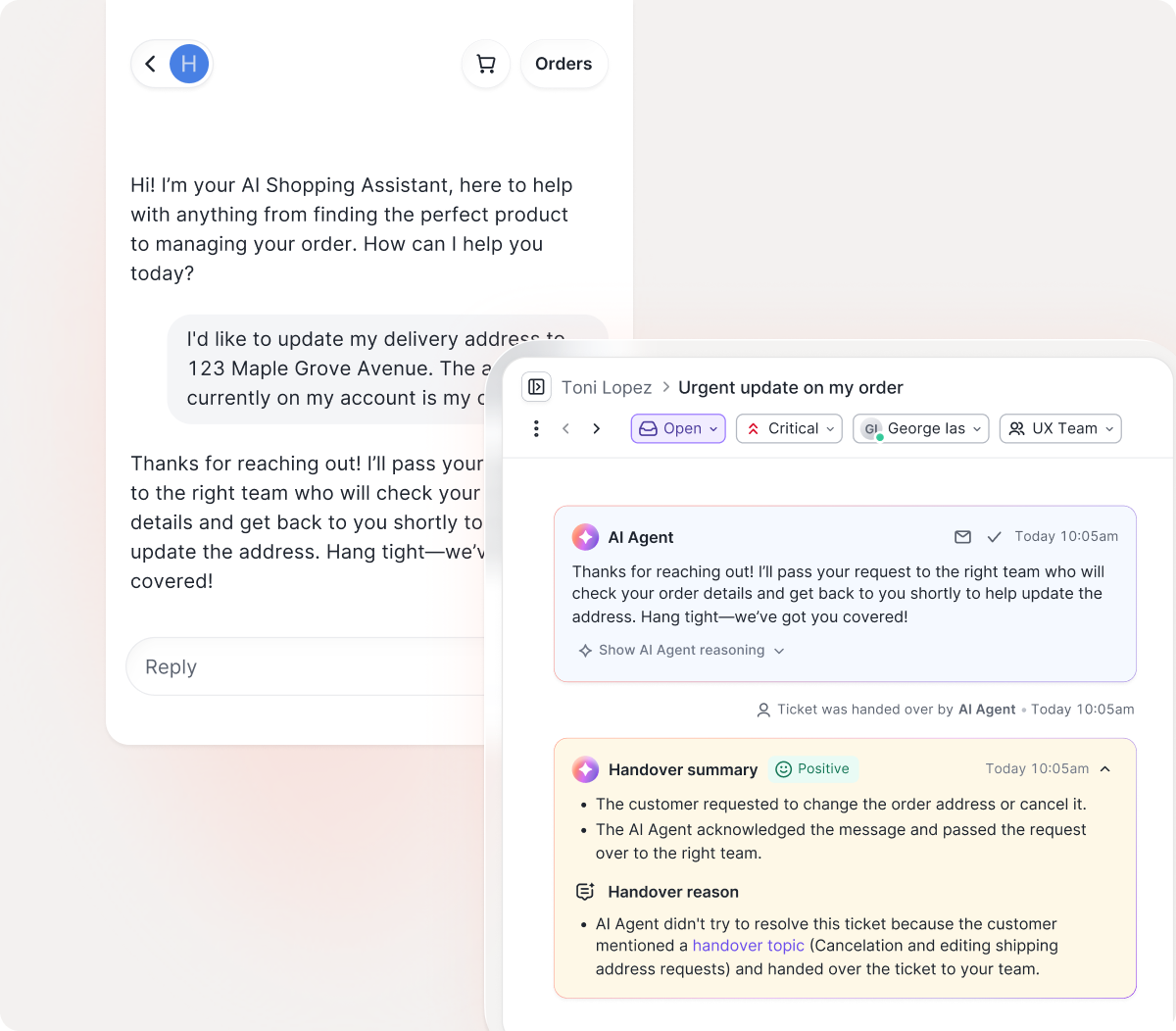
Both platforms offer AI across email, chat, SMS, social, and voice, access to full order history, and pre-sale shopping assistance. Gorgias AI also supports 13+ native Shopify actions including refunds, cancellations, edits, and reshipping, AI coaching and scoring, and resolution-based pricing where you only pay for fully resolved conversations. Klaviyo AI does not offer native Shopify actions, AI coaching or scoring, or outcome-based pricing.
Both platforms offer 100+ ecommerce integrations. Where they differ is depth. Gorgias integrations are built specifically for support workflows, connecting tools like Recharge, Attentive, Yotpo, Smile.io, Loop Returns, and NetSuite directly into the helpdesk. Klaviyo integrations are built primarily around marketing workflows.
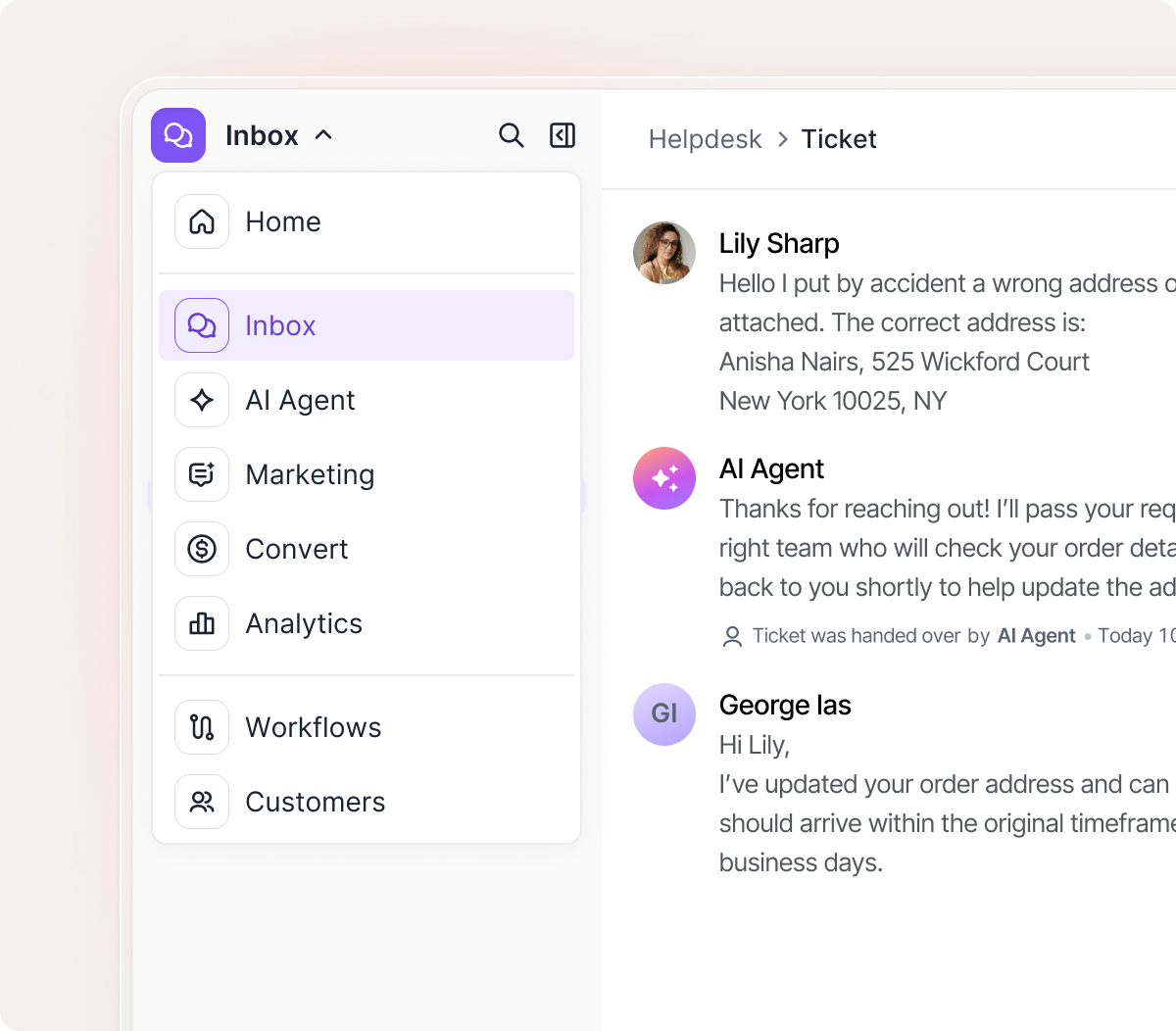
Gorgias has a native Shopify integration that supports reading and writing data, including order data in macros, and lets agents perform actions like refunds, cancellations, and order edits directly in the ticket view. Klaviyo does not offer a native Shopify integration with read and write capabilities or in-ticket Shopify actions.
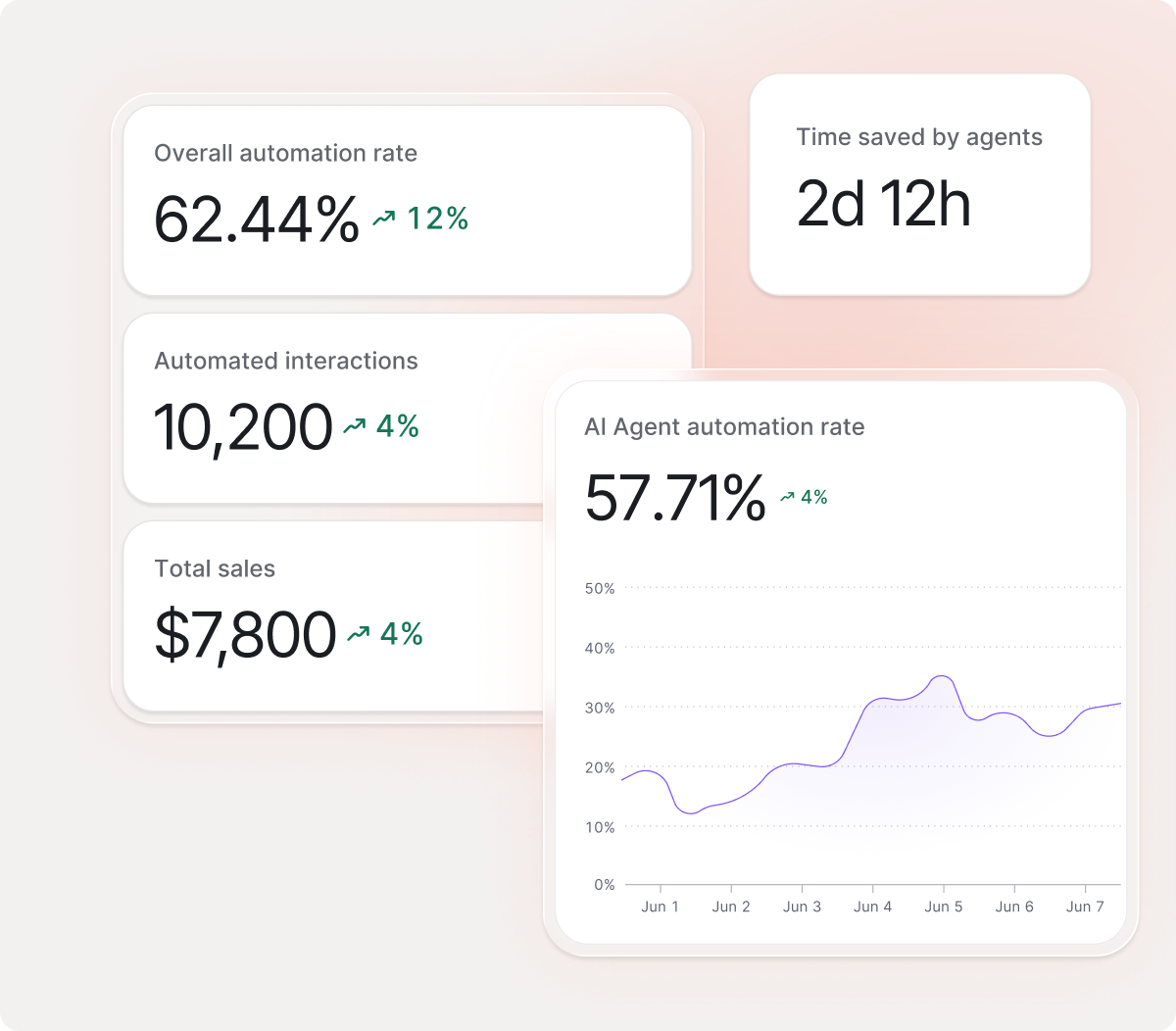
Gorgias includes a Revenue Dashboard that ties support activity directly to ecommerce sales, as well as full agent productivity reporting history. Klaviyo does not offer either. Both platforms cover ecommerce as a core focus, but Gorgias reporting is built around support performance and revenue impact specifically.
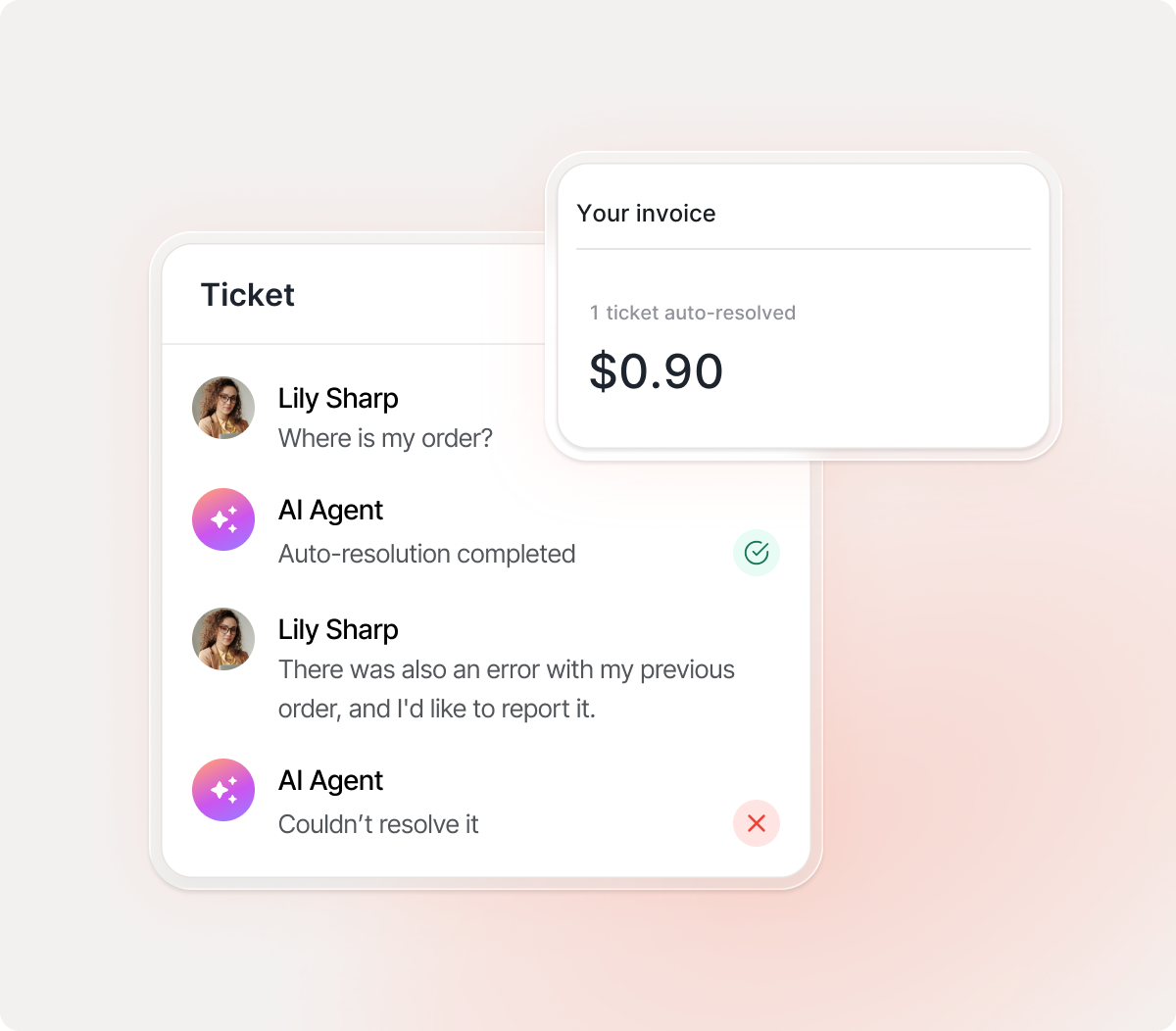
Gorgias charges per handled ticket and starts at $10/month, with AI priced at $0.50–$1 per resolution and unlimited users included. Klaviyo charges per ticket created regardless of whether it is resolved, bills Customer Hub separately based on active profiles, and counts marketing profiles on top. Each product scales independently, making total spend harder to predict.
Gorgias includes a Help Center, Contact Form, interactive scripted automations on your website, Order Management portals, and the ability to generate help center articles from past tickets using AI. Klaviyo offers Customer Hub as a self-service portal, though it is billed separately based on active profiles.



