Join us for Moments That Matter: Meet the Modern Helpdesk
September 10 at 12PM EST.
Save your seat


TL;DR:
Rising customer expectations, shoppers willing to pay a premium for convenience, and a growing lack of trust in social media channels to make purchase decisions are making it more challenging to turn a profit.
In this emerging era, AI’s role is becoming not only more pronounced, but a necessity for brands who want to stay ahead. Tools like Gorgias Shopping Assistant can help drive measurable revenue while reducing support costs.
For example, a brand that specializes in premium outdoor apparel implemented Shopping Assistant and saw a 2.25% uplift in GMV and 29% uplift in average order volume (AOV).
But how, among competing priorities and expenses, do you convince leadership to implement it? We’ll show you.
Shoppers want on-demand help in real time that’s personalized across devices.
Shopping Assistant recalls a shopper’s browsing history, like what they have clicked, viewed, and added to their cart. This allows it to make more relevant suggestions that feel personal to each customer.
The AI ecommerce tools market was valued at $7.25 billion in 2024 and is expected to reach $21.55 billion by 2030.
Your competitors are using conversational AI to support, sell, and retain. Shopping Assistant satisfies that need, providing upsells and recommendations rooted in real shopper behavior.
Conversational AI has real revenue implications, impacting customer retention, average order value (AOV), conversion rates, and gross market value (GMV).
For example, a leading nutrition brand saw a GMV uplift of over 1%, an increase in AOV of over 16%, and a chat conversion rate of over 15% after implementing Shopping Assistant.
Overall, Shopping Assistant drives higher engagement and more revenue per visitor, sometimes surpassing 50% and 20%, respectively.
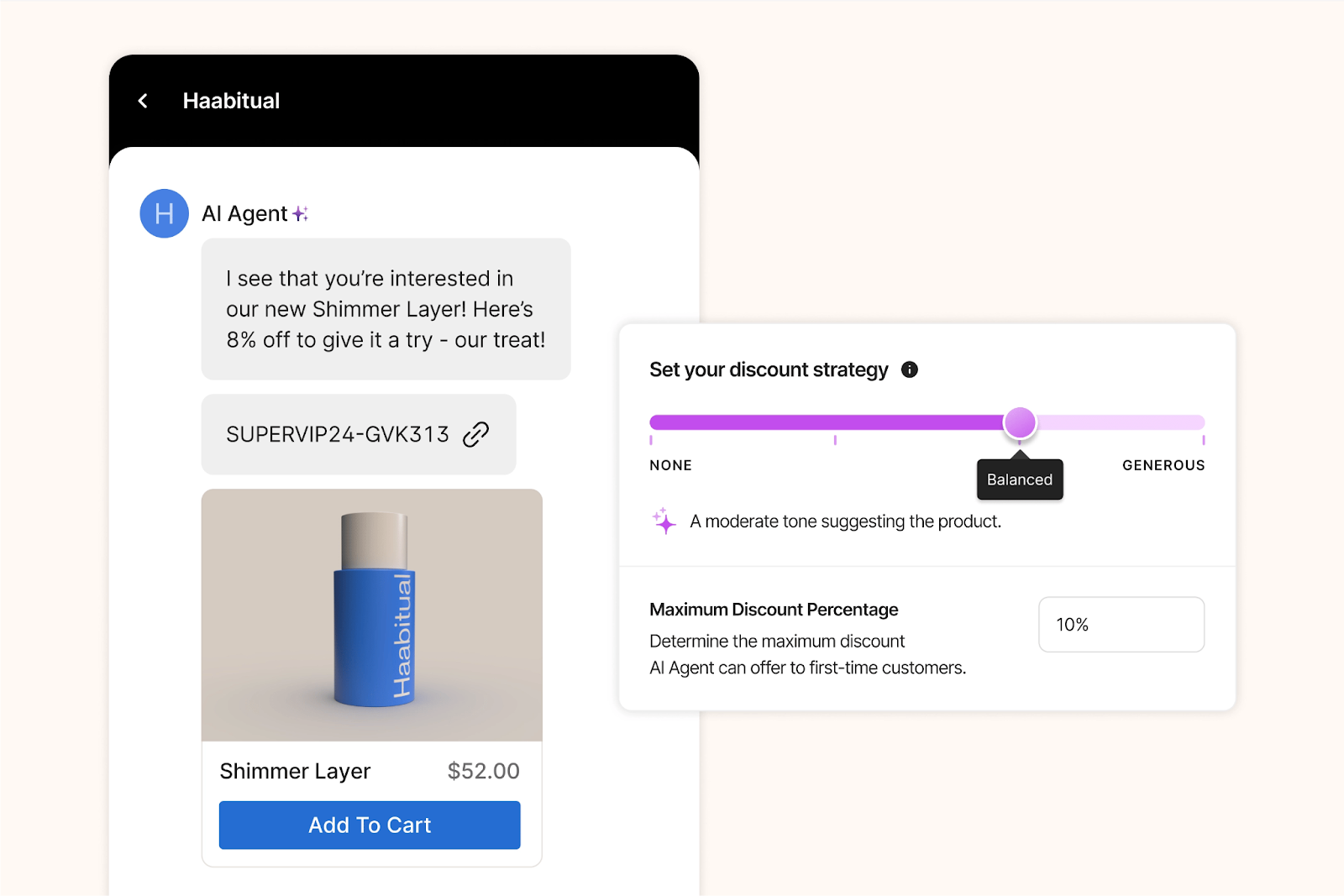
Shopping Assistant engages, personalizes, recommends, and converts. It provides proactive recommendations, smart upsells, dynamic discounts, and is highly personalized, all helping to guide shoppers to checkout.
After implementing Shopping Assistant, leading ecommerce brands saw real results:
Shopping Assistant drives uplift in chat conversion rate and makes successful upsell recommendations.
“It’s been awesome to see Shopping Assistant guide customers through our technical product range without any human input. It’s a much smoother journey for the shopper,” says Nathan Larner, Customer Experience Advisor for Arc’teryx.
For Arc’teryx, that smoother customer journey translated into sales. The brand saw a 75% increase in conversion rate (from 4% to 7%) and 3.7% of overall revenue influenced by Shopping Assistant.
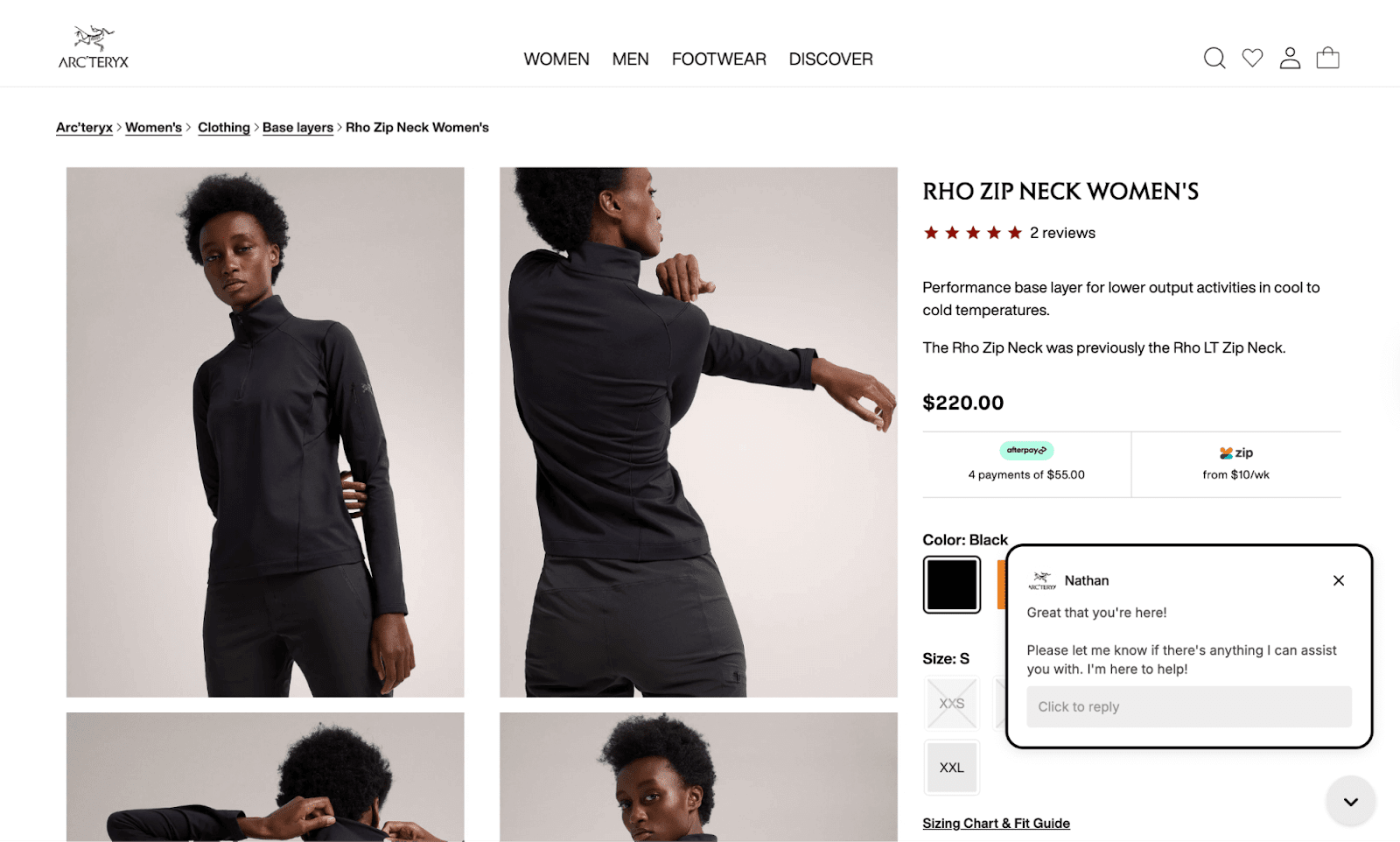
Because it follows shoppers’ live journey during each session on your website, Shopping Assistant catches shoppers in the moment. It answers questions or concerns that might normally halt a purchase, gets strategic with discounting (based on rules you set), and upsells.
The overall ROI can be significant. For example, bareMinerals saw an 8.83x return on investment.
"The real-time Shopify integration was essential as we needed to ensure that product recommendations were relevant and displayed accurate inventory,” says Katia Komar, Sr. Manager of Ecommerce and Customer Service Operations, UK at bareMinerals.
“Avoiding customer frustration from out-of-stock recommendations was non-negotiable, especially in beauty, where shade availability is crucial to customer trust and satisfaction. This approach has led to increased CSAT on AI converted tickets."
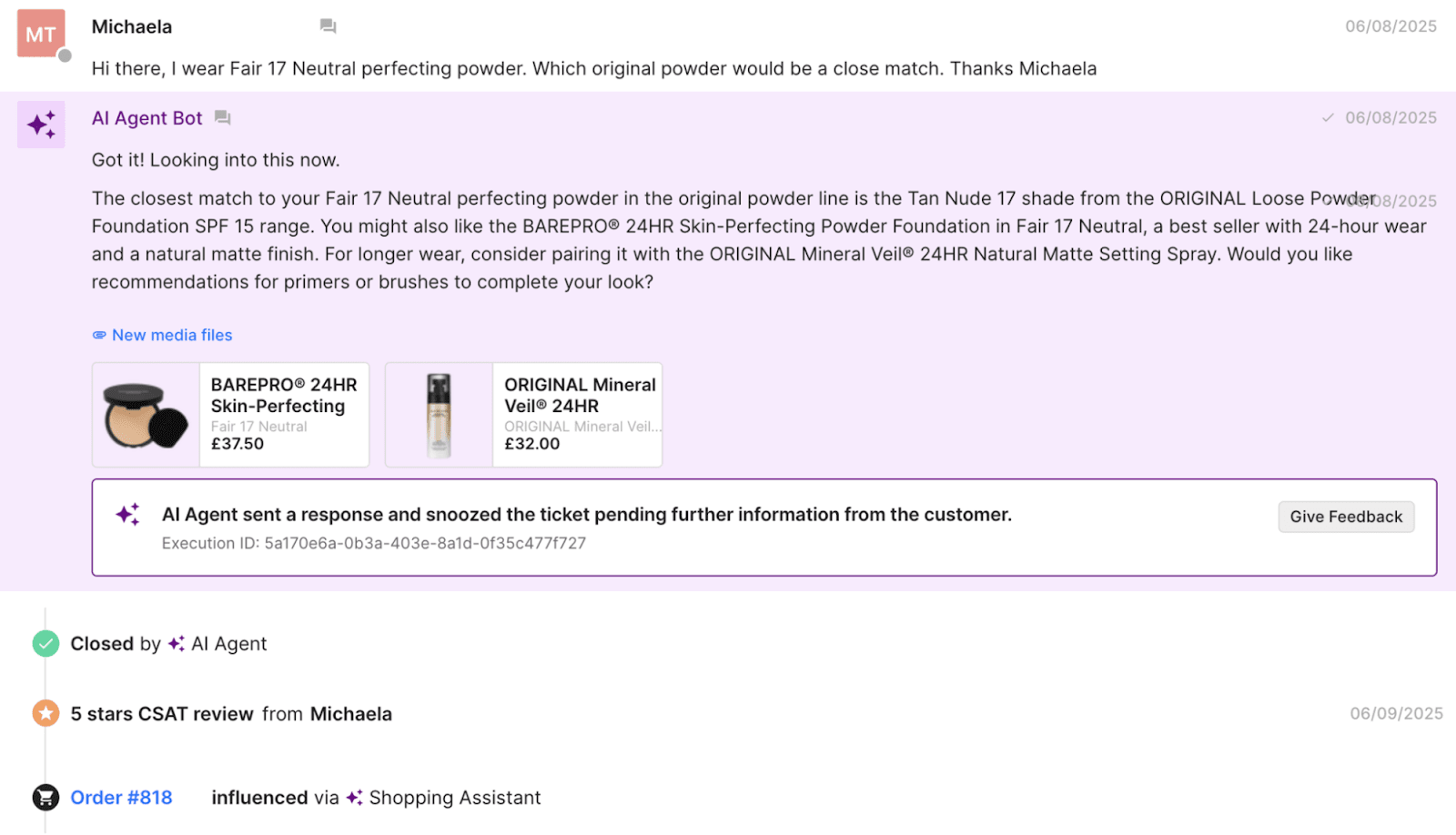
Shopping Assistant can impact CSAT scores, response times, resolution rates, AOV, and GMV.
For Caitlyn Minimalist, those metrics were an 11.3% uplift in AOV, an 18% click through rate for product recommendations, and a 50% sales lift versus human-only chats.
"Shopping Assistant has become an intuitive extension of our team, offering product guidance that feels personal and intentional,” says Anthony Ponce, its Head of Customer Experience.
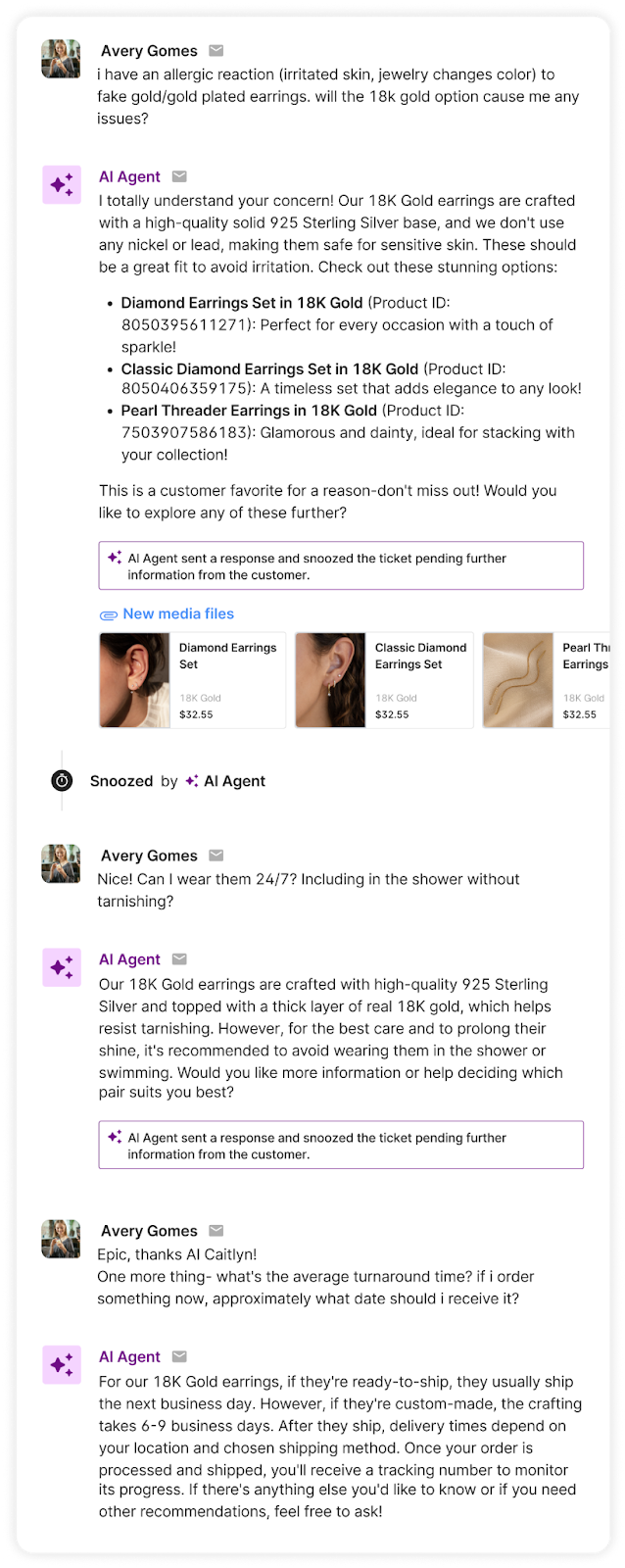
Support agents have limited time to assist customers as it is, so taking advantage of sales opportunities can be difficult. Shopping Assistant takes over that role, removing obstacles for purchase or clearing up the right choice among a stacked product catalog.
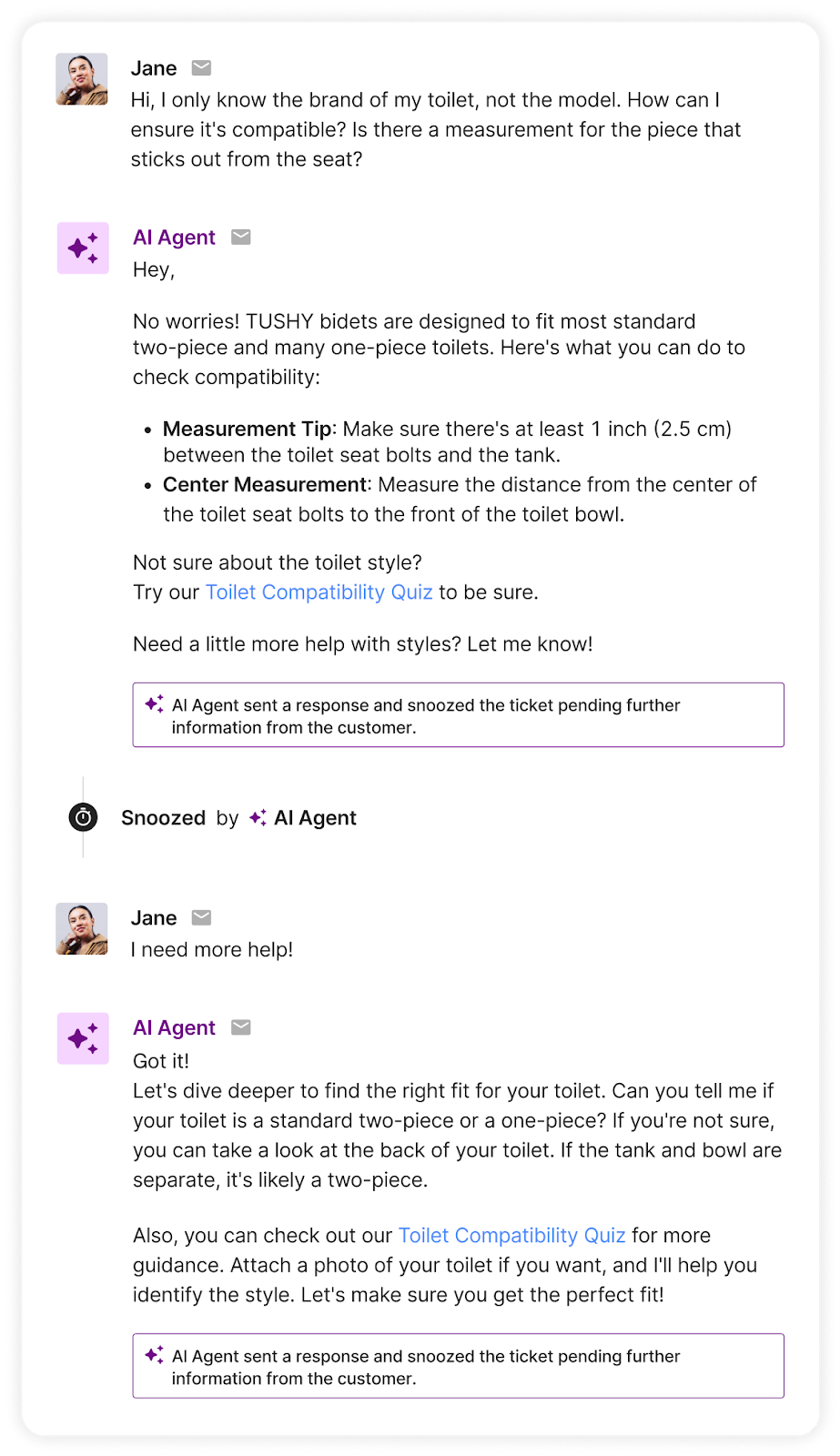
With a product that’s not yet mainstream in the US, TUSHY leverages Shopping Assistant for product education and clarification.
"Shopping Assistant has been a game-changer for our team, especially with the launch of our latest bidet models,” says Ren Fuller-Wasserman, Sr. Director of Customer Experience at TUSHY.
“Expanding our product catalog has given customers more choices than ever, which can overwhelm first-time buyers. Now, they’re increasingly looking to us for guidance on finding the right fit for their home and personal hygiene needs.”
The bidet brand saw 13x return on investment after implementation, a 15% increase in chat conversion rate, and a 2x higher conversion rate for AI conversations versus human ones.
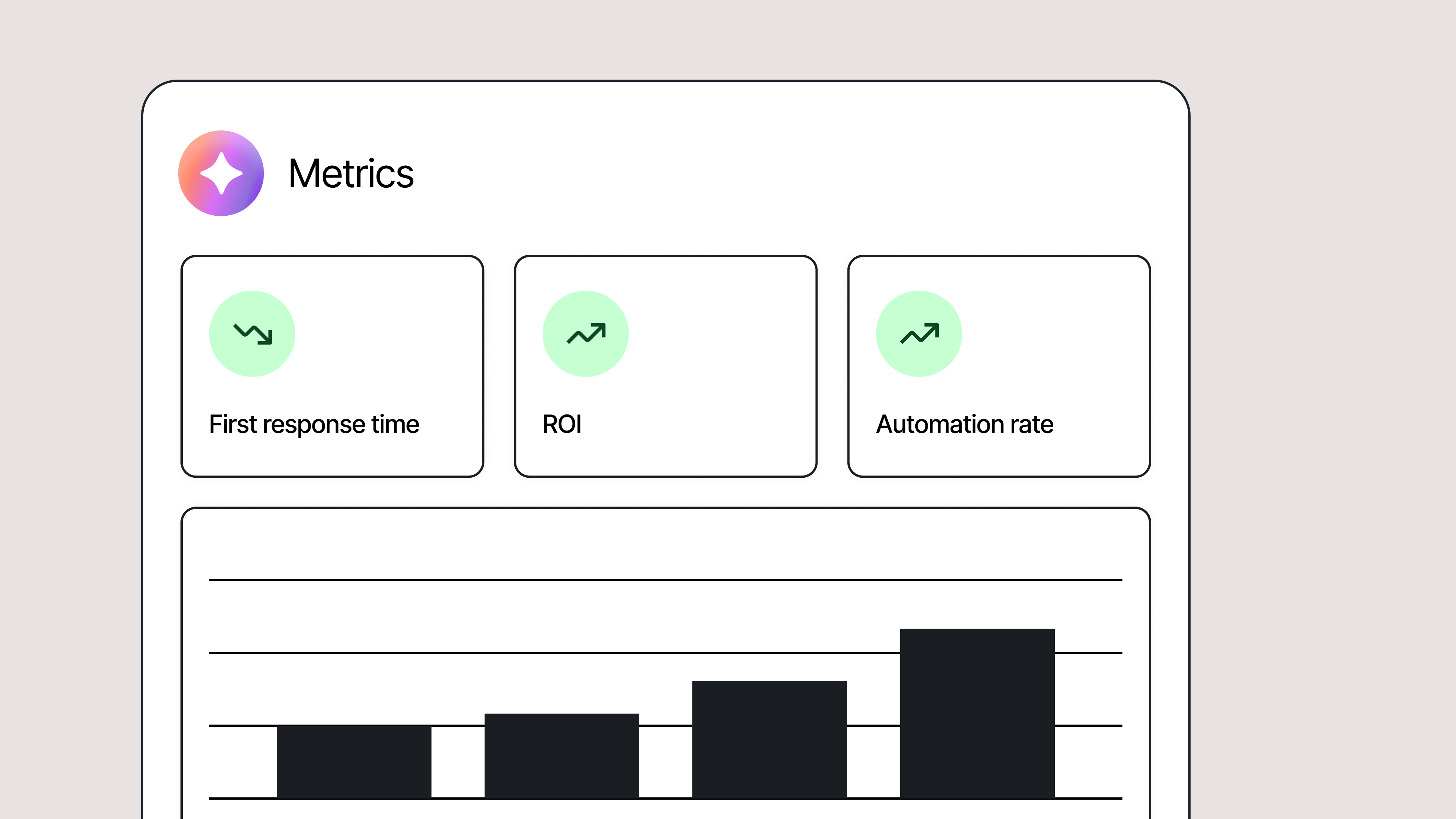
Customer support metrics include:
Revenue metrics to track include:
Shopping Assistant connects to your ecommerce platform (like Shopify), and streamlines information between your helpdesk and order data. It’s also trained on your catalog and support history.
Allow your agents to focus on support and sell more by tackling questions that are getting in the way of sales.
{{lead-magnet-2}}
TL;DR:
Conversational commerce finally has a scoreboard.
For years, CX leaders knew support conversations mattered, they just couldn’t prove how much. Conversations lived in that gray area of ecommerce where shoppers got answers, agents did their best, and everyone agreed the channel was “important”…
But tying those interactions back to actual revenue? Nearly impossible.
Fast forward to today, and everything has changed.
Real-time conversations — whether handled by a human agent or powered by AI — now leave a measurable footprint across the entire customer journey. You can see how many conversations directly influenced a purchase.
In other words, conversational commerce is finally something CX teams can measure, optimize, and scale with confidence.
If you want to prove the value of your CX strategy to your CFO, your marketing team, or your CEO, you need data, not anecdotes.
Leadership isn’t swayed by “We think conversations help shoppers.” They want to see the receipts. They want to know exactly how interactions influence revenue, which conversations drive conversion, and where AI meaningfully reduces workload without sacrificing quality.
That’s why conversational commerce metrics matter now more than ever. This gives CX leaders a way to:
These metrics let you track impact with clarity and confidence.
And once you can measure it, you can build a stronger case for deeper investment in conversational tools and strategy.
So, what exactly should CX teams be measuring?
While conversational commerce touches every part of the customer journey, the most meaningful insights fall into four core categories:
Let’s dive into each.
If you want to understand how well your conversational commerce strategy is working, automation performance is the first place to look. These metrics reveal how effectively AI is resolving shopper needs, reducing ticket volume, and stepping into revenue-driving conversations at scale.
The two most foundational metrics?
Resolution rate measures how many conversations your AI handles from start to finish without needing a human to take over. On paper, high resolution rates sound like a guaranteed win. It suggests your AI is handling product questions, sizing concerns, shade matching, order guidance, and more — all without adding to your team’s workload.
But a high resolution rate doesn’t automatically mean your AI is performing well.
Yes, the ticket was “resolved,” but was the customer actually helped? Was the answer accurate? Did the shopper leave satisfied or frustrated?
This is where quality assurance becomes essential. Your AI should be resolving tickets accurately and helpfully, not simply checking boxes.
At its best, a strong resolution rate signals that your AI is:
When resolution rate quality goes up, so does revenue influence.
You can see this clearly with beauty brands, where accuracy matters enormously. bareMinerals, for example, used to receive a flood of shade-matching questions. Everything from “Which concealer matches my undertone?” to “This foundation shade was discontinued; what’s the closest match?”
Before AI, these questions required well-trained agents and often created inconsistencies depending on who answered.
Once they introduced Shopping Assistant, resolution rate suddenly became more meaningful. AI wasn’t just closing tickets; it was giving smarter, more confident recommendations than many agents could deliver at scale, especially after hours.
That accuracy paid off.
AI-influenced purchases at bareMinerals had zero returns in the first 30 days because customers were finally getting the right shade the first time.
That’s the difference between “resolved” and resolved well.
The zero-touch ticket rate measures something slightly different: the percentage of conversations AI manages entirely on its own, without ever being escalated to an agent.
This metric is a direct lens into:
More importantly, deflection widens the funnel for more revenue-driven conversations.
When AI deflects more inbound questions, your support team can focus on conversations that truly require human expertise, including returns exceptions, escalations, VIP shoppers, and emotionally sensitive interactions.
Brands with strong deflection rates typically see:
If automation metrics tell you how well your AI is working, conversion and revenue metrics tell you how well it’s selling.
This category is where conversational commerce really proves its value because it shows the direct financial impact of every human- or AI-led interaction.
Chat conversion rate measures the percentage of conversations that end in a purchase, and it’s one of the clearest indicators of whether your conversational strategy is influencing shopper decisions.
A strong CVR tells you that conversations are:
You see this clearly with brands selling technical or performance-driven products.
Outdoor apparel shoppers, for example, don’t just need “a jacket” — they need to know which jacket will hold up in specific temperatures, conditions, or terrains. A well-trained AI can step into that moment and convert uncertainty into action.
Arc’teryx saw this firsthand.
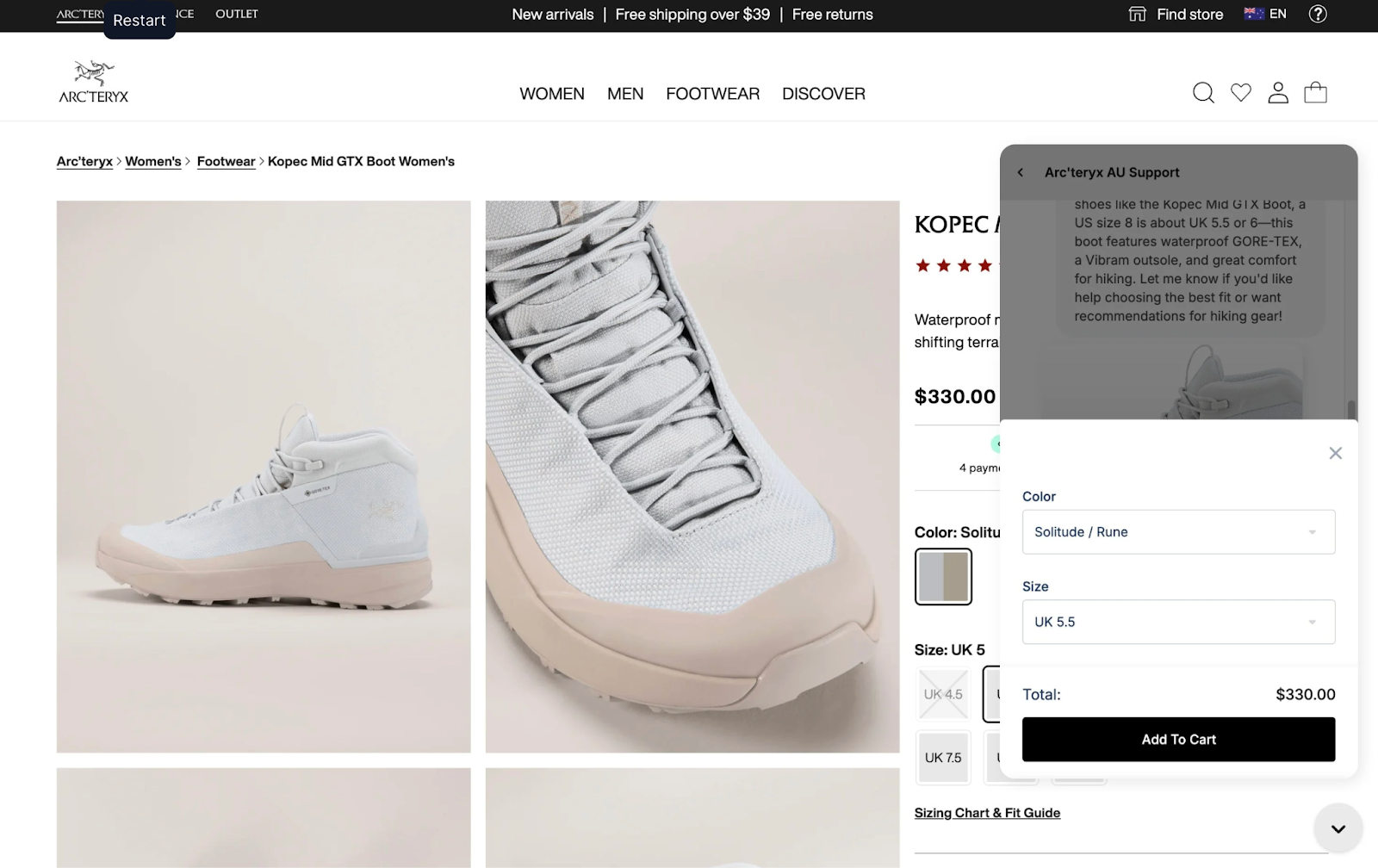
Once Shopping Assistant started handling their high-intent pre-purchase questions, their chat conversion rate jumped dramatically — from 4% to 7%. A 75% lift.
That’s what happens when shoppers finally get the expert guidance they’ve been searching for.
Not every shopper buys the moment they finish a chat. Some take a few hours. Some need a day or two. Some want to compare specs or read reviews before committing.
GMV influenced captures this “tail effect” by tracking revenue within 1–3 days of a conversation.
It’s especially powerful for:
In Arc’teryx’s case, shoppers often take time to confirm they’re choosing the right technical gear.
Yet even with that natural pause in behavior, Shopping Assistant still influenced 3.7% of all revenue, not by forcing instant decisions, but by providing the clarity people needed to make the right one.
This metric looks at the average order value of shoppers who engage in a conversation versus those who don’t.
If the conversational AOV is higher, it means your AI or agents are educating customers in ways that naturally expand the cart.
Examples of AOV-lifting conversations include:
When conversations are done well, AOV increases not because shoppers are being upsold, but because they’re being guided.
ROI compares the revenue generated by conversational AI to the cost of the tool itself — in short, this is the number that turns heads in boardrooms.
Strong ROI shows that your AI:
When ROI looks like that, AI stops being a “tool” and starts being an undeniable growth lever.
Related: The hidden power and ROI of automated customer support
Not every metric in conversational commerce is a final outcome. Some are early signals that show whether shoppers are interested, paying attention, and moving closer to a purchase.
These engagement metrics are especially valuable because they reveal why conversations convert, not just whether they do. When engagement goes up, conversion usually follows.
CTR measures the percentage of shoppers who click the product links shared during a conversation. It’s one of the cleanest leading indicators of buyer intent because it reflects a moment where curiosity turns into action.
If CTR is high, it’s a sign that:
In other words, CTR tells you which conversations are influencing shopping behavior.
And the connection between CTR and revenue is often tighter than teams expect.
Just look at what happened with Caitlyn Minimalist. When they began comparing the results of human-led conversations versus AI-assisted ones over a 90-day period, CTR became one of the clearest predictors of success. Their Shopping Assistant consistently drove meaningful engagement with its recommendations — an 18% click-through rate on the products it suggested.
That level of engagement translated directly into better outcomes:
When shoppers click, they’re moving deeper into the buying cycle. Strong CTR makes it easier to forecast conversion and understand how well your conversational flows are guiding shoppers toward the right products.
Discounting can be one of the fastest ways to nudge a shopper toward checkout, but it’s also one of the fastest ways to erode margins.
That’s why discount-related metrics matter so much in conversational commerce.
They show not just whether AI is using discounts, but how effectively those discounts are driving conversions.
This metric tracks how many discount codes or promotional offers your AI is sharing during conversations.
Ideally, discounts should be purposeful — timed to moments when a shopper hesitates or needs an extra nudge — not rolled out as a one-size-fits-all script. When you monitor “discounts offered,” you can ensure that incentives are being used as conversion tools, not crutches.
This visibility becomes particularly important at high-intent touchpoints, such as exit intent or cart recovery interactions, where a small incentive can meaningfully increase conversion if used correctly.
Offering a discount is one thing. Seeing whether customers use it is another.
A high “discounts applied” rate suggests:
A low usage rate tells a different story: Your team (or your AI) is discounting unnecessarily.
This metric alone often surprises brands. More often than not, CX teams discover they can discount less without hurting conversion, or that a non-discount incentive (like a relevant product recommendation) performs just as well.
Understanding this relationship helps teams tighten their promotional strategy, protect margins, and use discounts only where they actually drive incremental revenue.
Once you know which metrics matter, the next step is building a system that brings them together in one place.
Think of your conversational commerce scorecard as a decision-making engine — something that helps you understand performance at a glance, spot bottlenecks, optimize AI, and guide shoppers more effectively.
In Gorgias, you can customize your analytics dashboard to watch the metrics that matter most to your brand. This becomes the single source of truth for understanding how conversations influence revenue.
Here’s what a powerful dashboard unlocks:
Some parts of the customer journey are perfect for AI: repetitive questions, product education, sizing guidance, shade matching, order status checks.
Others still benefit from human support, like emotional conversations, complex troubleshooting, multi-item styling, or high-value VIP concerns.
Metrics like resolution rate, zero-touch ticket rate, and chat conversion rate show you exactly which is which.
When you track these consistently, you can:
For example, if AI handles 80% of sizing questions successfully but struggles with multi-item styling advice, that tells you where to invest in improving AI, and where human expertise should remain the default.
Metrics like CTR, CVR, and conversational AOV reveal the inner workings of shopper decision-making. They show which recommendations resonate, which don’t, and which messaging actually moves someone to purchase.
With these insights, CX teams can:
For instance, if shoppers repeatedly ask clarifying questions about a product’s material or fit, that’s a signal for merchandising or product teams.
If recommendations with social proof get high engagement, marketing can integrate that insight into on-site messaging.
Conversations reveal what customers really care about — often before analytics do.
This is the moment when the scorecard stops being a CX tool and becomes a business tool.
A clear set of metrics shows how conversations tie to:
When a CX leader walks into a meeting and says, “Our AI Assistant influenced 5% of last month’s revenue” or “Conversational shoppers have a 20% higher AOV,” the perception of CX changes instantly.
You’re no longer a support cost. You’re a revenue channel.
And once you have numbers like ROI or revenue influence in hand, it becomes nearly impossible for anyone to argue against further investment in CX automation.
A scorecard doesn’t just show what’s working, it surfaces what’s not.
Metrics make friction obvious:
Once you identify these patterns, you can run targeted experiments:
Compounded over time, these moments create major lifts in conversion and revenue.
One of the biggest hidden values of conversational data is how it strengthens cross-functional decision-making.
A clear analytics dashboard gives teams visibility into:
Suddenly, CX isn’t just answering questions — it’s informing strategy across the business.
With the right metrics in place, CX leaders can finally quantify the impact of every interaction, and use that data to shape smarter, more profitable customer journeys.
If you're ready to measure — and scale — the impact of your conversations, tools like Gorgias AI Agent and Shopping Assistant give CX teams the visibility, accuracy, and performance needed to turn every interaction into revenue.
Want to see it in action? Book a demo and discover what conversational commerce can do for your bottom line.
{{lead-magnet-2}}
The best in CX and ecommerce, right to your inbox
TL;DR:
In 2024, Shopify merchants drove $11.5 billion in sales over Black Friday Cyber Monday. Now, BFCM is quickly approaching, with some brands and major retailers already hosting sales.
If you’re feeling late to prepare for the season or want to maximize the number of sales you’ll make, we’ll cover how food and beverage CX teams can serve up better self-serve resources for this year’s BFCM.
Learn how to answer and deflect customers’ top questions before they’re escalated to your support team.
💡 Your guide to everything peak season → The Gorgias BFCM Hub
During busy seasons like BFCM and beyond, staying on top of routine customer asks can be an extreme challenge.
“Every founder thinks BFCM is the highest peak feeling of nervousness,” says Ron Shah, CEO and Co-founder of supplement brand Obvi.
“It’s a tough week. So anything that makes our team’s life easier instantly means we can focus more on things that need the time,” he continues.
Anticipating contact reasons and preparing methods (like automated responses, macros, and enabling an AI Agent) is something that can help. Below, find the top contact reasons for food and beverage companies in 2025.
According to Gorgias proprietary data, the top reason customers reach out to brands in the food and beverage industry is to cancel a subscription (13%) followed by order status questions (9.1%).
Because product detail queries represent 5.7% of contact reasons for the food and beverage industry, the more information you provide on your product pages, the better.
Include things like calorie content, nutritional information, and all ingredients.
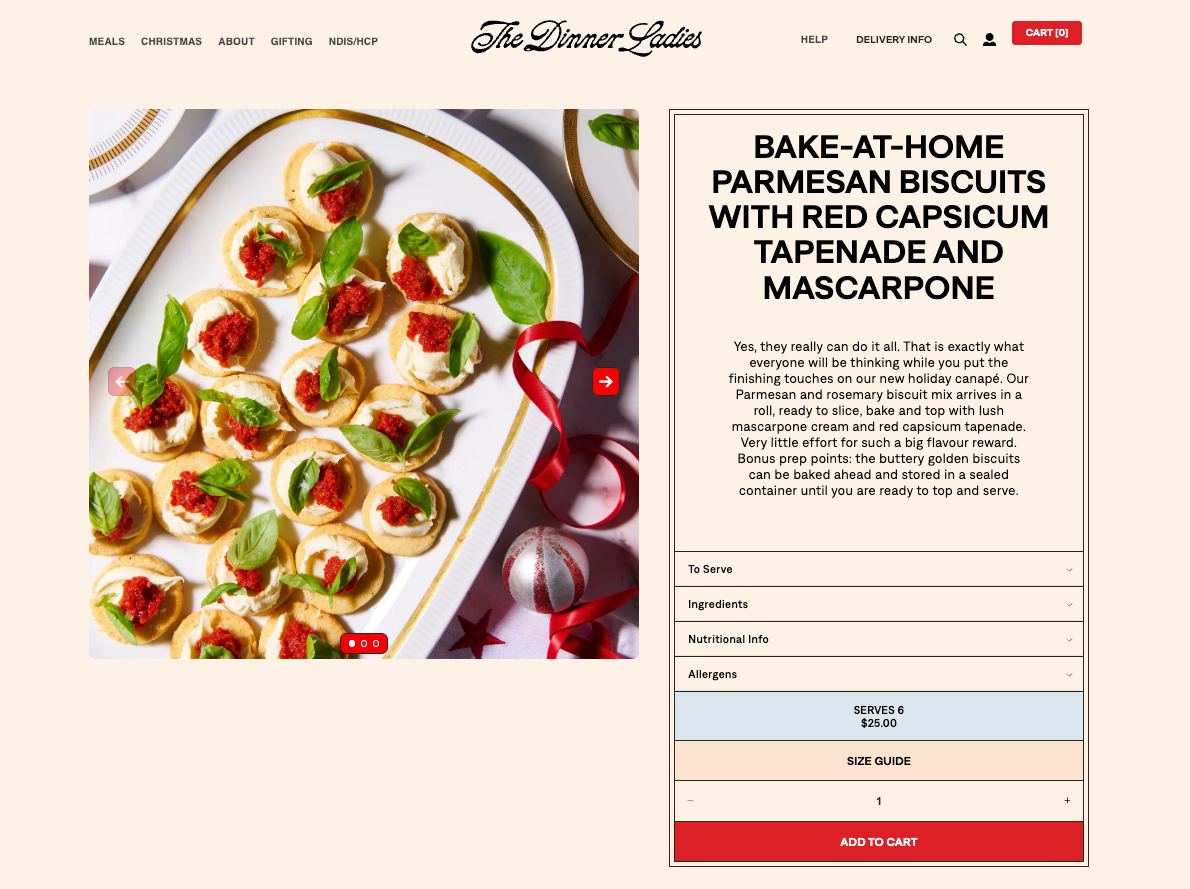
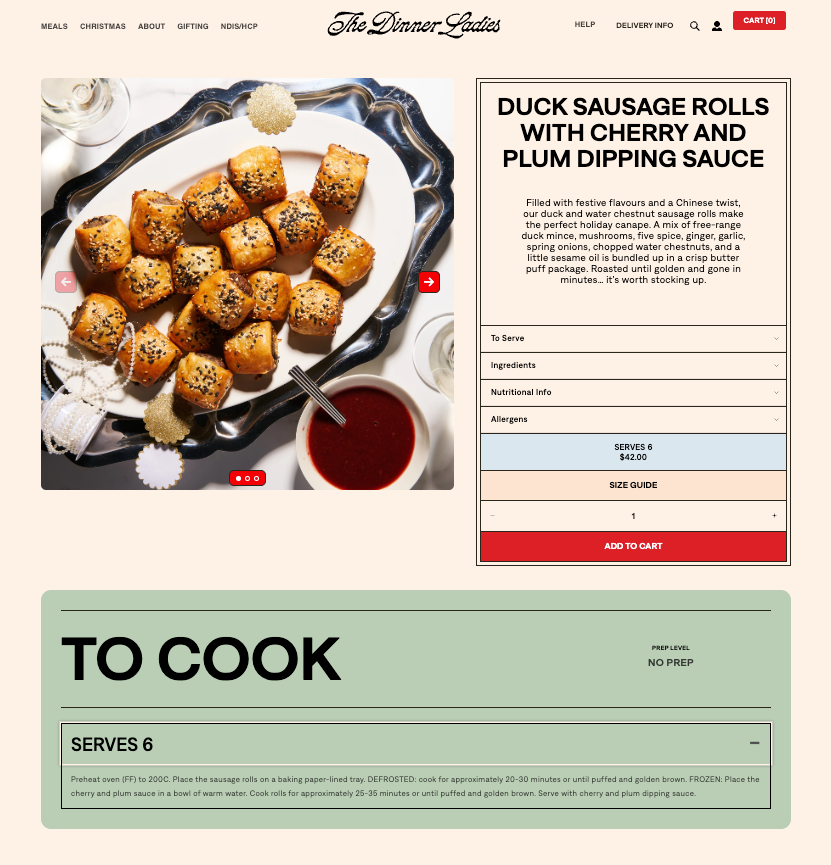
For example, ready-to-heat meal company The Dinner Ladies includes a dropdown menu on each product page for further reading. Categories include serving instructions, a full ingredient list, allergens, nutritional information, and even a handy “size guide” that shows how many people the meal serves.
FAQ pages make up the information hub of your website. They exist to provide customers with a way to get their questions answered without reaching out to you.
This includes information like how food should be stored, how long its shelf life is, delivery range, and serving instructions. FAQs can even direct customers toward finding out where their order is and what its status is.

In the context of BFCM, FAQs are all about deflecting repetitive questions away from your team and assisting shoppers in finding what they need faster.
That’s the strategy for German supplement brand mybacs.
“Our focus is to improve automations to make it easier for customers to self-handle their requests. This goes hand in hand with making our FAQs more comprehensive to give customers all the information they need,” says Alexander Grassmann, its Co-Founder & COO.
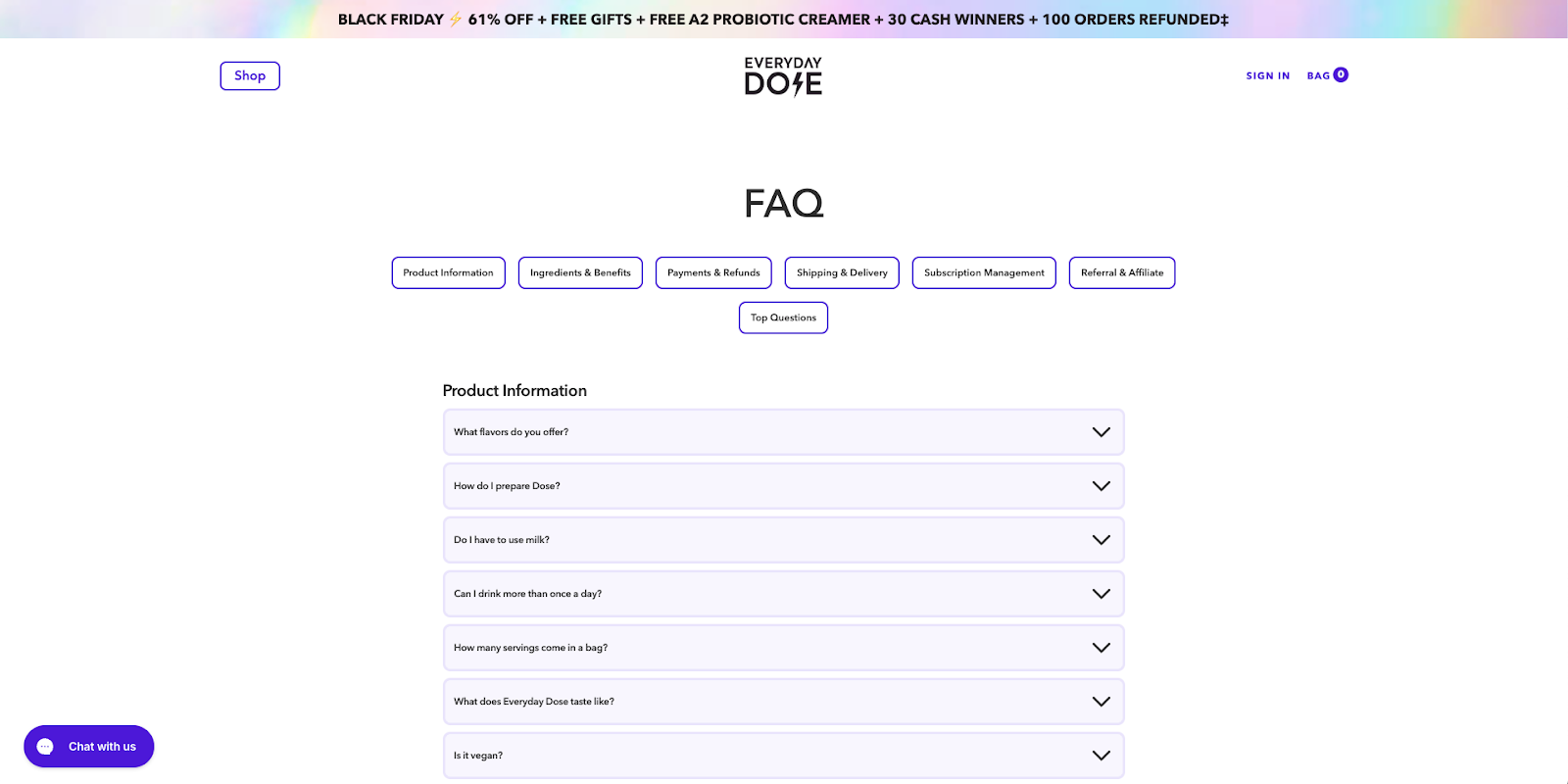
As you contemplate what to add to your FAQ page, remember that more information is usually better. That’s the approach Everyday Dose takes, answering even hyper-specific questions like, “Will it break my fast?” or “Do I have to use milk?”
While the FAQs you choose to add will be specific to your products, peruse the top-notch food and bev FAQ pages below.
Time for some FAQ inspo:
AI Agents and AI-powered Shopping Assistants are easy to set up and are extremely effective in handling customer interactions––especially during BFCM.
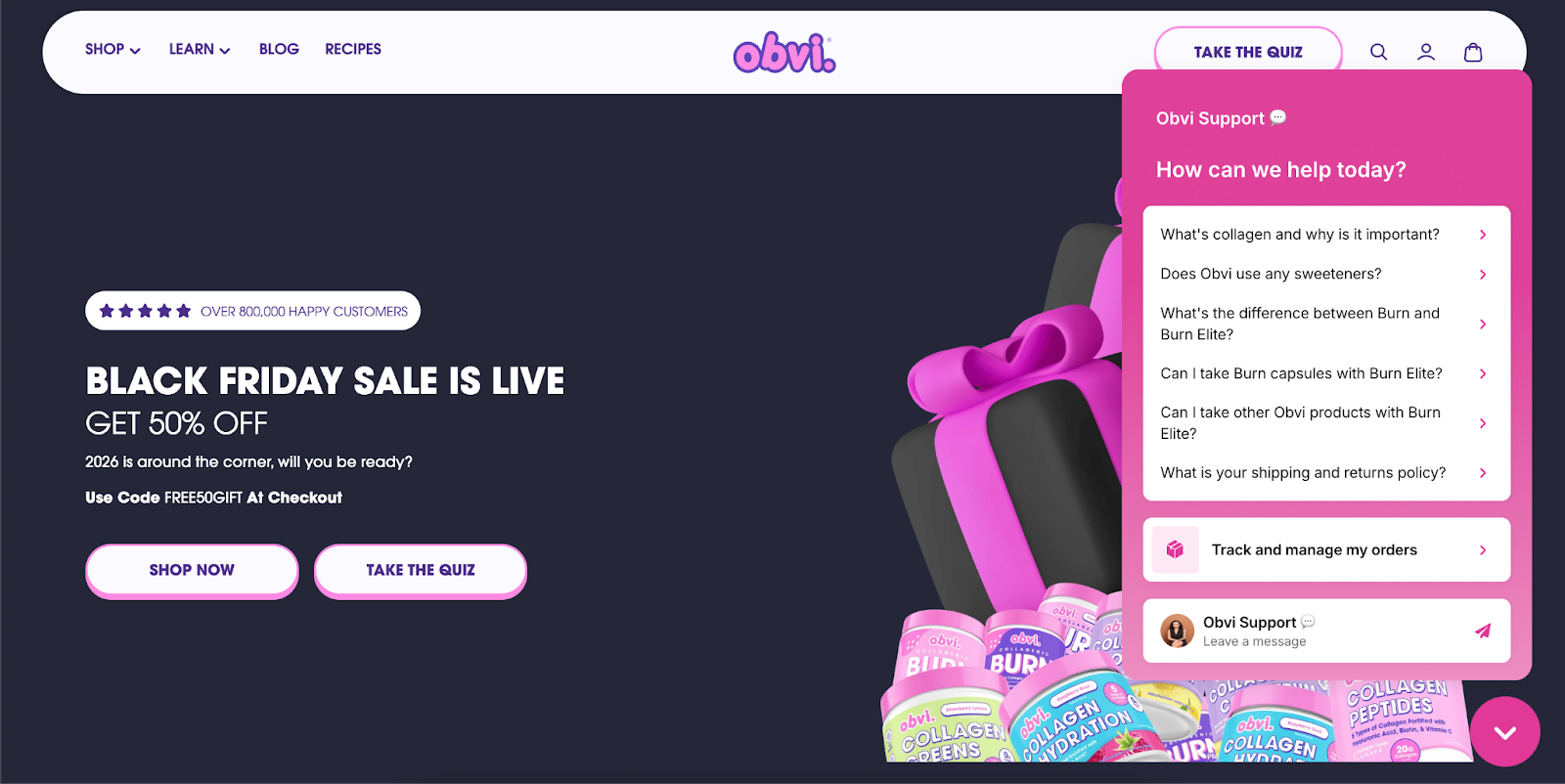
“I told our team we were going to onboard Gorgias AI Agent for BFCM, so a good portion of tickets would be handled automatically,” says Ron Shah, CEO and Co-founder at Obvi. “There was a huge sigh of relief knowing that customers were going to be taken care of.”
And, they’re getting smarter. AI Agent’s CSAT is just 0.6 points shy of human agents’ average CSAT score.
Here are the specific responses and use cases we recommend automating:
Get your checklist here: How to prep for peak season: BFCM automation checklist
With high price reductions often comes faster-than-usual sell out times. By offering transparency around item quantities, you can avoid frustrated or upset customers.
For example, you could show how many items are left under a certain threshold (e.g. “Only 10 items left”), or, like Rebel Cheese does, mention whether items have sold out in the past.
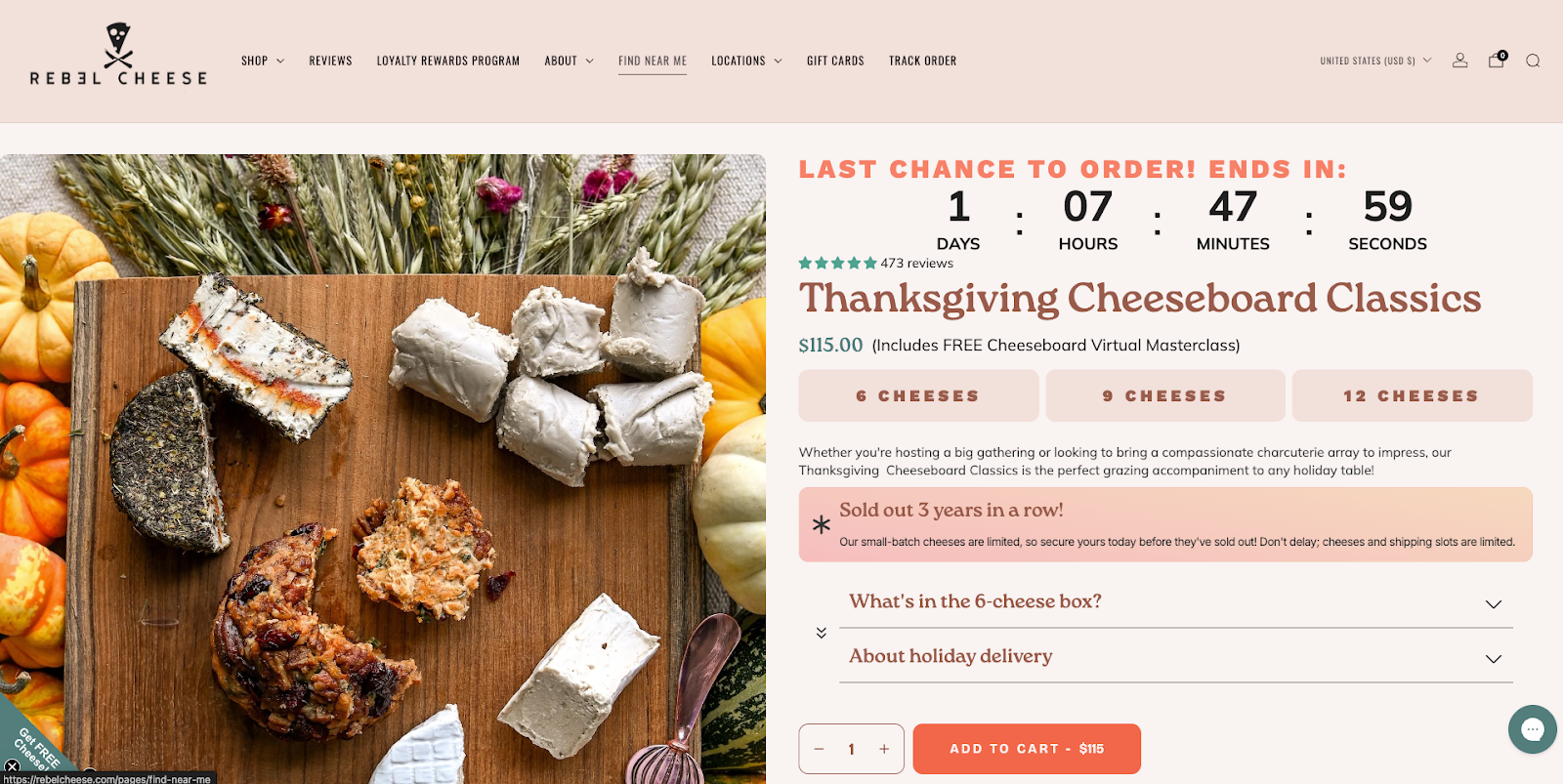
You could also set up presales, give people the option to add themselves to a waitlist, and provide early access to VIP shoppers.
Give shoppers a heads up whether they’ll be able to cancel an order once placed, and what your refund policies are.
For example, cookware brand Misen follows its order confirmation email with a “change or cancel within one hour” email that provides a handy link to do so.
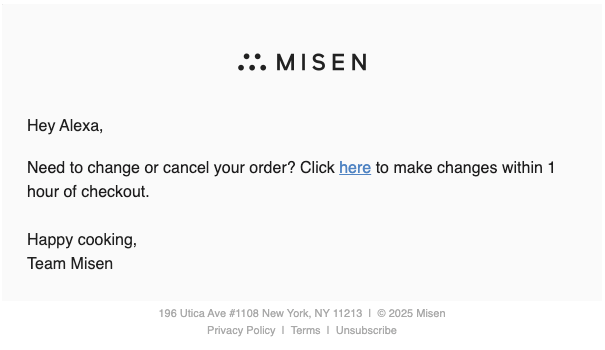
Your refund policies and order cancellations should live within an FAQ and in the footer of your website.
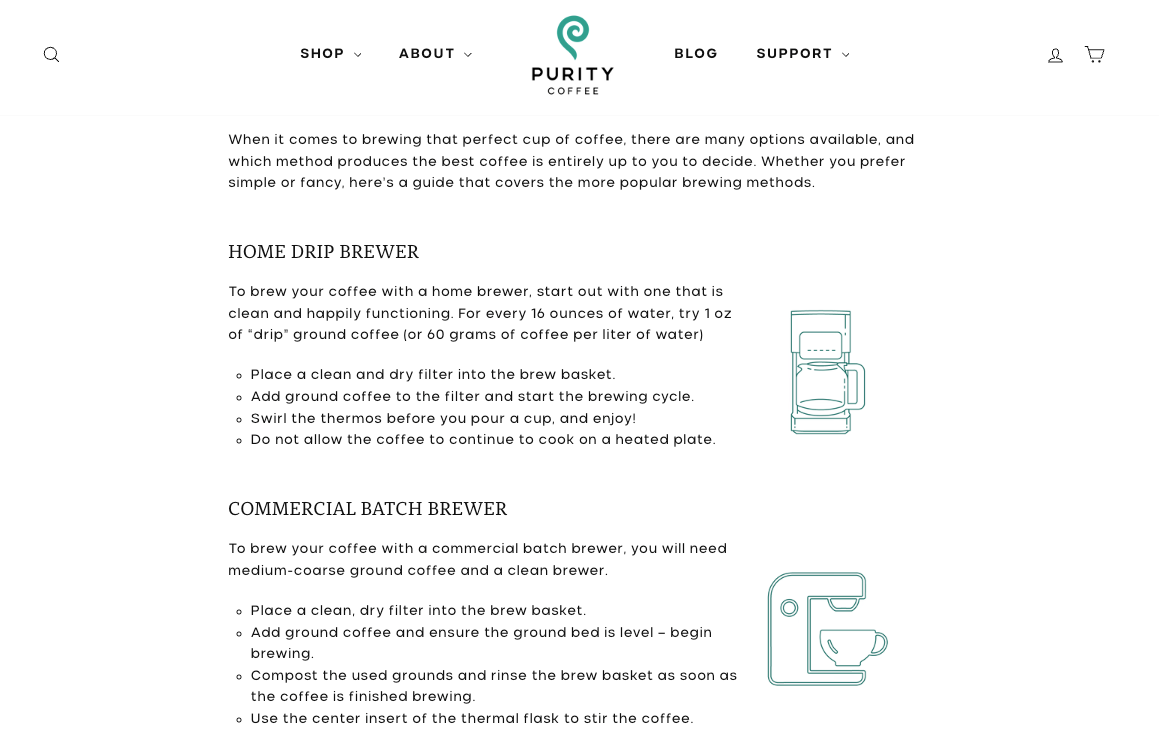
Include how-to information on your website within your FAQs, on your blog, or as a standalone webpage. That might be sharing how to use a product, how to cook with it, or how to prepare it. This can prevent customers from asking questions like, “how do you use this?” or “how do I cook this?” or “what can I use this with?” etc.
For example, Purity Coffee created a full brewing guide with illustrations:
Similarly, for its unique preseasoned carbon steel pan, Misen lists out care instructions:

And for those who want to understand the level of prep and cooking time involved, The Dinner Ladies feature cooking instructions on each product page.
Interactive quizzes, buying guides, and gift guides can help ensure shoppers choose the right items for them––without contacting you first.
For example, Trade Coffee Co created a quiz to help first timers find their perfect coffee match:
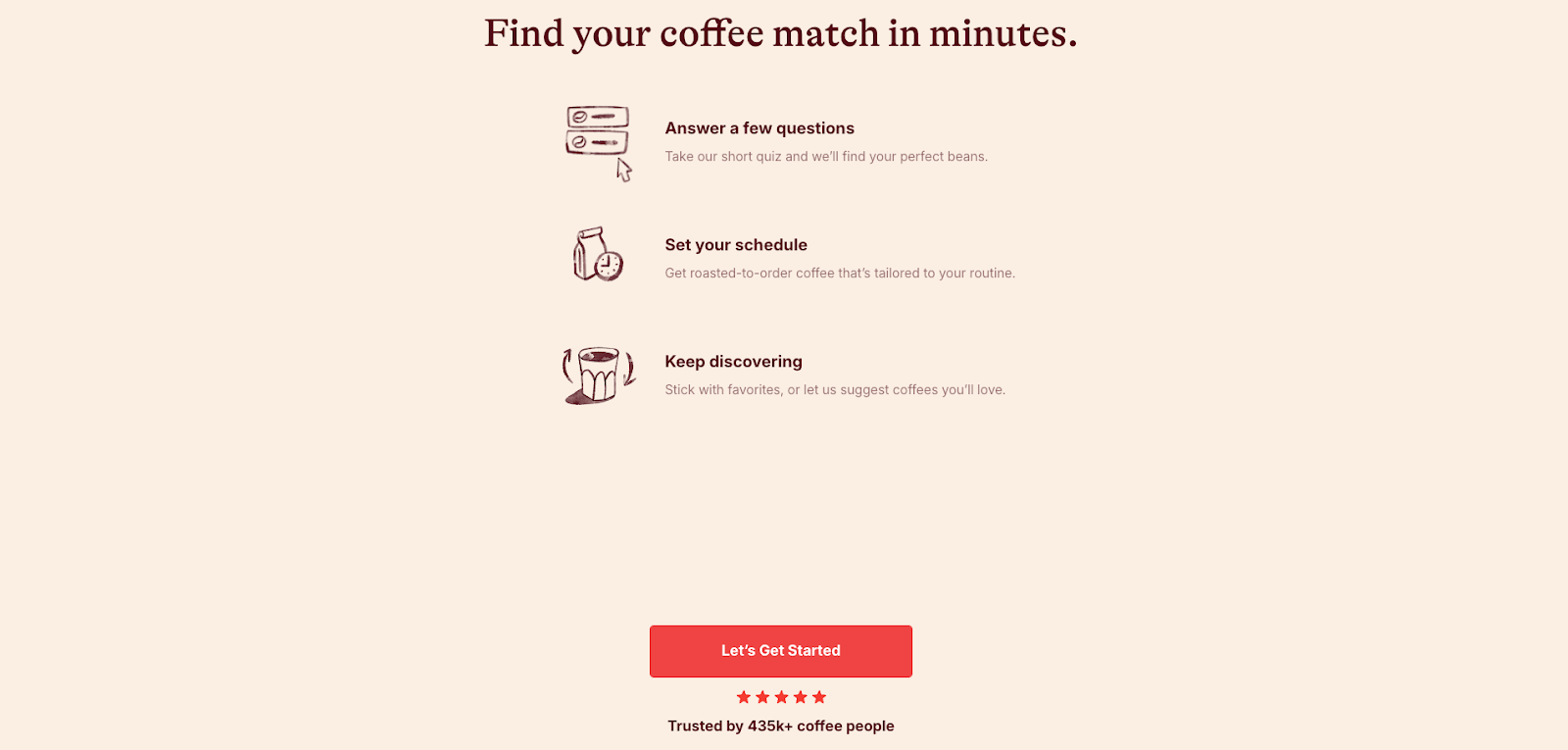
The more information you can share with customers upfront, the better. That will leave your team time to tackle the heady stuff.
If you’re looking for an AI-assist this season, check out Gorgias’s suite of products like AI Agent and Shopping Assistant.
{{lead-magnet-2}}

TL;DR:
As holiday season support volumes spike and teams lean on AI to keep up, one frustration keeps surfacing, our Help Center has the answers—so why can’t AI find them?
The truth is, AI can’t help customers if it can’t understand your Help Center. Most large language models (LLMs), including Gorgias AI Agent, don’t ignore your existing docs, they just struggle to find clear, structured answers inside them.
The good news is you don’t need to rebuild your Help Center or overhaul your content. You simply need to format it in a way that’s easy for both people and AI to read.
We’ll break down how AI Agent reads your Help Center, finds answers, and why small formatting changes can help it respond faster and more accurately, so your team spends less time on escalations.
{{lead-magnet-1}}
Before you start rewriting your Help Center, it helps to understand how AI Agent actually reads and uses it.
Think of it like a three-step process that mirrors how a trained support rep thinks through a ticket.
Your Help Center is AI Agent’s brain. AI Agent uses your Help Center to pull facts, policies, and instructions it needs to respond to customers accurately. If your articles are clearly structured and easy to scan, AI Agent can find what it needs fast. If not, it hesitates or escalates.
Think of Guidance as AI Agent’s decision layer. What should AI Agent do when someone asks for a refund? What about when they ask for a discount? Guidance helps AI Agent provide accurate answers or hand over to a human by following an “if/when/then” framework.
Finally, AI Agent uses a combination of your help docs and Guidance to respond to customers, and if enabled, perform an Action on their behalf—whether that’s changing a shipping address or canceling an order altogether.
Here’s what that looks like in practice:
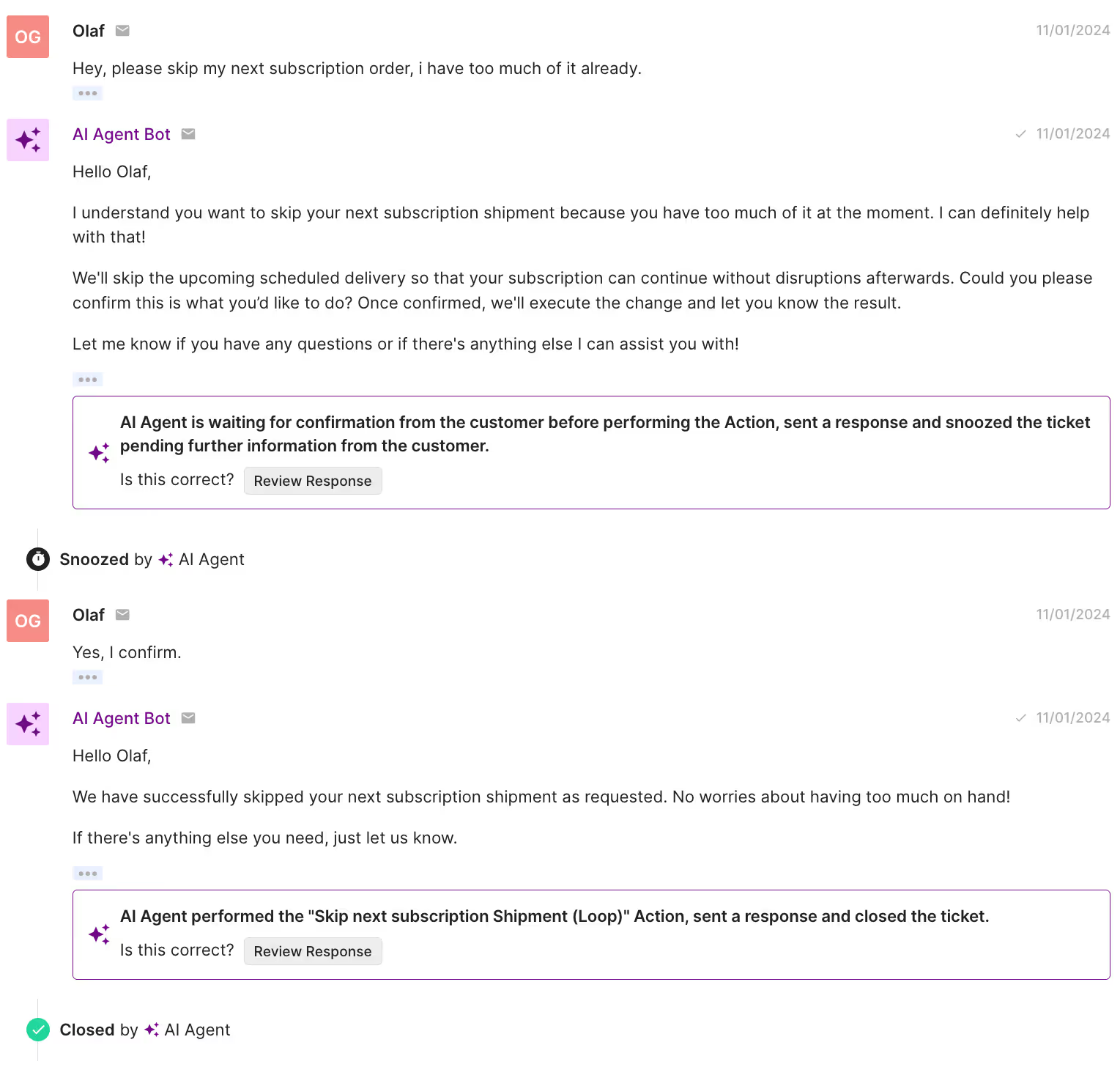
This structure removes guesswork for both your AI and your customers. The clearer your docs are about when something applies and what happens next, the more accurate and human your automated responses will feel.
A Help Center written for both people and AI Agent:
Our data shows that most AI escalations happen for a simple reason––your Help Center doesn’t clearly answer the question your customer is asking.
That’s not a failure of AI. It’s a content issue. When articles are vague, outdated, or missing key details, AI Agent can’t confidently respond, so it passes the ticket to a human.
Here are the top 10 topics that trigger escalations most often:
Each of these topics needs a dedicated, clearly structured Help Doc that uses keywords customers are likely to search and spells out specific conditions.
Here’s how to strengthen each one:
Start by improving these 10 articles first. Together, they account for nearly half of all AI Agent escalations. The clearer your Help Center is on these topics, the fewer tickets your team will ever see, and the faster your AI will resolve the rest.
Once you know how AI Agent reads your content, the next step is formatting your help docs so it can easily understand and use them.
The goal isn’t to rewrite everything, it’s to make your articles more structured, scannable, and logic-friendly.
Here’s how.
Both humans and large language models read hierarchically. If your article runs together in one long block of text, key answers get buried.
Break articles into clear sections and subheadings (H2s, H3s) for each scenario or condition. Use short paragraphs, bullets, and numbered lists to keep things readable.
Example:
How to Track Your Order
A structured layout helps both AI and shoppers find the right step faster, without confusion or escalation.
AI Agent learns best when your Help Docs clearly define what happens under specific conditions. Think of it like writing directions for a flowchart.
Example:
This logic helps AI know what to do and how to explain the answer clearly to the customer.
Customers don’t always use the same words you do, and neither do LLMs. If your docs treat “cancel,” “stop,” and “pause” as interchangeable, AI Agent might return the wrong answer.
Define each term clearly in your Help Center and add small keyword variations (“cancel subscription,” “end plan,” “pause delivery”) so the AI can recognize related requests.
AI Agent follows links just like a human agent. If your doc ends abruptly, it can’t guide the customer any further.
Always finish articles with an explicit next step, like linking to:
Example: “If your return meets our policy, request your return label here.”
That extra step keeps the conversation moving and prevents unnecessary escalations.
AI tools prioritize structure and wording when learning from your Help Center—not emotional tone.
Phrases like “Don’t worry!” or “We’ve got you!” add noise without clarity.
Instead, use simple, action-driven sentences that tell the customer exactly what to do:
A consistent tone keeps your Help Center professional, helps AI deliver reliable responses, and creates a smoother experience for customers.
You don’t need hundreds of articles or complex workflows to make your Help Center AI-ready. But you do need clarity, structure, and consistency. These Gorgias customers show how it’s done.
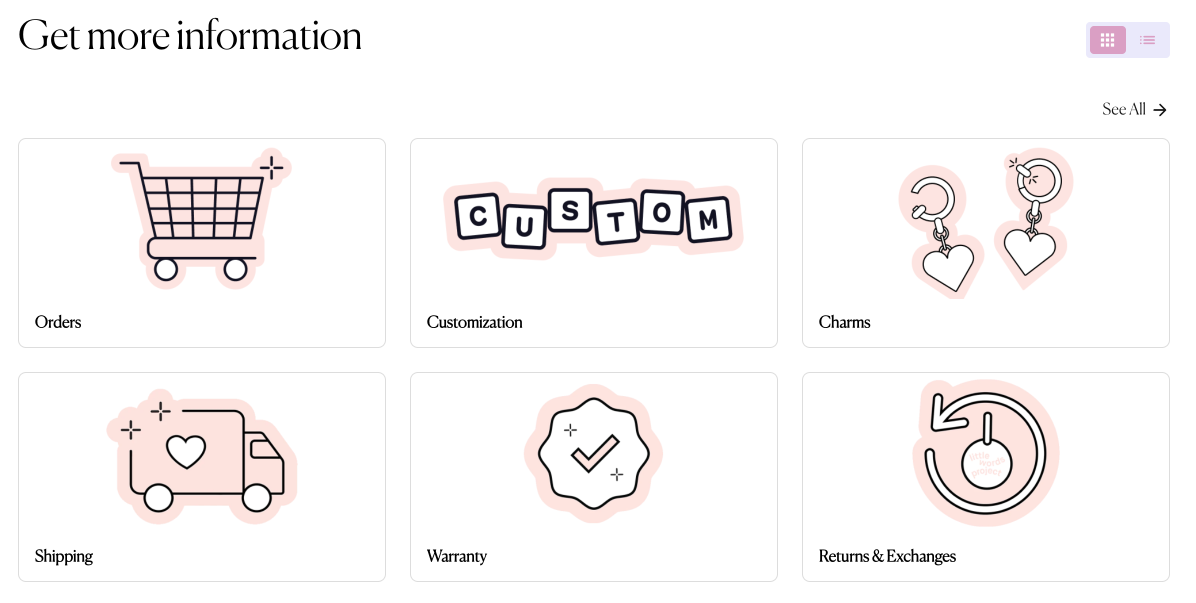
Little Words Project keeps things refreshingly straightforward. Their Help Center uses short paragraphs, descriptive headers, and tightly scoped articles that focus on a single intent, like returns, shipping, or product care.
That makes it easy for AI Agent to scan the page, pull out the right facts, and return accurate answers on the first try.
Their tone stays friendly and on-brand, but the structure is what shines. Every article flows from question → answer → next step. It’s a minimalist approach, and it works. Both for customers and the AI reading alongside them.
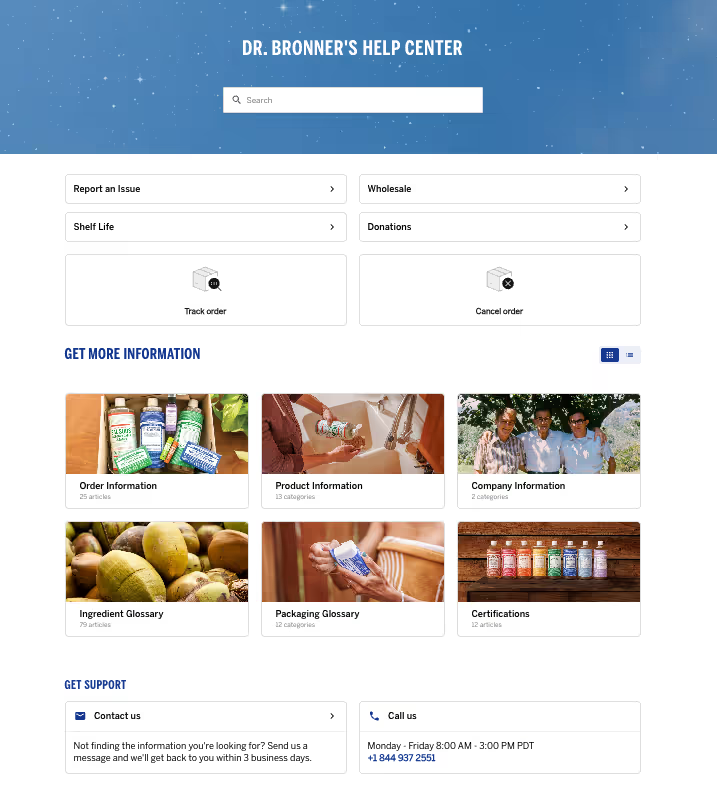
Customer education is at the heart of Dr. Bronner’s mission. Their customers often ask detailed questions about product ingredients, packaging, and certifications. With Gorgias, Emily and her team were able to build a robust Help Center that helped to proactively give this information.
The Help Center doesn't just provide information. The integration of interactive Flows, Order Management, and a Contact Form automation allowed Dr. Bronner’s to handle routine inquiries—such as order statuses—quickly and efficiently. These kinds of interactive elements are all possible out-of-the-box, no IT support needed.

When Ekster switched to Gorgias, the team wanted to make their Help Center work smarter. By writing clear, structured articles for common questions like order tracking, returns, and product details, they gave both customers and AI Agent the information needed to resolve issues instantly.
"Our previous Help Center solution was the worst. I hated it. Then I saw Gorgias’s Help Center features, and how the Article Recommendations could answer shoppers’ questions instantly, and I loved it. I thought: this is just what we need." —Shauna Cleary, Head of Ecommerce at Ekster
The results followed fast. With well-organized Help Center content and automation built around it, Ekster was able to scale support without expanding the team.
“With all the automations we’ve set up in Gorgias, and because our team in Buenos Aires has ramped up, we didn’t have to rehire any extra agents.” —Shauna Cleary, Head of Ecommerce at Ekster
Learn more: How Ekster used automation to cover the workload of 4 agents
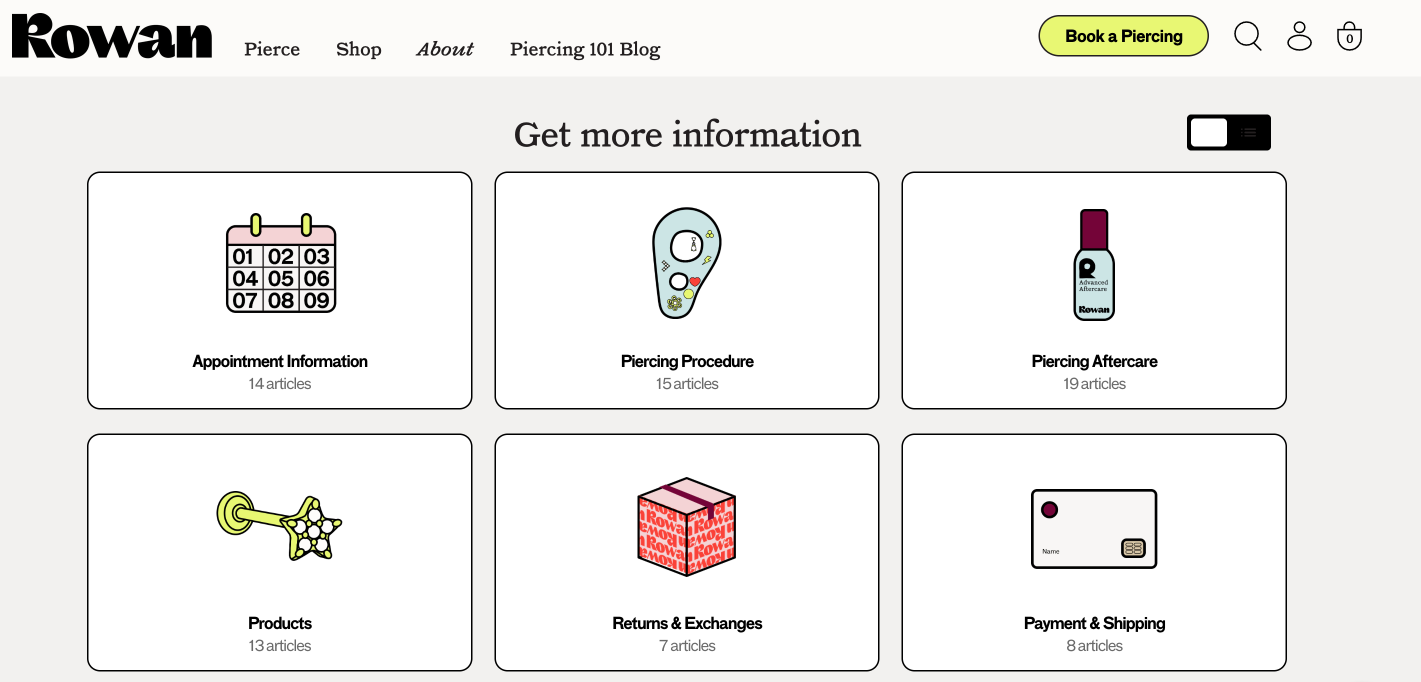
Rowan’s Help Center is a great example of how clear structure can do the heavy lifting. Their FAQs are grouped into simple categories like piercing, shipping, returns, and aftercare, so readers and AI Agent can jump straight to the right topic without digging.
For LLMs, that kind of consistency reduces guesswork. For customers, it creates a smooth, reassuring self-service experience.
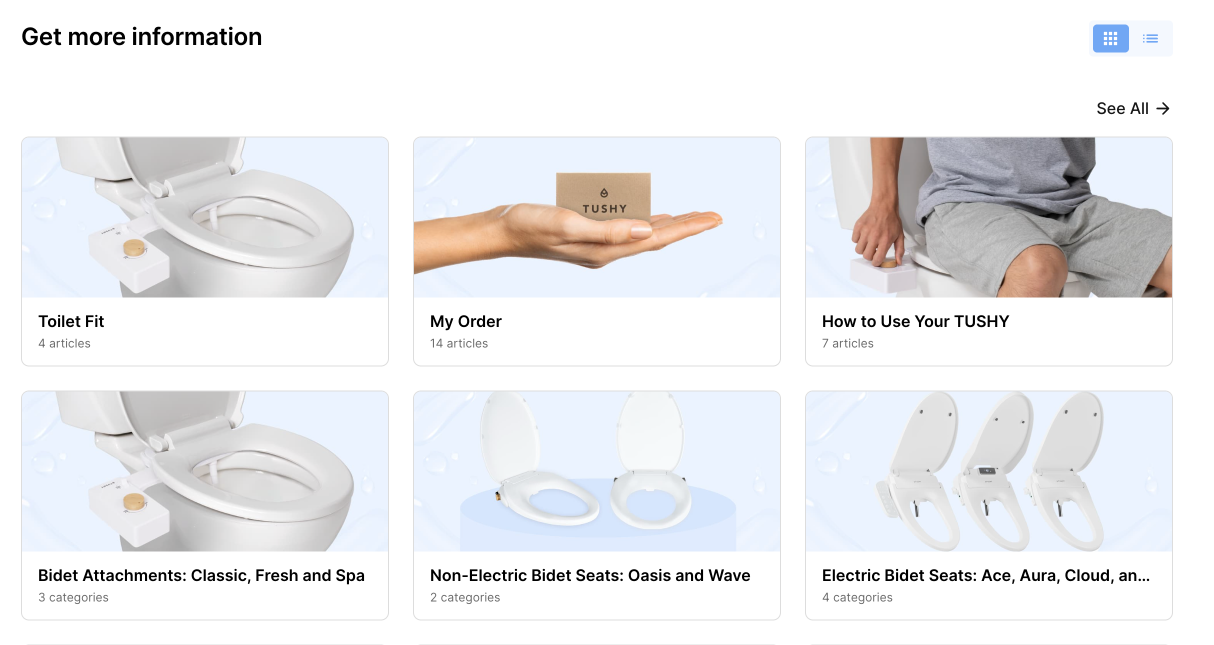
TUSHY proves you can maintain personality and structure. Their Help Center articles use clear headings, direct language, and brand-consistent tone. It makes it easy for AI Agent to give accurate, on-brand responses.
“Too often, a great interaction is diminished when a customer feels reduced to just another transaction. With AI, we let the tech handle the selling, unabashedly, if needed, so our future customers can ask anything, even the questions they might be too shy to bring up with a human. In the end, everybody wins!" —Ren Fuller-Wasserman, Senior Director of Customer Experience at TUSHY
Ready to put your Help Center to the test? Use this five-point checklist to make sure your content is easy for both customers and AI to navigate.
Break up long text blocks and use descriptive headers (H2s, H3s) so readers and AI Agent can instantly find the right section.
Spell out what happens in each scenario. This logic helps AI Agent decide the right next step without second-guessing.
Make sure your Help Center includes complete, structured articles for high-volume issues like order status, returns, and refunds.
Close every piece with a call to action, like a form, related article, or support link, so neither AI nor customers hit a dead end.
Use direct, predictable phrasing. Avoid filler like “Don’t worry!” and focus on steps customers can actually take.
By tweaking structure instead of your content, it’s easier to turn your Help Center into a self-service powerhouse for both customers and your AI Agent.
Your Help Center already holds the answers your customers need. Now it’s time to make sure AI can find them. A few small tweaks to structure and phrasing can turn your existing content into a powerful, AI-ready knowledge base.
If you’re not sure where to start, review your Help Center with your Gorgias rep or CX team. They can help you identify quick wins and show you how AI Agent pulls information from your articles.
Remember: AI Agent gets smarter with every structured doc you publish.
Ready to optimize your Help Center for faster, more accurate support? Book a demo today.
{{lead-magnet-2}}


TL;DR:
If you’ve been side-eyeing AI and wondering if it’s just hype, you’re not alone. A lot of CX leaders were skeptical, too:
“I used to be the loudest skeptic,” said Amber van den Berg, Head of CX at Wildride. “I was worried it would feel cold and robotic, completely disconnected from the warm, personal vibe we’d worked so hard to build.”
But fast forward to today, and teams at Wildride, OLIPOP, bareMinerals, and Love Wellness are using AI to do more than just deflect tickets. They’re…
Here are six lessons you can steal from the brands doing it best.
{{lead-magnet-1}}
We need to get one point across clearly: AI isn’t about replacing your support team.
For brands with lean CX teams, burnout is a serious problem. And it’s one of the biggest reasons AI adoption is accelerating.
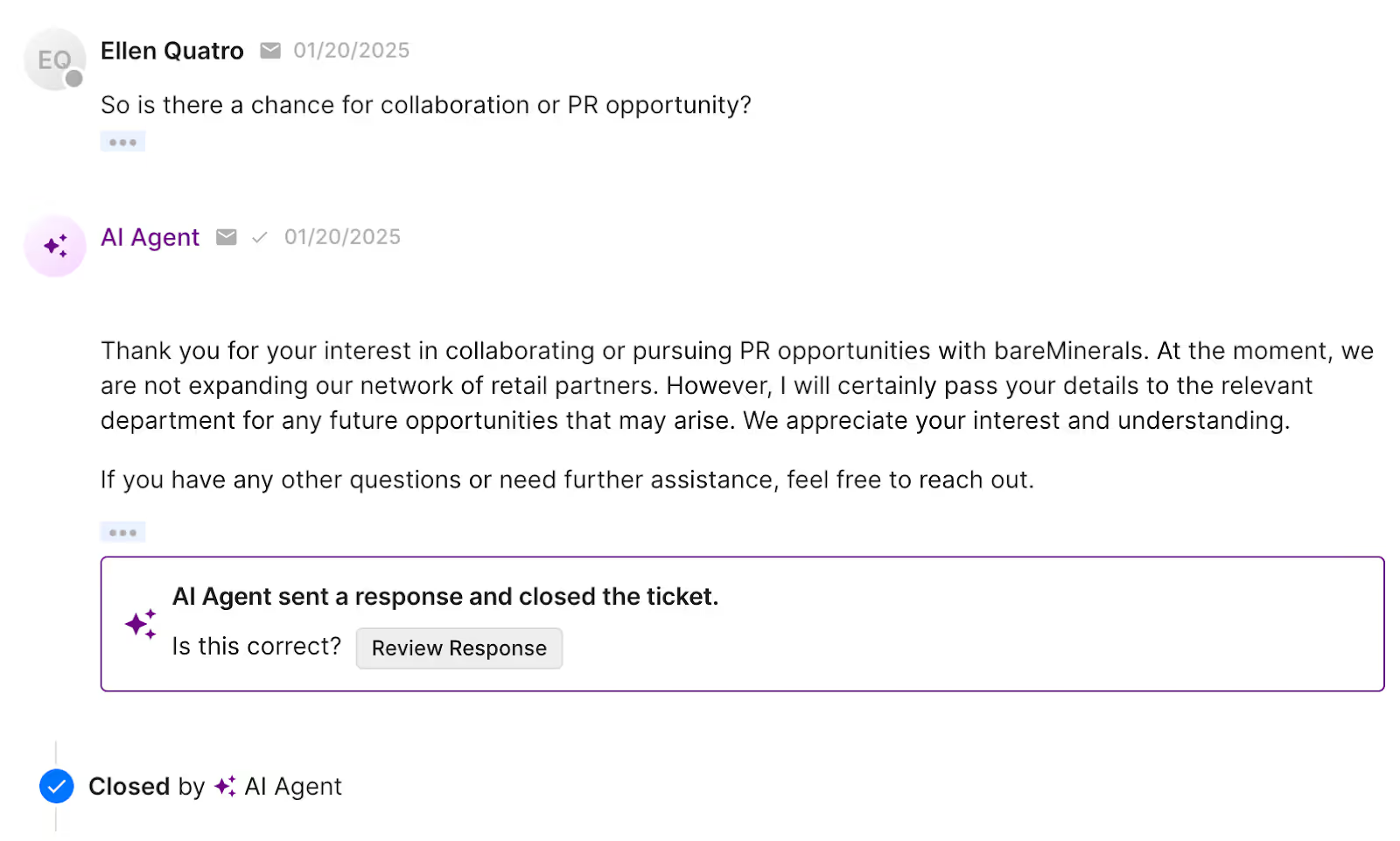
“I was constantly seeing the same frustrating inquiries—sponsorship asks, bachelorette party freebies, PR requests… 45% of our tickets were these kinds of messages,” said Nancy Sayo, Director of Consumer Services at global beauty brand, bareMinerals.
“Once I realized AI could handle them with kindness and consistency without pulling in my team, I was sold.”
Instead of thinking of AI as a replacement, think of it as an enhancement.
It’s about making sure your CX team doesn’t burn out answering the same five questions 50 times a day.
With Gorgias AI Agent, Nancy’s team now uses automation to absorb the high-volume, low-conversion noise, freeing up their seasoned agents to focus on real revenue-driving moments.
“We use AI to handle low-complexity tickets. And we route higher-value customers to our human sales team—people who’ve been doing makeup for over a decade and really know what they’re doing.”
TL;DR? The smartest teams use AI to take the weight of repetitive tickets (“Do you ship internationally?” “Can I get free samples?”) off their shoulders so agents can focus on conversations that build trust, drive loyalty, and increase LTV.
While you can get started with AI quickly for simple queries, we don't recommend using it “out of the box.” And honestly, that’s a good thing.
Brands that “set it and forget it” are missing the point. Because if you want AI to sound exactly like your brand—not like every other chatbot on the internet—you need to give it the same context you’d give a new hire.
Amber van den Berg, Head of Customer Experience at baby carrier brand Wildride, wrote out detailed tone guidelines, including:
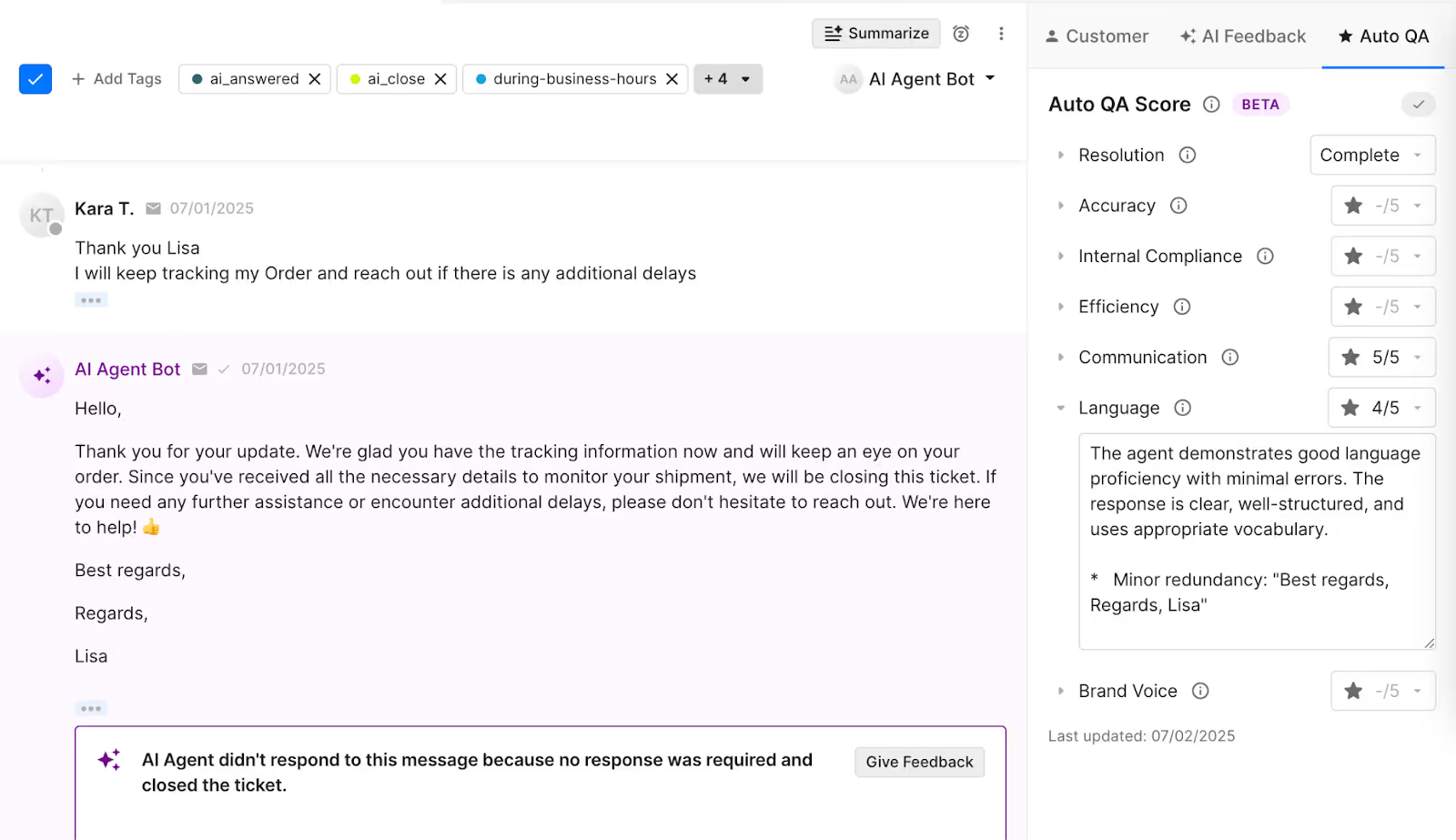
“Lisa, our AI agent, is basically a super well-trained intern who never sleeps. I give her the same updates I give my human team, and I review Lisa’s conversations every week,” said Amber. “If something feels off-brand, too robotic, or just not Wildride enough, I tweak it.”
The feedback never stops, and that’s what makes Lisa so effective.
Related: Meet Auto QA: Quality checks are here to stay
Even when AI gets it right, customers might not always feel like it did. Especially if the tone of voice is off or if your customer base just isn’t used to automation.
“Our CSAT was low at first,” said Nancy Sayo of bareMinerals. “Even if the response was accurate and beautifully written, our older customers just didn’t want to interact with AI.”
So Nancy’s team adapted. Rather than giving customers a blunt “no” to product requests, they restructured the flow:
“If someone asked for free product, we’d say, ‘We’ll send this to the team and follow up.’ Then, 3-5 days later, the AI would close the loop. It softened the blow and made customers feel heard—even if the answer didn’t change.”
That simple tweak raised CSAT and created a better customer experience without requiring a human to step in.
Inside Gorgias, teams like bareMinerals review AI performance weekly, not just to catch mistakes, but to optimize for tone, satisfaction, and brand feel. They use:
AI gives you the flexibility to test, tweak, and tailor your approach in a way traditional support channels never could.

Too many CX teams still treat AI like a glorified autoresponder. But the most forward-thinking brands are using it to guide shoppers to checkout.
“Our customers often ask: ‘Which carrier is better for warm weather?’ or ‘Will this fit both me and my taller partner?’” said Amber van den Berg, Head of CX at Wildride. “Lisa doesn’t just answer—she gives context, recommends features, and highlights small touches like the fact that a diaper fits in the side pocket.”
With Gorgias Shopping Assistant, brands can turn AI into a proactive sales assistant—answering product questions in real time, referencing what’s in the customer’s cart, and nudging them toward the best option with empathy.
Great support doesn’t stop at the inbox. At Love Wellness, CX is the connective tissue between ecommerce, product, and marketing.
“We meet quarterly with our CX and ecommerce teams to review top questions, objections, and patterns,” said Mckay Elliot, Director of Amazon at Love Wellness. “That feedback goes straight into product development and PDP optimizations on both DTC and Amazon.”
But it’s not just a quarterly ritual. Feedback sharing is embedded in the culture, and they do this with a Slack channel dedicated to customer feedback.
Dropping in insights is part of the team’s daily and weekly responsibilities. It helps everyone stay close to the content, and it sparks real collaboration on what we can improve. They then use those insights to improve ad messaging and content.

Your team has so much data they can review between channels like email, SMS, chat, and social media—both compliments and complaints. You need to be willing to listen to every customer’s needs.
Read more: Why customer service is important (according to a VP of CX)
One of the biggest mistakes brands make with AI? Trying to do too much, too soon.
Rolling out AI should feel like a phased launch, not a switch flip. The best results come from starting simple, testing often, and iterating as you go.
“We started with one simple question—‘Do you ship internationally?’—and built from there,” said Amber van den Berg of Wildride.
“And if it doesn’t work? You can always turn it off,” added Anne Dyer, Sr. Manager of CX & Loyalty Marketing at OLIPOP. “The key is to test, review, and keep iterating. AI should enhance your human experience, not replace it.”
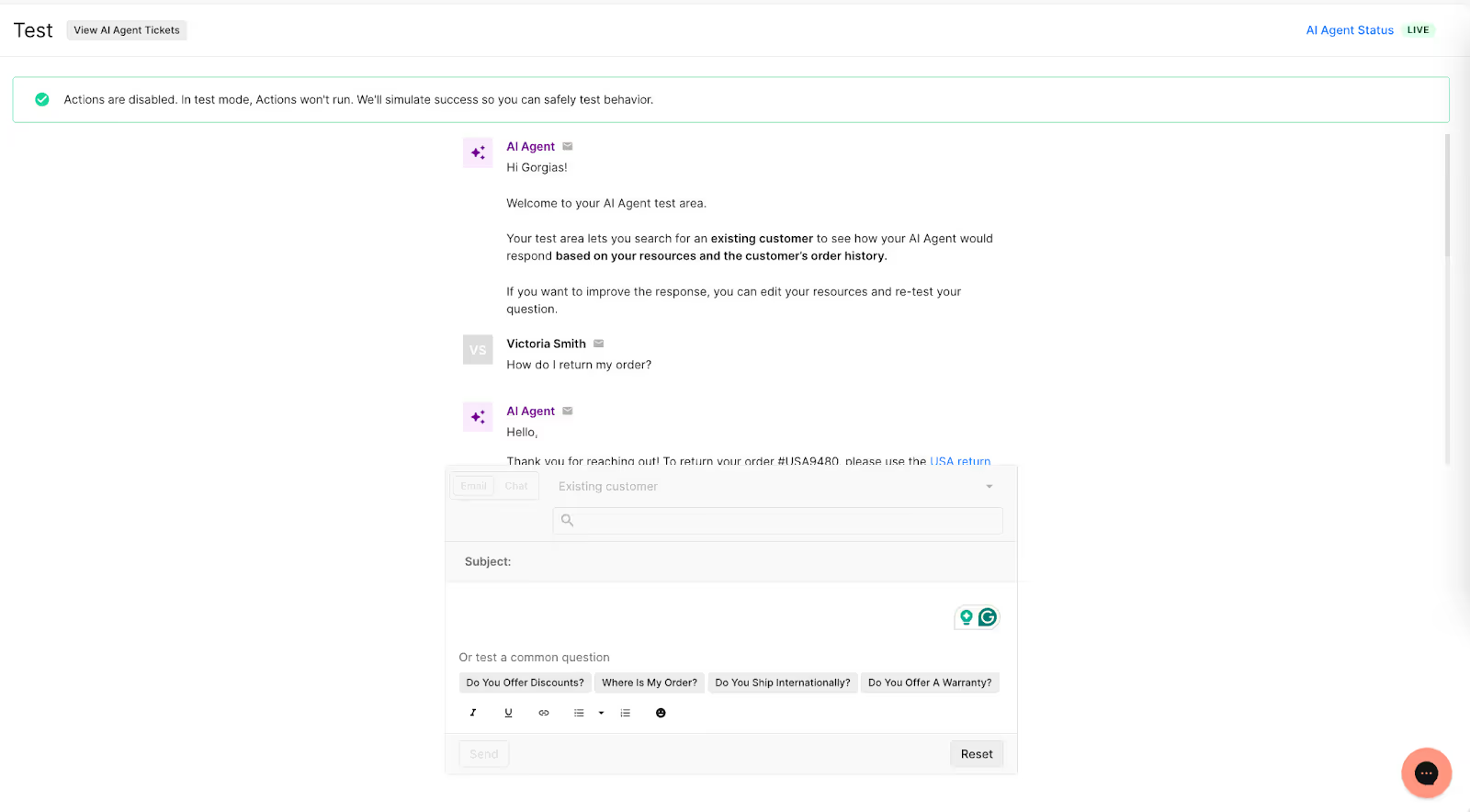
If your helpdesk supports it, start in a test environment to preview answers before going live. Then roll out automation gradually by channel, topic, or ticket type and QA every step of the way.
For most brands, the best starting point is high-volume, low-complexity tickets like:
You don’t need to solve everything on day 1. Just commit to one question, one channel, and one hour per week. That’s where real momentum starts.
Related: Store policies by industry, explained: What to include for every vertical
Most CX teams are used to tracking classic metrics like ticket volume and CSAT. But when AI enters the mix, your definition of success shifts. It’s not all about how fast you handle tickets anymore—it’s about how customers feel after conversations with AI, team efficiency, and the quality of every interaction.
Here are the metric CX teams used to track without AI—and what they track now with AI:
AI isn’t here to replace your CX team. It’s here to free them up, so they can focus on deeper, more meaningful conversations that build loyalty and drive revenue.
So if you’re on the fence, start small. Train it. Review weekly. Build the muscle.
You’ll be surprised how quickly AI becomes your favorite intern.
If you want more tips from the experts featured today, you can:

TL;DR:
If your CX team is juggling a dozen different tools just to answer one support ticket, you’re not alone. According to our 2025 Ecommerce Trends report, 42.28% of ecommerce professionals use six or more tools every day. Plus, nearly 40% spend $5,000–$50,000 annually on their tech stack.
That’s a lot of money and a lot of tabs.
It’s no wonder “tech stack fatigue” is setting in. But while many brands are ready to simplify, there’s still hesitation around consolidation. The biggest fear is that all-in-one tools are too rigid or basic to handle the complexity of a growing business.
But the truth is, consolidation doesn’t mean compromise. When done right, it means clarity, speed, and control. It also means fewer tools, smoother workflows, and faster customer support.
Let’s bust some myths and show you what smart consolidation looks like.
{{lead-magnet-1}}
One of the biggest blockers to consolidation is compatibility. Fifty-two percent of ecommerce professionals said they hesitate to consolidate because they’re worried about tools not playing nicely together.
That hesitation makes sense. In the past, “all-in-one” tools meant being locked into a single provider’s ecosystem, with limited integrations and rigid workflows. For CX teams managing fast-moving ops and dozens of tools, from email and returns to reviews and subscriptions, the idea of losing flexibility is a non-starter.
Modern support platforms have moved away from monolithic systems and toward modular API-friendly designs that give brands control instead of constraints.
If you choose the right platform, consolidation doesn’t lead to a loss of functionality. Instead, it means getting a better-connected system that works smarter.
Just ask Audien Hearing who uses Gorgias’s open API to create an integration with its warehouse software to manage returns directly in Gorgias instead of a shared Google spreadsheet.
They also combine the power of Gorgias Voice with an integration to Aircall to resolve thousands of questions a day. This integration enables agents to access customer and order data directly from Gorgias while on a call—staying in one workspace.
“It's amazing that we're able to create any custom solutions we want with Gorgias's open API. Gorgias is way more than a typical helpdesk if you utilize the features it offers,” says Zoe Kahn, VP of Retention and Customer Experience at Audien Hearing.

Read more: The Gorgias & Shopify integration: 8 features your support team will love
Another common hesitation around consolidation is the risk of putting all your eggs in one basket. If everything runs through one tool, what happens when something breaks or you need to pivot?
It’s understandable, many teams worry that one tool can’t possibly do everything well. Maybe it won’t support their preferred channels, or the automation will be too limited. Or maybe they’ve been burned by a platform that promised too much and delivered too little.
In reality, consolidating gives CX teams more freedom, not less.
Instead of stitching together half a dozen tools and hoping they sync, teams using a single, well-integrated platform gain:
Under one system, your team doesn’t have to jump between tabs anymore. They can just focus on helping customers, quickly and consistently.
Take it from Osea Malibu, a seaweed‑infused skincare brand that transformed their support quality assurance process using Gorgias Auto QA. Their manual QA system was time-consuming and couldn’t scale as ticket volume surged. But the switch made impressive improvements:
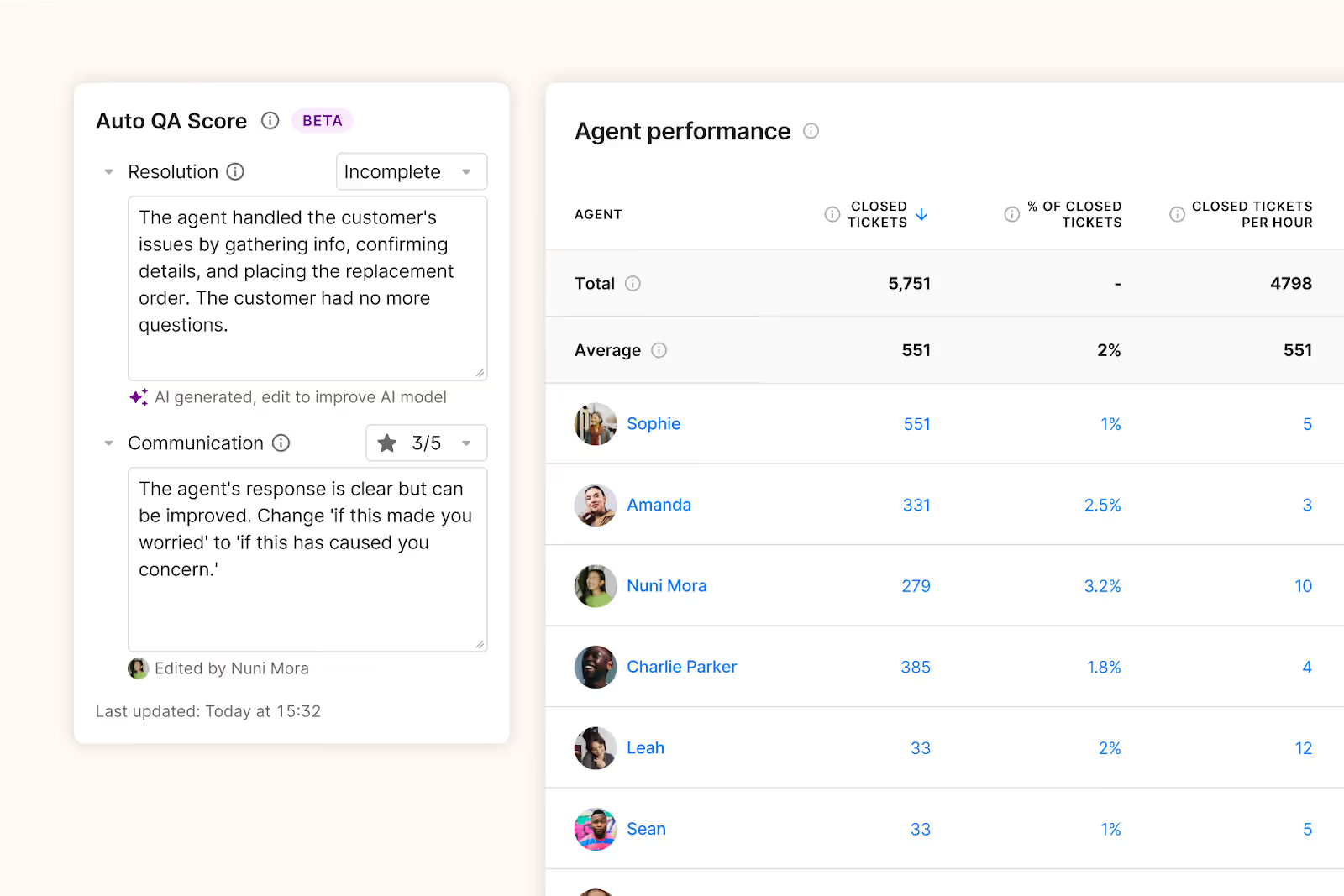
“Gorgias Auto QA saved me so much time. What used to take over an hour now only takes 15 minutes a week, and I no longer have to worry about spreadsheets.” —Sare Sahagun, Customer Care Manager at Osea Malibu
On paper, consolidation sounds smart. But 47.6% of ecommerce professionals say cost is a barrier, and 40.3% worry about the time it takes to implement a new system.
Sticking with a fragmented stack isn’t exactly cheap or quick, either. Between training new agents, managing multiple vendors, and patching together tools that don’t fully sync, the hidden costs add up fast.
It’s not actually consolidation that drains your resources—it’s complexity. And with Gorgias, simplifying pays off fast.
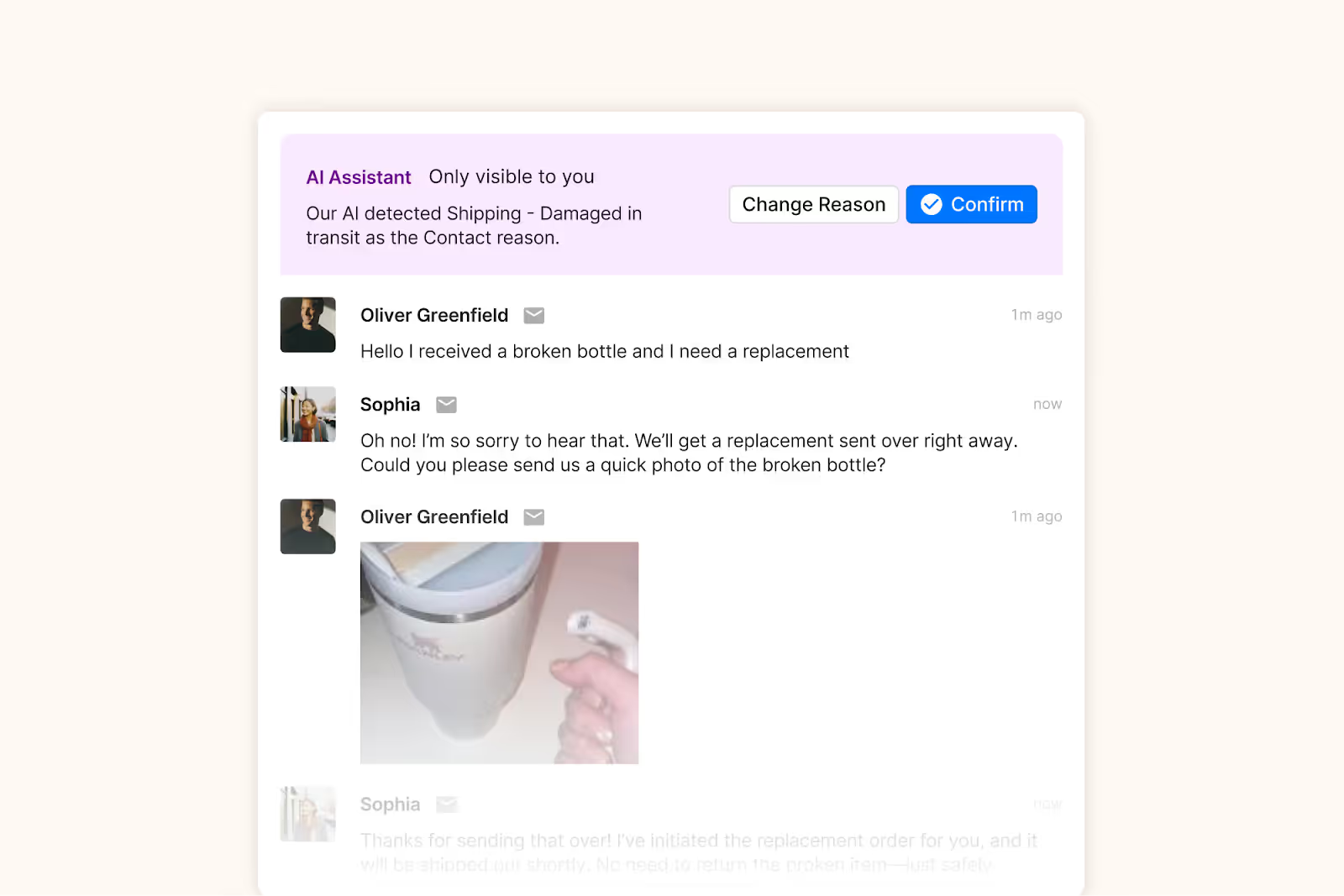
Trove Brands is a standout example. After centralizing their support with Gorgias, they implemented AI-powered order cancellation workflows and saw:
Related: The hidden cost of not adopting AI in ecommerce
The biggest benefit of fewer tools is efficiency. It’s also a direct line to real business impact.
Constant tab-switching and duplicate data entry mean way too much time spent managing platforms instead of helping customers.
When you consolidate your tech stack, your team spends less time learning new systems, chasing down info, or waiting for one tool to sync with another.
Instead, they get everything they need in one place, faster replies, smoother workflows, and happier customers.
And that all adds up to better CSAT, lower churn, and a support team that’s finally free to focus on what matters.
Gorgias is built specifically for ecommerce brands, with features that reflect the way CX teams actually work.
As Shopify’s only Premier Partner for customer support, we offer a native integration that pulls in key order data and context automatically, so agents have everything they need without switching platforms. That means conversations, AI, automation, revenue data, and reporting are in one place.
Our open app ecosystem allows you to connect to 100+ tools like Shopify, Klaviyo, Yotpo, and Recharge in just a few clicks. Need more customization? Our add-ons, like AI Agent and Voice let you level up at your own pace.
Whether you're handling hundreds of tickets a week or scaling globally, Gorgias adapts—so you don’t have to keep reinventing your support stack every six months.
Dr. Bronner’s, a globally recognized organic soap and personal care brand, made the switch from Salesforce to Gorgias to keep up with growing support demands, and it paid off fast.
Here are the results they saw with Gorgias:
“We don’t get boxed out because we only work with Gorgias tools. Gorgias deeply understands the needs of CX, Shopify, and orders and how those tools work together so that it’s really easy for us to work across the board throughout those tools and that didn’t exist in our last setup at all,” says Emily McEnany, Senior CX Manager at Dr. Bronner’s.
If you’re still stitching together half a dozen tools to handle support, it might be time to ask: Is your tech stack helping you or holding you back?
With Gorgias, you get centralization and flexibility, so your team can move faster, serve better, and scale smarter.
Book a demo or dive into the full 2025 Ecommerce Trends report to see how other brands are rethinking their stacks.
{{lead-magnet-2}}

TL;DR:
Shoppers aren’t always going to reach out and ask the questions they have, especially if they’re going to have to wait for a response from a CX team.
That means you’re losing sales to friction, indecision, or information gaps.
In 2025, the average cart abandonment rate is 70.19%. But if you can find an AI tool that doubles as a support and sales agent, it could make all the difference.
Gorgias’s Shopping Assistant, for example, has brought a 62% uplift in conversion rate for brands that implement it.
Ahead, learn where you can leverage an AI shopping assistant to increase conversions and craft better purchase experiences.
{{lead-magnet-1}}
An AI shopping assistant is a chat tool powered by AI to provide pre-sales support for shoppers. It can answer questions, make product recommendations, and help guide shoppers in the right direction if they’re stuck.
Gorgias's Shopping Assistant is a powerful, hyper-personalized AI tool built for Shopify brands. Unlike other AI tools, Shopping Assistant starts conversations with customers, not the other way around. It’s uniquely tailored for each customer by tracking browsing behavior during each session and remembering what shoppers say, keeping conversations natural and recommendations relevant.
It’ll also chat with shoppers in your own brand voice, as its responses are pulled right from the knowledge you feed it.
The stages of the customer journey where common drop-off points occur for brands that lack proactive support include:
There’s a big chance that shoppers—especially first-timers—have questions, but aren’t willing to wait for a human to get back to them. And when your CX team is off the clock? Customers will likely leave altogether.
An AI shopping assistant can help you engage customers right away, even outside your business hours.
Bra brand Pepper uses Gorgias Shopping Assistant to help shoppers find their perfect size. When it detects hesitation, Shopping Assistant points customers to the sizing guide.
This proactive approach creates an easy path for conversation and sets the precedent that any questions will be answered immediately, providing a better––and less confusing––experience.
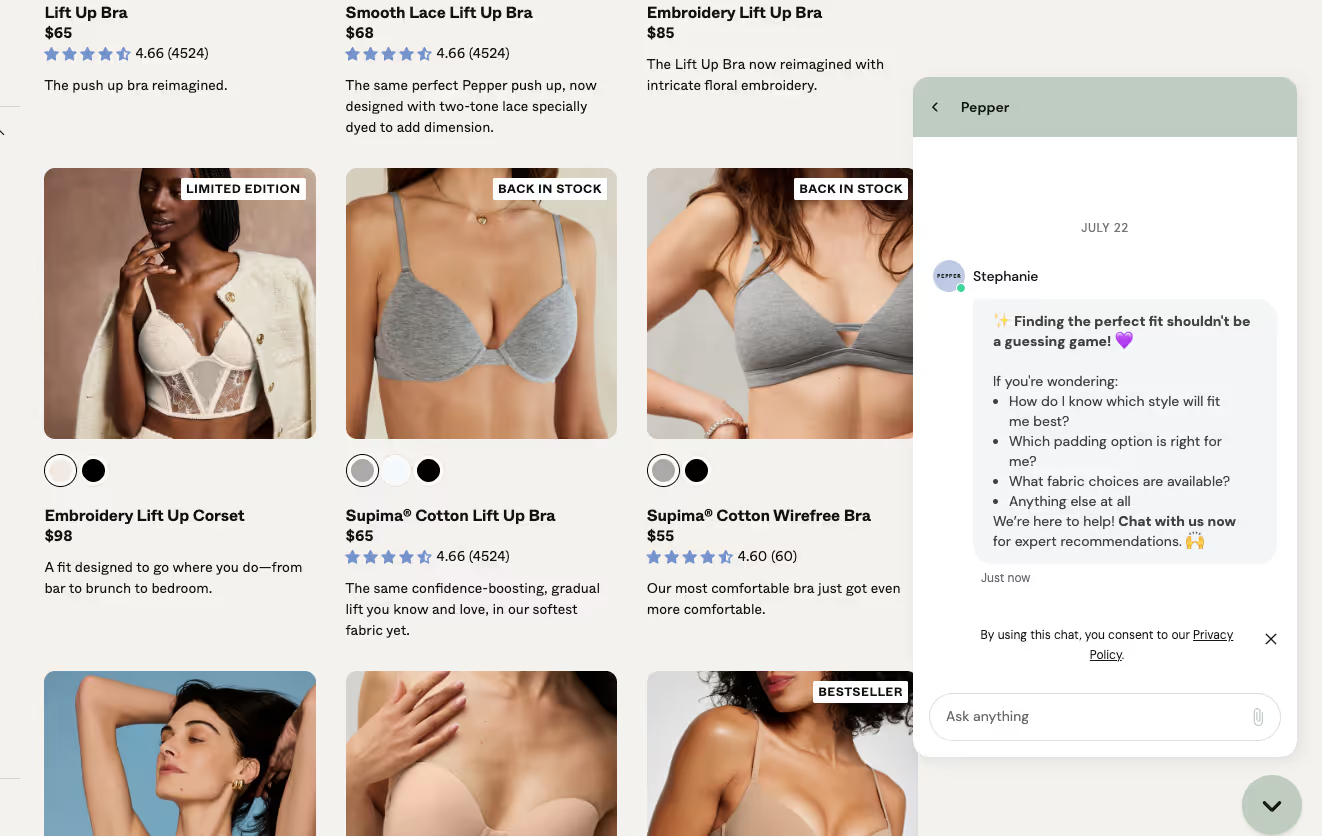
“With Shopping Assistant, we’re not just putting information in our customers’ hands; we’re putting bras in their hands,” says Gabrielle McWhirter, CX Operations Lead at Pepper.
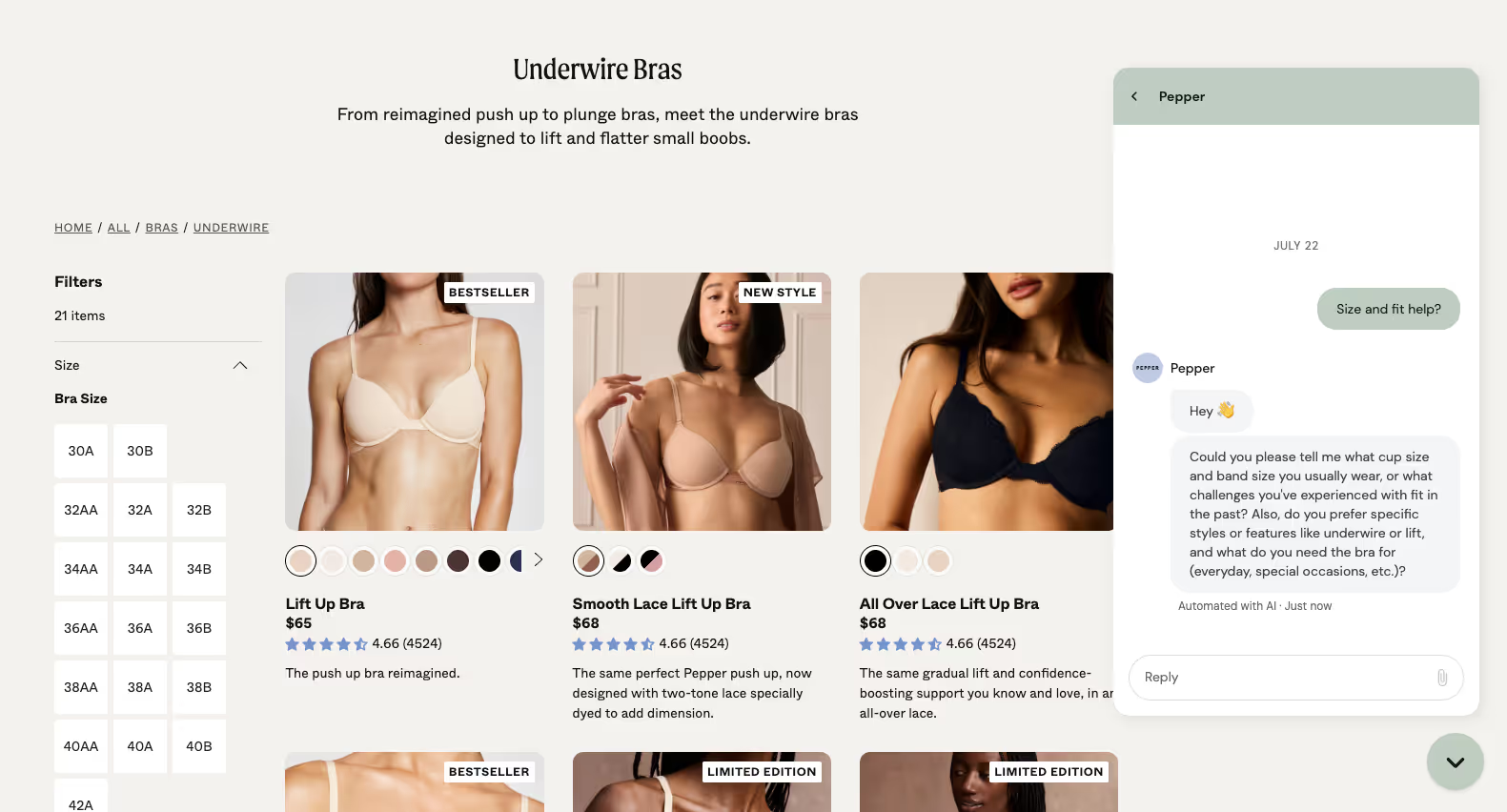
For shoppers in the Discovery stage, using a Shopping Assistant boosts clicks and time on site and reduces bounce rate. It does this by surfacing specific questions on relevant product pages. Pepper boosted their conversion rate by 19% with Gorgias Shopping Assistant.
Read more: How Pepper’s AI Agent automates 54% of support and converts 19% of conversations
In a retail environment, a salesperson can give shoppers recommendations by asking a few questions, especially if they’re unsure of what to buy.
AI shopping assistants have the ability to mirror those in-person shopping experiences by interacting with customers in real-time to help them find their perfect match.
Shoppers can give as much (e.g., “Help! What dress is suitable for a wedding reception?”) or as little information as they’d like, and the AI shopping assistant will do the rest.
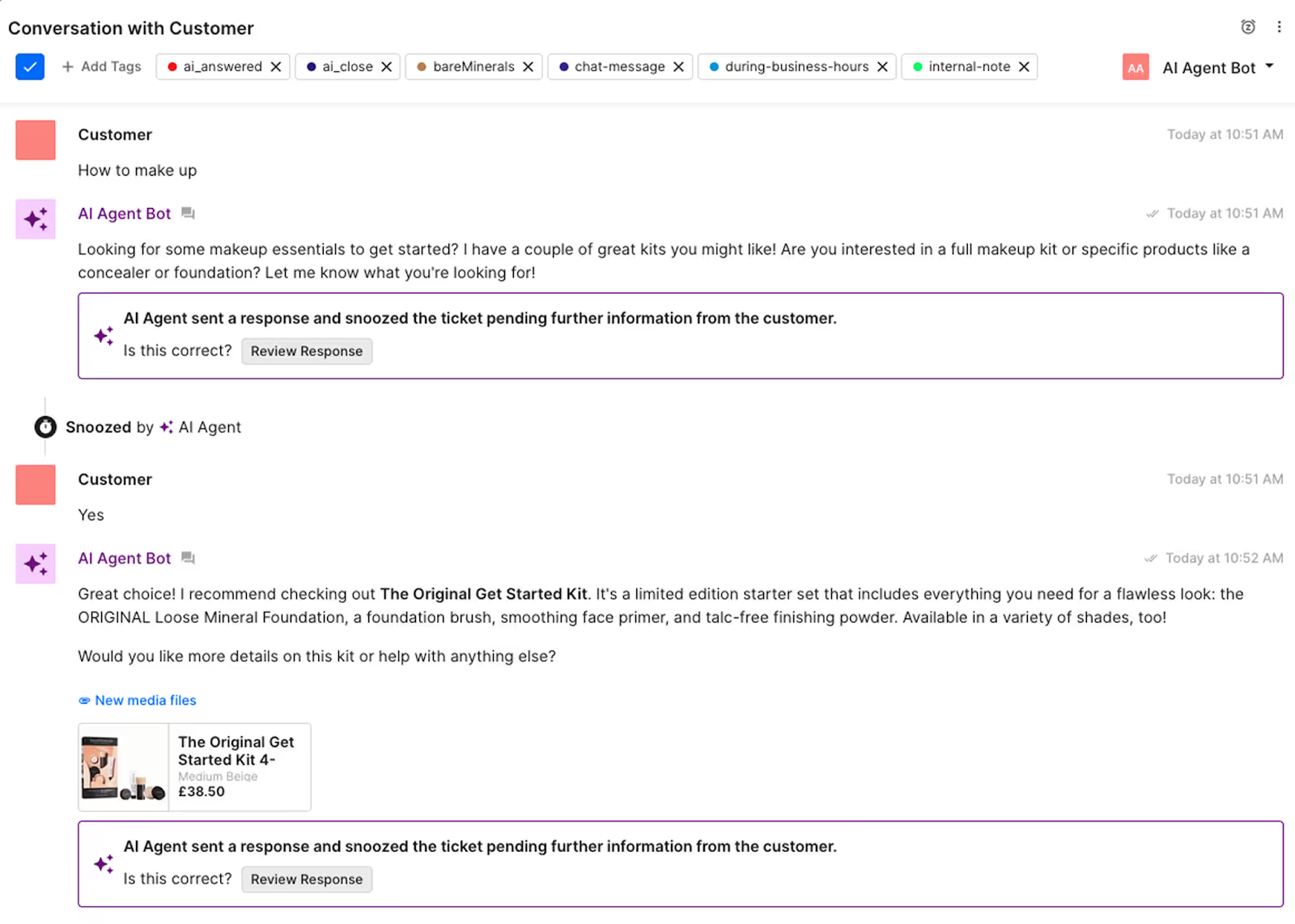
It’s possible even for questions that are slightly vague, like a customer who types in “how to make up” without any other context:
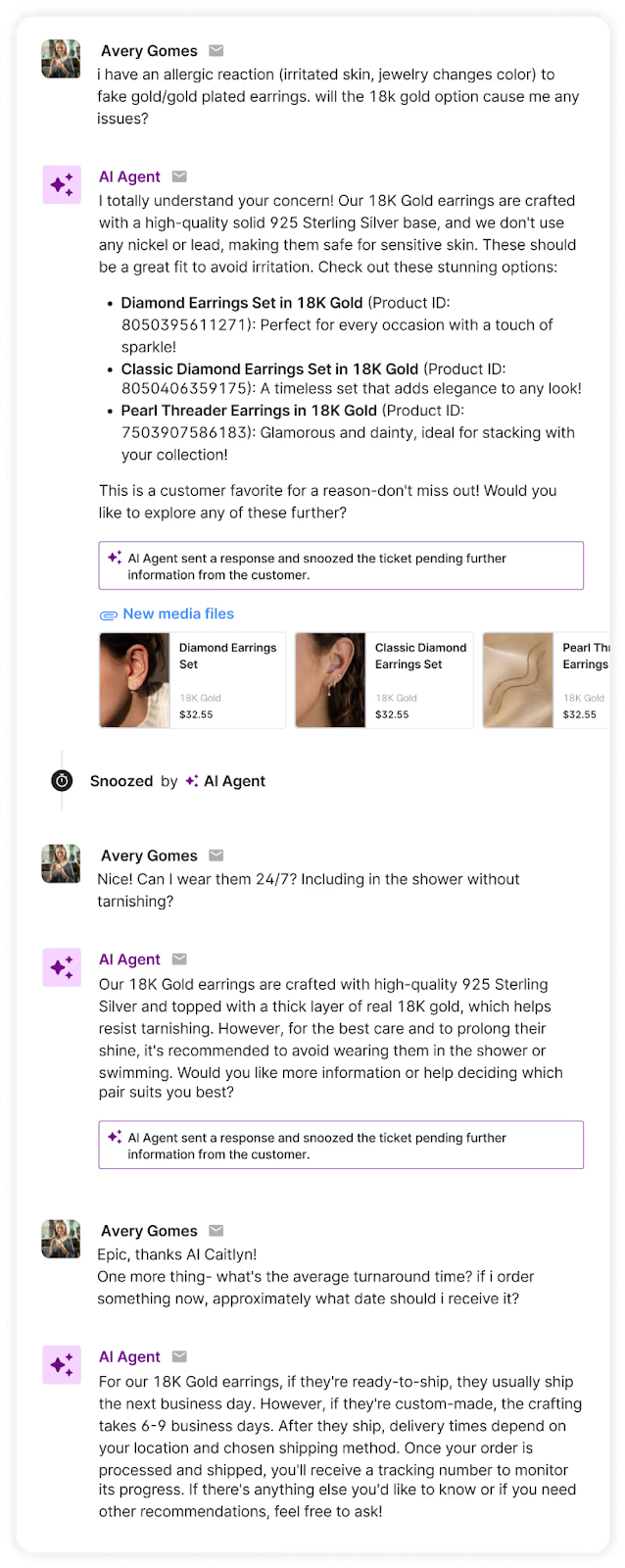
For example, jewelry shop Caitlyn Minimalist uses Shopping Assistant to recommend products, engaging interested customers and bringing them closer to a purchase.
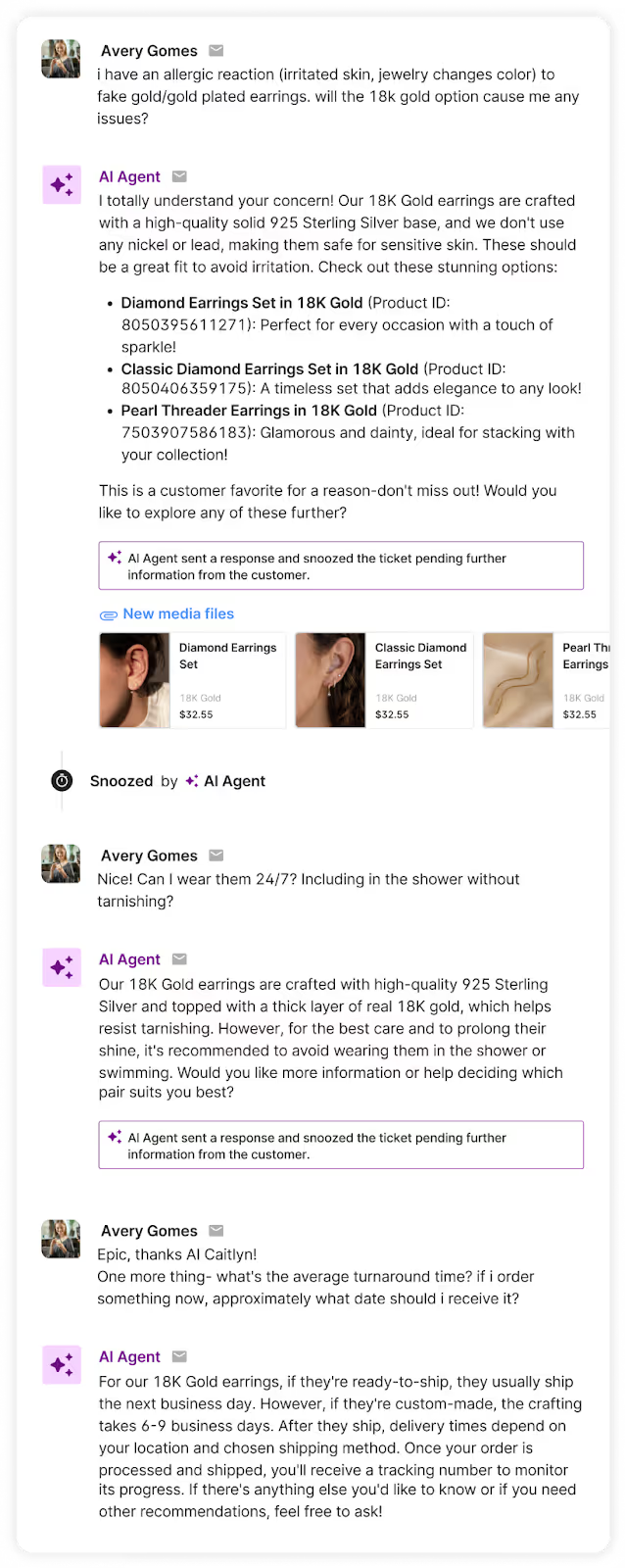
“As a result of Shopping Assistant, we've seen a measurable lift in AOV through more meaningful customer interactions,” says Anthony Ponce, Head of Customer Experience at Caitlyn Minimalist.
“Our clients are provided the right information at the right time, creating a seamless experience that builds trust and drives confident purchases."
According to data from Gorgias, email is the highest volume support channel, with ~25% of that tied to pre-sales. AI shopping assistants tackle these pre-sales asks and also upsell by recommending complementary products. This can lead to a boost in average order value (AOV) and conversion rate.
Read more: How Caitlyn Minimalist uses Shopping Assistant to turn single purchases into jewelry collections
The main reasons customers abandoned a cart in 2025 include:
An AI shopping assistant can mitigate or resolve these issues. They resolve crucial questions—like delivery time or return policies—that need in-the-moment answers. By alleviating pre-sale concerns, they give customers the confidence to make a purchase.
For example, bidet brand TUSHY leverages Shopping Assistant to answer questions about toilet compatibility that might flush a pending sale.
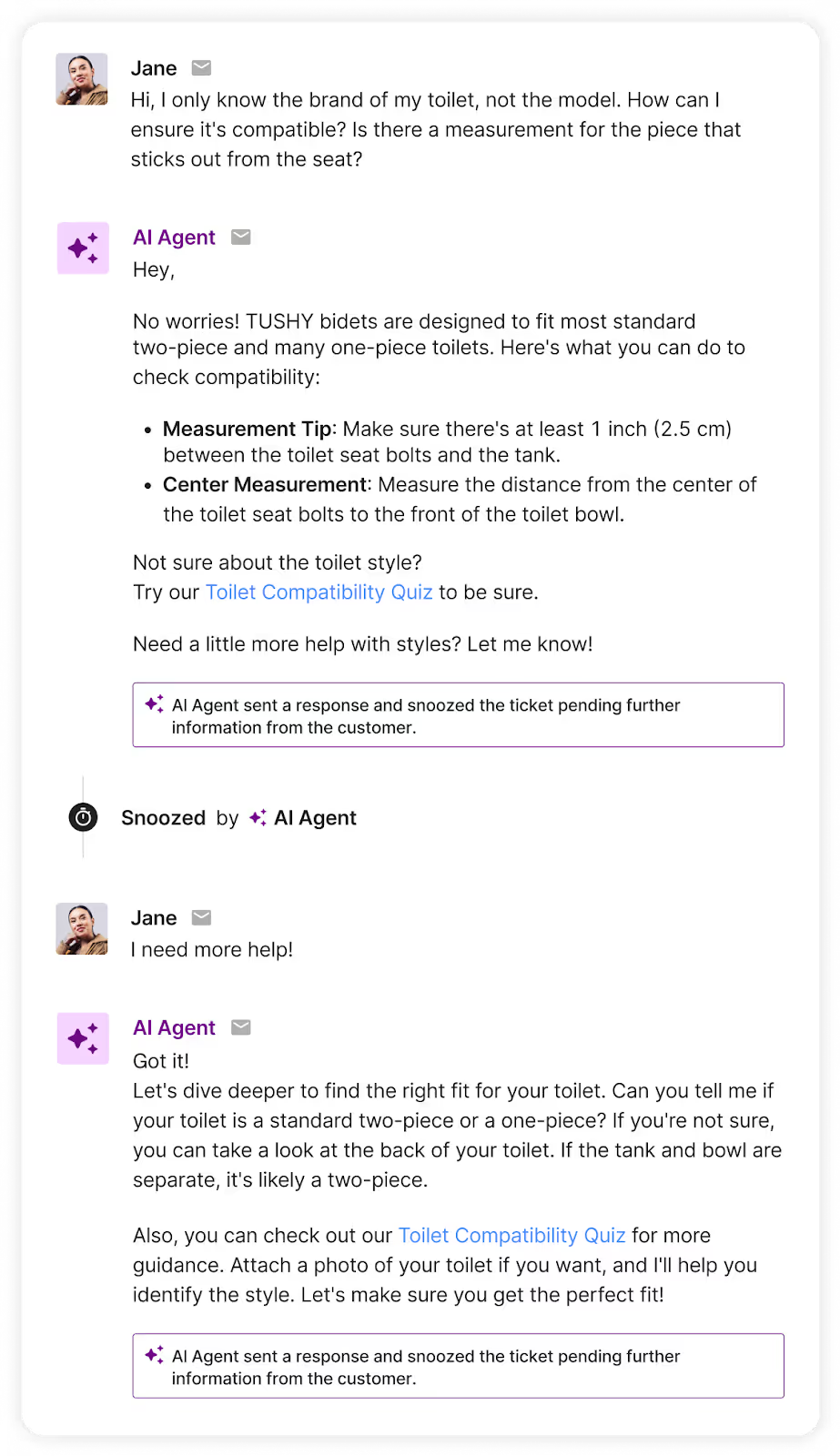
Aside from quelling customer concerns, Shopping Assistant can also send discount codes to close deals. Unlike general discount codes you find across the internet, these discounts are uniquely generated for each customer, keeping them engaged and on your site.
AI shopping assistants can reduce cart abandonment rate and increase conversion rate. Gorgias Shopping Assistant adjusts to your sales strategy by sending customers discount codes that can be the final nudge to checkout.
Most AI tools are built just for support. They deflect tickets and answer FAQs, but they’re not built to sell.
Shopping Assistant proves that support teams can also drive revenue by upselling, suggesting exchanges, and giving shoppers the confidence to try a brand for the first time (or to give it another shot).
Gorgias’s AI Shopping Assistant uses context-based decision making and looks for specific behavioral signals:
Ultimately, the cost of not adopting AI can be higher than the investment of implementing it. 77.2% of ecommerce professionals use AI to improve their work. Why not extend those benefits to your customers?
AI Shopping Assistants help you create better customer experiences overall. These tools help reduce customer effort, increase average order value, save would-be-lost sales, and create more customer touchpoints.
Hire the always-on Shopping Assistant that never misses a sale.
{{lead-magnet-2}}

TL;DR:
What’s the common factor between shoppers debating between products and considering a splurge? Hesitation.
Today’s shoppers are overwhelmed with choices. They don’t want to be left to figure things out on their own. They want guidance.
But most brands are missing that crucial piece of the puzzle. They lack a strategy that accompanies shoppers on their journey. A tool that encourages shoppers to proceed to checkout. And, ultimately, a customer experience devoid of a sales approach.
That’s why we built Shopping Assistant, an AI Agent that proactively engages browsers, offers context-aware product recommendations, and turns hesitation into conversions in real time.
And it’s working. Brands using Shopping Assistant are seeing a 62% uplift in conversion, 10% higher average order value, and 5x ROI.
Here’s a closer look at what’s behind the magic.
{{lead-magnet-1}}
Most traditional chatbots passively wait for questions and deliver answers that aren’t personalized to each shopper's preferences.
Unlike these bots, Shopping Assistant reads real-time signals like pages viewed, cart contents, and conversation tone. This results in a solution that not only offers support but also offers personalized, proactive selling. This enables Shopping Assistant to continuously refine and adjust its playbook, evolving with each shopper as their journey matures.
Here’s how Shopping Assistant engages with customers across the shopping journey:
Take this example below. When a customer vaguely asks “how to make up,” Shopping Assistant interprets it as a sign of interest in makeup products and recommends a starter kit.
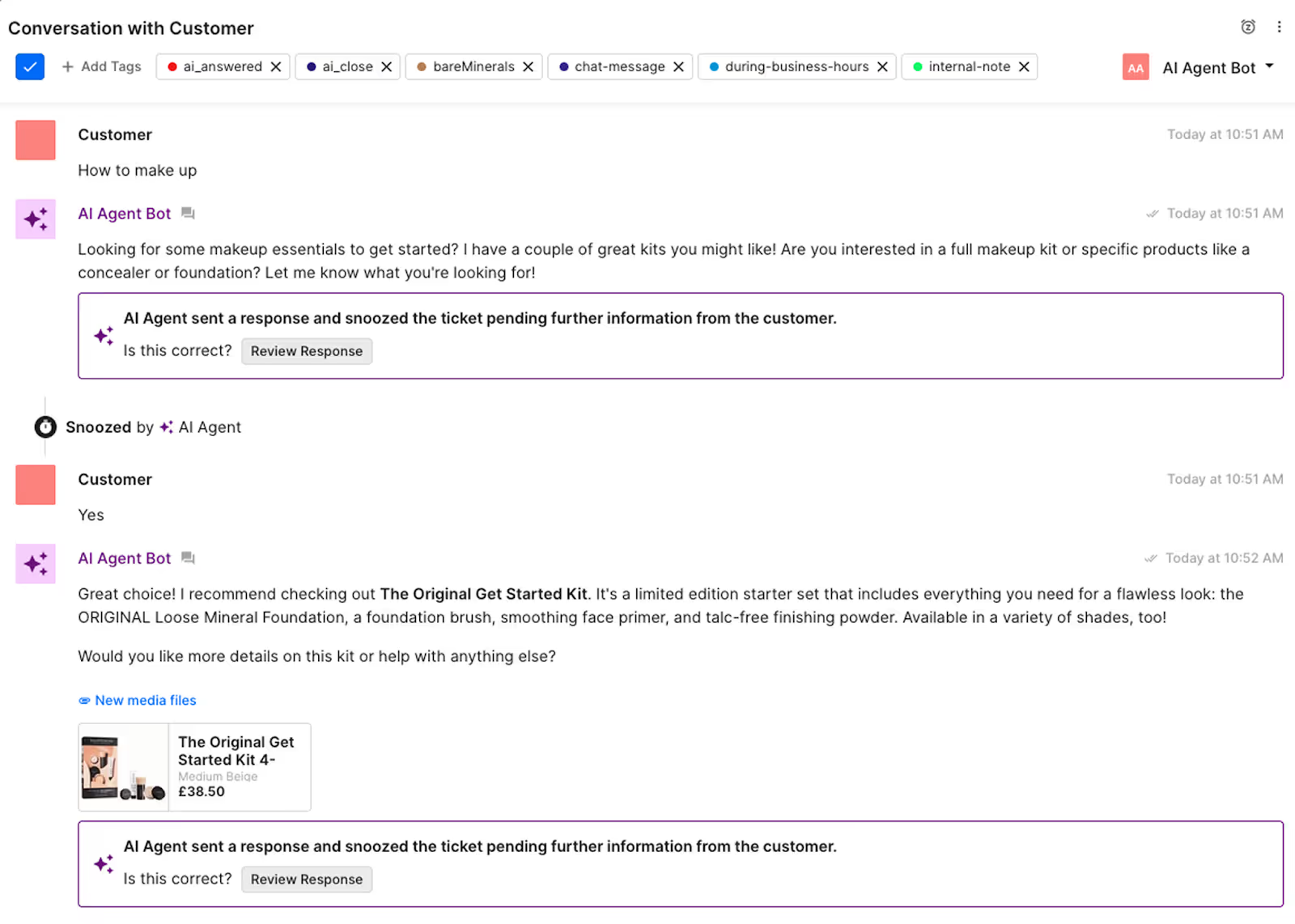
Where traditional bots reset with every message, Shopping Assistant does the opposite. It has built-in context-aware intelligence that remembers what shoppers have clicked, viewed, and added to their cart during a session.
This enables natural, relevant, and persuasive conversations that truly resonate with each shopper. It goes beyond reading messages and observes behavior to adapt its responses.
That means it knows if someone has:
With plenty of context to work with, Shopping Assistant is not only smarter but also more profitable than the average chatbot. It drives more conversions with product recommendations and lifts average order value with timely upsells based on what’s been added to the cart or viewed.
Here’s what it looks like in action: When a customer engages through a product page, Shopping Assistant recommends a matching outfit, suggesting it’s aware of alternate product variants and the customer's likely interest in that style.
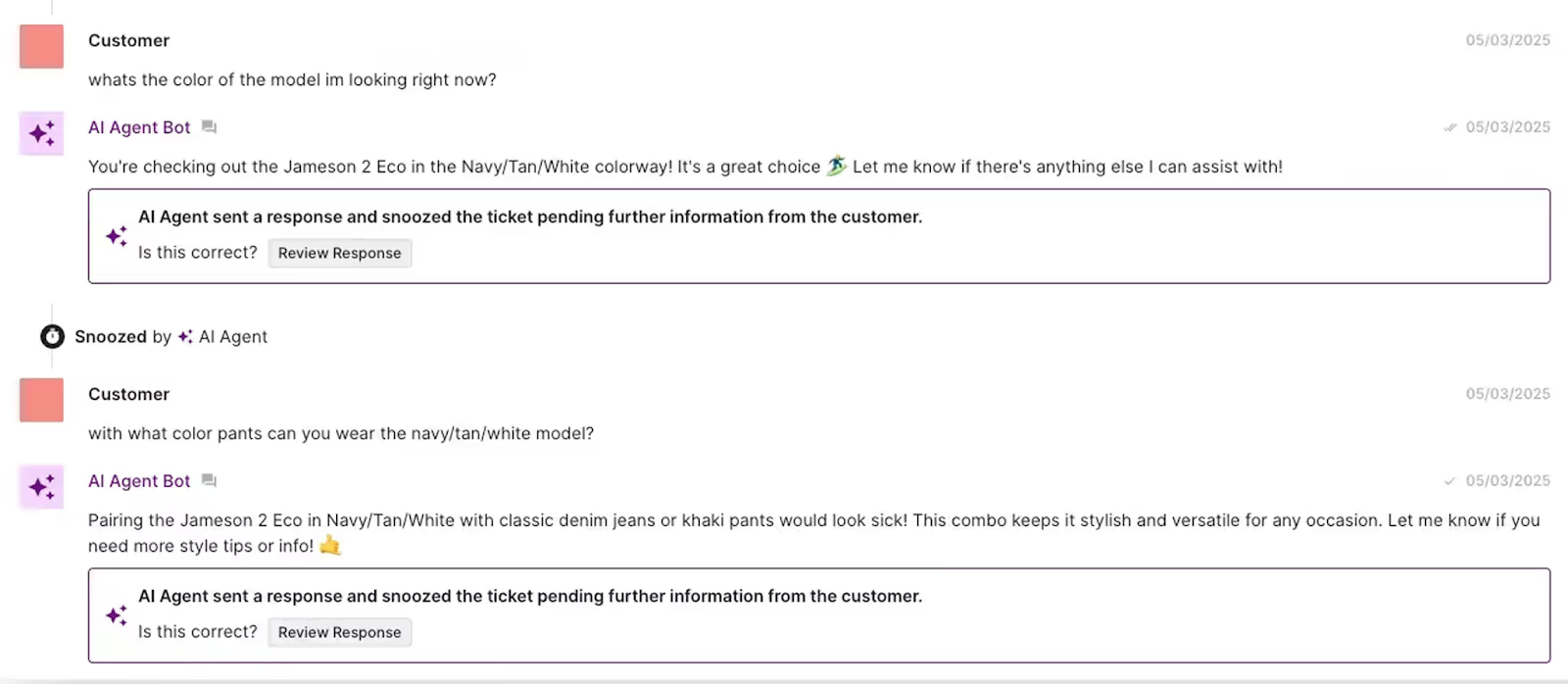
Promotions are powerful, but they’re not one-size-fits-all.
With Shopping Assistant, merchants can define their discount strategy to align with their brand. These strategies can range from offering no deals to using aggressive promotions.
Once the strategy is set, Shopping Assistant waits for hesitation and customer intent to trigger a discount, firing it at the most conversion-worthy moment.
Shopping Assistant initiates conversations. It’s built to engage shoppers, spotting when they linger or show signs of confusion, stepping in with timely, personalized help.
Every second counts in ecommerce. If a shopper pauses on a product page or is left scrolling through an endless search results page, Shopping Assistant detects it in real-time and reaches out with a relevant prompt like:
Here’s how Shopping Assistant reduces drop-off, builds confidence, and drives faster decision-making in three different ways.
Shopping Assistant automatically triggers commonly asked questions depending on the product currently being viewed. In one click, shoppers can get the answer to the question they’re curious about. This combats hesitation caused by a lack of information, resulting in more confident conversions.
When shoppers land on the homepage, it’s easy to become overwhelmed and not know where to navigate. The Ask Anything Input provides an easy way to start a conversation with Shopping Assistant and get the guidance they need.
Shopping Assistant can refine its response to the customer based on the page context. For example, when the customer is on a product page, Shopping Assistant knows exactly what product is being asked about.
Shopping Assistant can step in to offer pinpointed help based on a shopper’s search query. Instead of scrolling through a results page, Shopping Assistant triggers a message based on what the shopper entered, offering an easier and faster way to find what they need.
Shopping Assistant’s suggestions are rooted in real context: what the shopper has viewed, added to cart, or asked about. Whether they’re exploring a specific product line or revisiting a category they’ve shown interest in, Shopping Assistant delivers relevant upsells and complementary items that make sense for the customer.
This personalized approach to upselling increases cart size without feeling forced—it’s smart, seamless, and sales-driven.
Shopping Assistant can even turn vague product questions into upsell opportunities. By asking questions, it learns more about an individual to come up with recommendations that best fit their preferences.
Shopping Assistant is transforming the way shoppers engage and helping ecommerce brands sell more effectively. Through smarter conversations and real-time personalization, it turns every interaction into an opportunity to convert, build trust, and drive revenue.
{{lead-magnet-2}}

TL;DR:
The most coachable team member on your support team might not be human.
Brands that want to keep up with rising customer expectations are turning to AI to help meet demand. But as SuitShop’s Director of Customer Experience, Katie Eriks, will tell you, great results don’t come from flipping a switch.
They come from coaching.
Since implementing Gorgias AI Agent, SuitShop has reached a 30% automation rate, all while maintaining a lean CX team and giving every customer the tailored experience they expect (literally and figuratively).
“I consider myself its boss,” said Katie, who runs the entire coaching process solo. With under an hour of weekly maintenance now, SuitShop’s AI Agent runs efficiently, accurately, and on-brand.
Katie spoke at Gorgias Connect 2025 to share exactly how she got there. You can watch her full session below:
When brands think about automation, they often imagine flipping a switch and watching repetitive tasks vanish. But in practice, it’s not that simple, at least not if you care about customer experience.
Gorgias encourages brands to treat their AI Agent like a junior teammate — someone you onboard, train, observe, and coach over time.
Brands that do this well are already seeing massive gains:
For SuitShop, automation was about creating space for their small team to focus on specialized service. Space to scale without scaling headcount. And space to do it all without losing their voice.
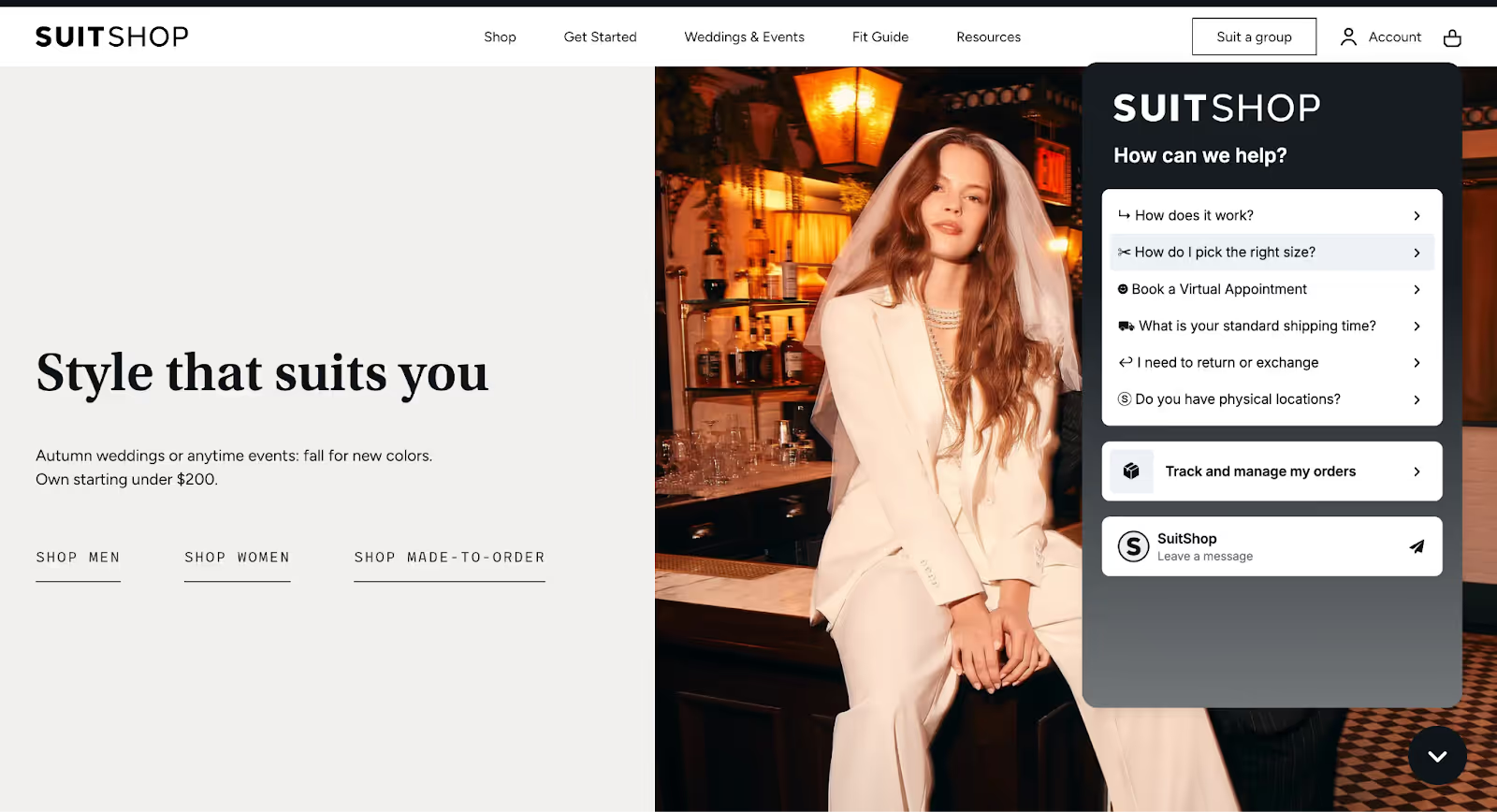
Katie and her team had been longtime Gorgias users, but when they turned on AI Agent in August 2023, the results were unremarkable. The responses weren’t inaccurate, but they weren’t helpful enough either.
What Katie learned was to “Be hands-on early. Use downtime to train. And never stop refining.”
So she got to work, not by replacing the tool, but by going deeper into it. Here are her coaching tips:
Katie made herself the sole point of contact for training and QA. That might sound like a lot, but over time, it became a light lift.
“At this point, it’s definitely less than one hour per week,” she said. “In the beginning, it was more time-consuming because I needed to create help center articles and Guidance regularly. Now I’ve got it down to a pretty quick thumbs-up, thumbs-down kind of process.”
Katie uses Monday mornings to review AI Agent tickets from over the weekend, when fewer human agents are available and AI takes the lead.
Read more: Why your strategy needs customer service quality assurance
Unlike many retail brands, SuitShop’s busiest time isn’t the holiday rush — it’s wedding season in the summer and fall. So when things quieted down in December, Katie used that time strategically.
She temporarily turned off the AI Agent to regroup.
“I decided to turn it off and really beef up our Help Center,” she explained. “I went back to the tickets I had to answer myself, checked what people were searching in the Help Center, and filled in the gaps.”
She built out content with a mix of blog knowledge, internal macros, and ChatGPT. Once she felt confident the content base was solid, she turned AI back on.
Read more: How to optimize your Help Center for AI Agent
Once SuitShop’s foundational content was in place, Katie didn’t just sit back and hope for the best. Instead, she built a repeatable feedback loop grounded in data — one that helped her spot opportunities for improvement before they became issues.
Rather than combing through tickets at random, Katie created custom views inside Gorgias to zero in on the most impactful coaching moments:
To keep all of this actionable, Katie logs insights in a shared spreadsheet that functions as a live to-do list. Every row includes:
These insights are also available in Gorgias’s dashboard, where you can identify the top issues customers had.
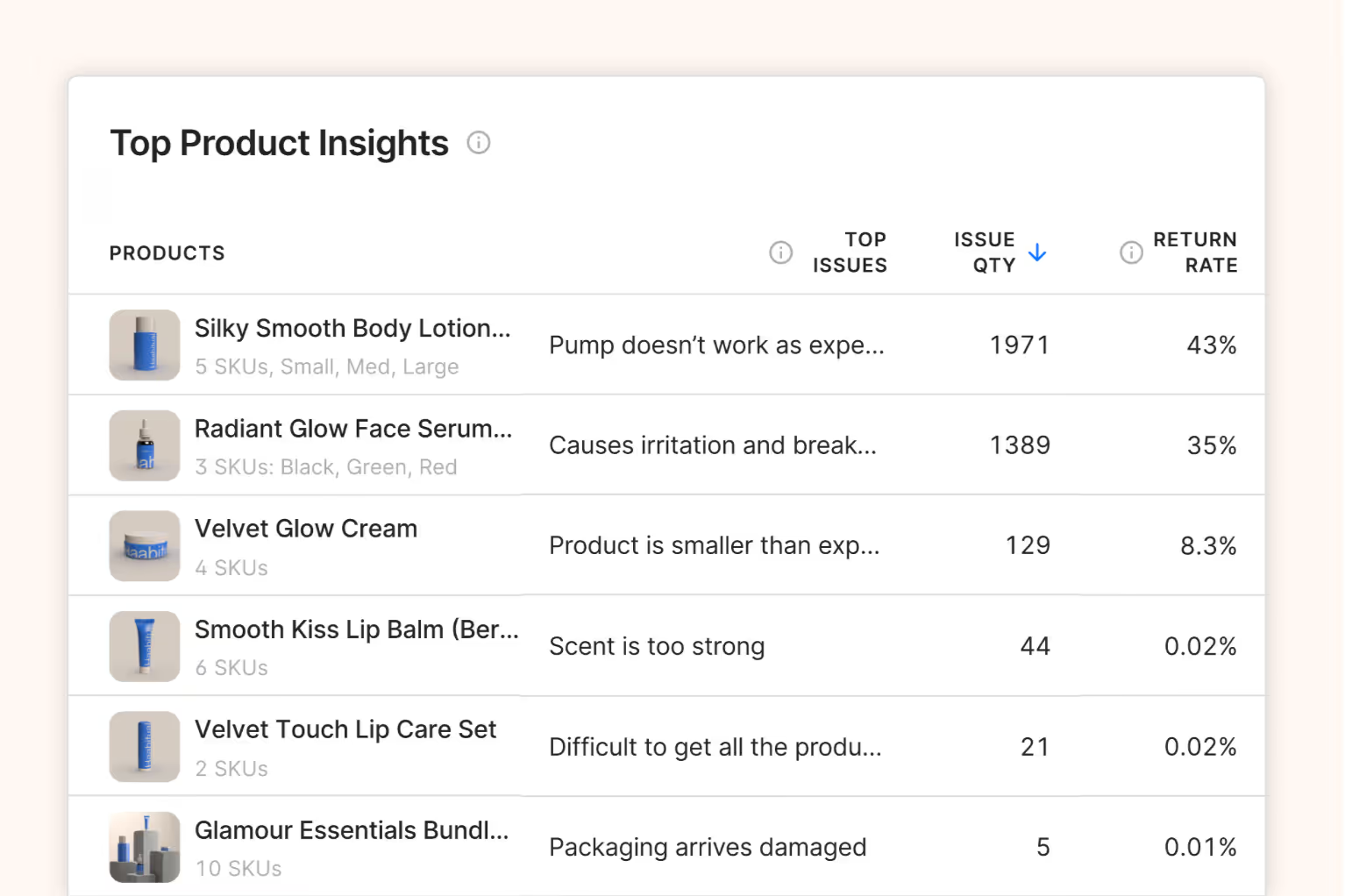
“Sometimes I do it all in the moment. Other times I’ll log it and come back later when I can take the time to do it right.”
By combining frontline feedback with structured ticket views, Katie turned scattered QA into a consistent coaching system — one that ensures SuitShop’s AI Agent keeps getting smarter every week.
One of Katie’s most effective strategies comes from her own team.
Like many CX leads, she noticed that some agents consistently resolved tickets in a single touch. That pattern, Katie realized, wasn’t just a win for customers, it was a roadmap for an AI-driven support strategy.
Her teammate Tacy quickly became her go-to signal for what the AI Agent needed to learn next.
“I pull her tickets often to see what she’s responded with. It helps AI learn from her directly.”
By reviewing Tacy’s ticket history, Katie identified standard replies that didn’t yet exist as macros or Guidance. If Tacy was writing the same sentence repeatedly or copy-pasting a reply manually, that meant it could (and should) be taught to the AI Agent.
She also tracked Tacy’s macro usage rate. If Tacy frequently used a macro for a certain issue, but other agents weren’t, it flagged an opportunity to standardize responses across the team and the AI.
The key insight? If it only takes one touch for a human to answer, the AI can be trained to do it too.
These small efficiency wins added up quickly, especially during peak season, when the ability to automate just a few extra conversations per day created meaningful breathing room for the rest of the team.
Related: How to automate half of your CX tasks
Automation without brand voice feels robotic. Katie made sure SuitShop’s AI Agent sounded like a natural extension of the team, and that started with a name: Max.
“We get replies like, ‘Thanks Max!’ from customers who think it’s a real person.”
Using AI Agent’s tone of voice settings, Katie went deep on personalization. She customized everything from sentence structure and greeting format to whether or not emojis and exclamation marks should be used (they shouldn’t, in SuitShop’s case).
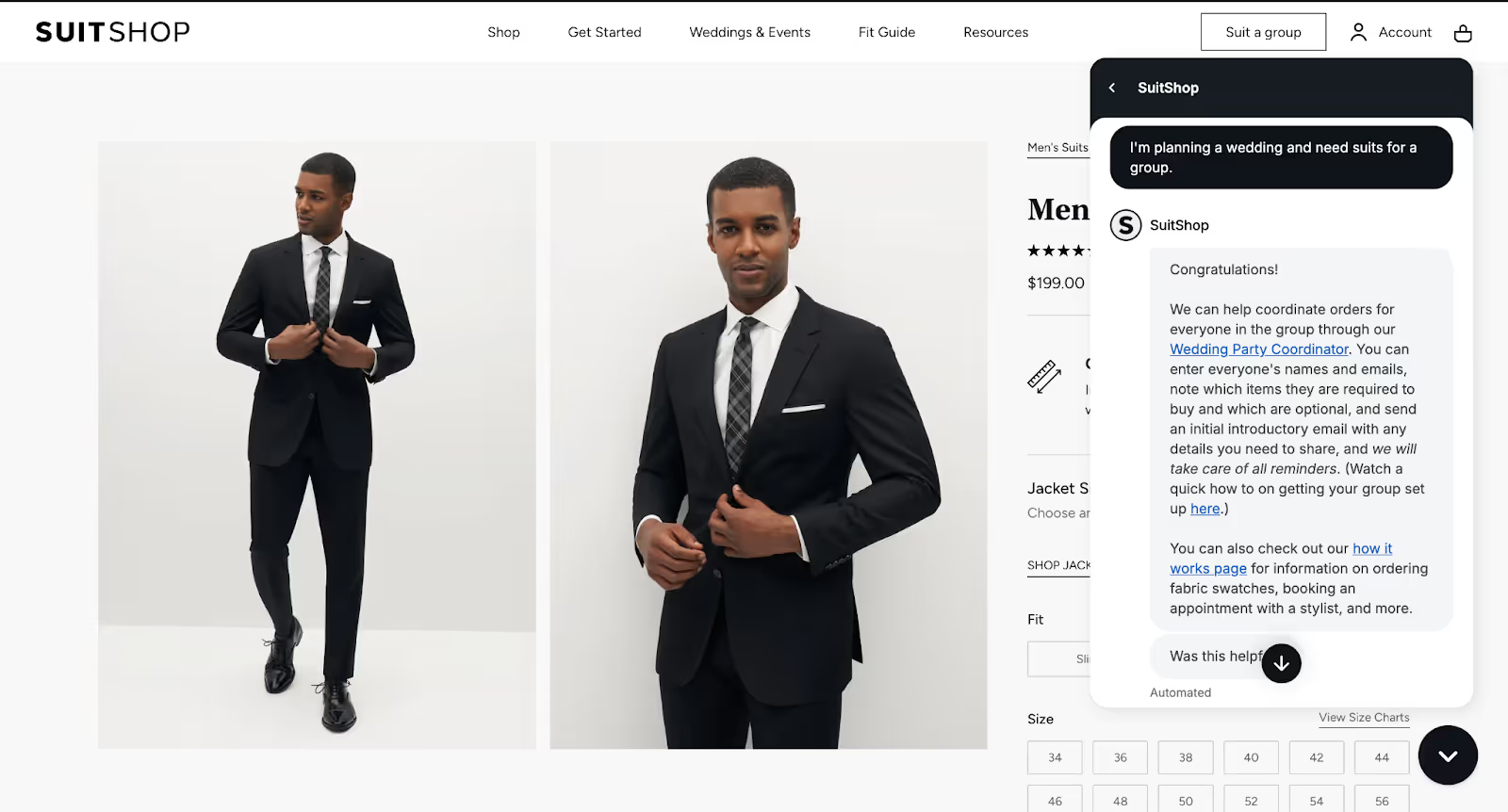
Her AI Agent instructions include clear direction on:
Katie also made sure she instructed AI Agent to acknowledge customer emotions — especially frustration — and to offer reassurance when things went wrong.
And because AI responses are written at lightning speed, she regularly reviewed messages to ensure they didn’t come off as cold or abrupt, especially in sensitive situations like delayed wedding orders or size issues close to the event date.
In the workshop, Katie walked through two real support tickets where AI missed the mark and how she used those moments to improve.
In one case, a customer asked a common question: “The navy suit I’m looking at says ‘unfinished pant hem.’ Will the pants need to be hemmed?”
Despite having help articles and macros explaining this exact issue, AI Agent responded: “I don’t have the information to answer your question.”
That was a red flag.
Katie immediately stepped in to coach the agent by:
“I like to write a short internal note, so if I see that ticket again, I know exactly how I coached it.”
In another case, AI Agent was incorrectly handing off a sizing question about jacket sleeve length. Katie realized that a previous broad handover topic ("sizing and fit questions") was causing confusion by flagging issues that the AI should have been able to handle.
So she deleted the handover topic and replaced it with a clear guidance article — complete with example questions, macros, and links to sizing resources.
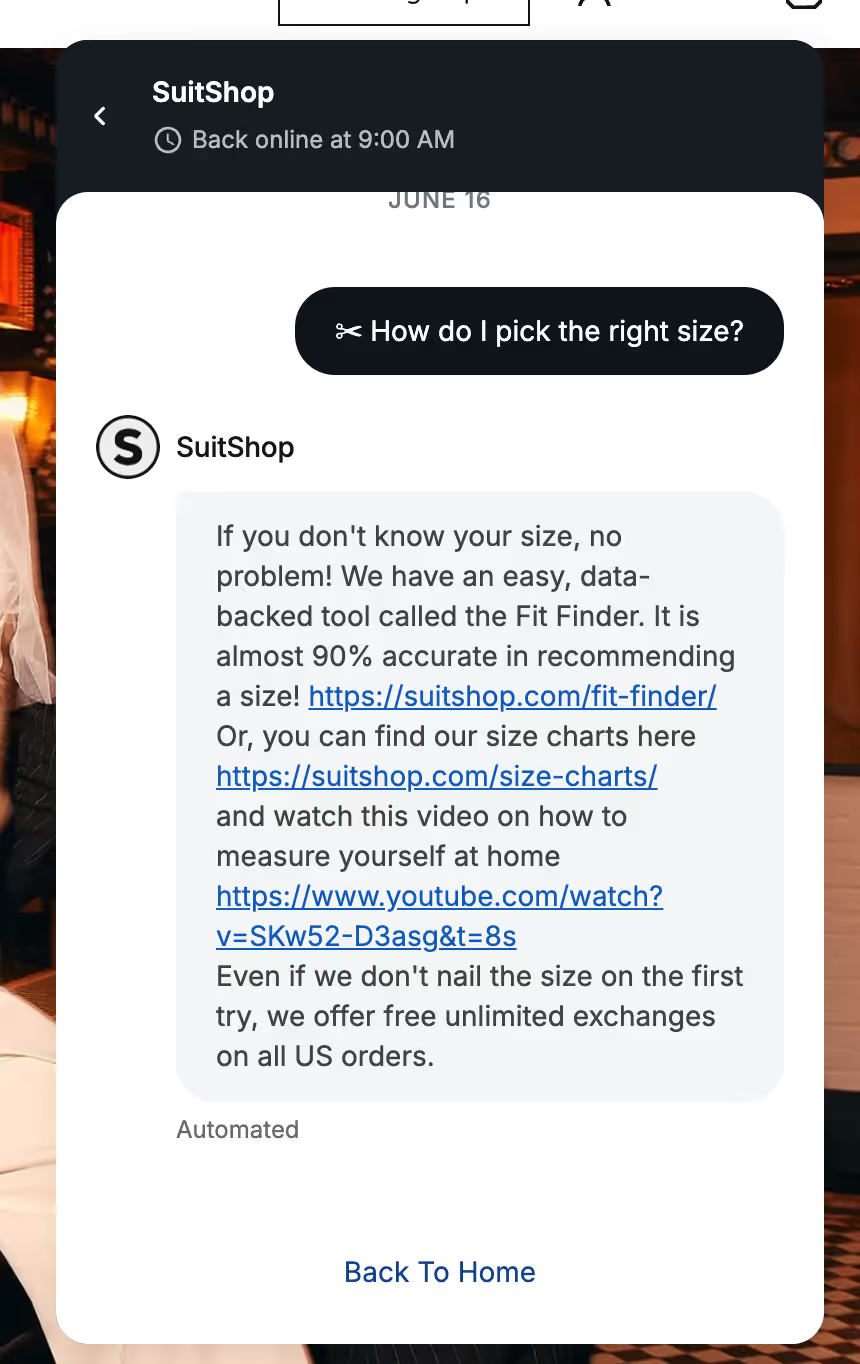
“Once I added specific questions in quotes, it made a huge difference.”
SuitShop didn’t automate 100% of CX — but that’s not the point. At 30% automation (and growing), Katie gives her team more time to specialize, connect, and handle urgent or emotional conversations with care.
Here’s what Gorgias offers to help as well:
Whether you’re just getting started or trying to move beyond basic automation, Katie’s approach proves that coached AI outperforms out-of-the-box tools every time.
Want to coach your AI Agent like SuitShop? Book a demo to see how Gorgias can help you scale smarter.
{{lead-magnet-1}}

TL;DR:
Vanessa Lopez, VP of Customer Experience at Recharge, recently led a workshop that outlined how brands can transform one-off interactions into rich subscription journeys that increase opt-ins, reduce churn rate, and boost lifetime value (LTV).
Here’s what we learned.
There are many different ways that you can offer subscriptions. Here’s a rundown of the most common.
The most common subscription type is “Subscribe and save.” Instead of making a one-time purchase, customers subscribe to a product and receive it on a different cadence, whether that's weekly, bi-weekly, monthly, or quarterly.
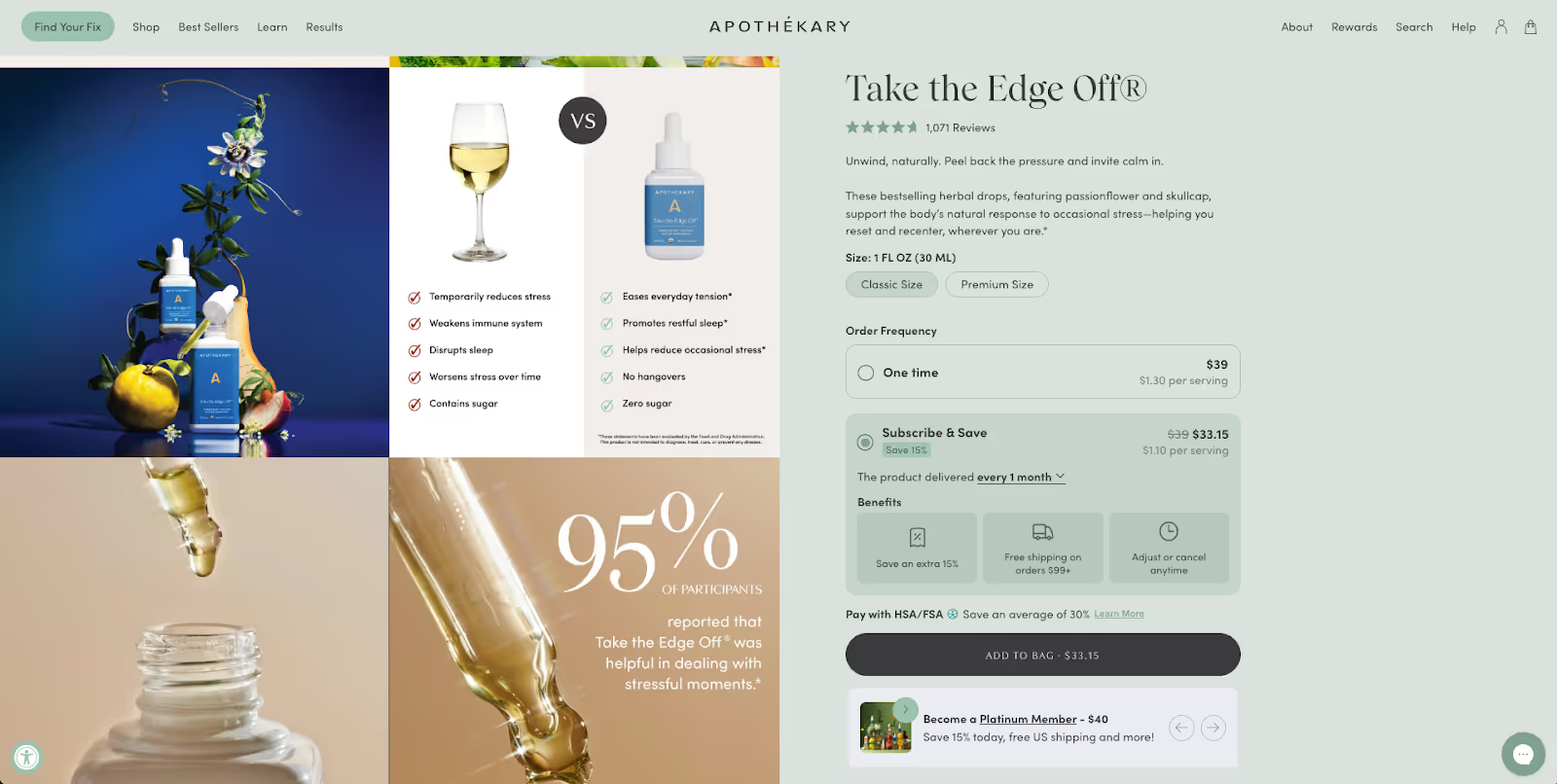
For example, Apothékary offers a Subscribe and Save option for its herbal remedies where shoppers get a discounted rate if they subscribe every one, two, or three months.
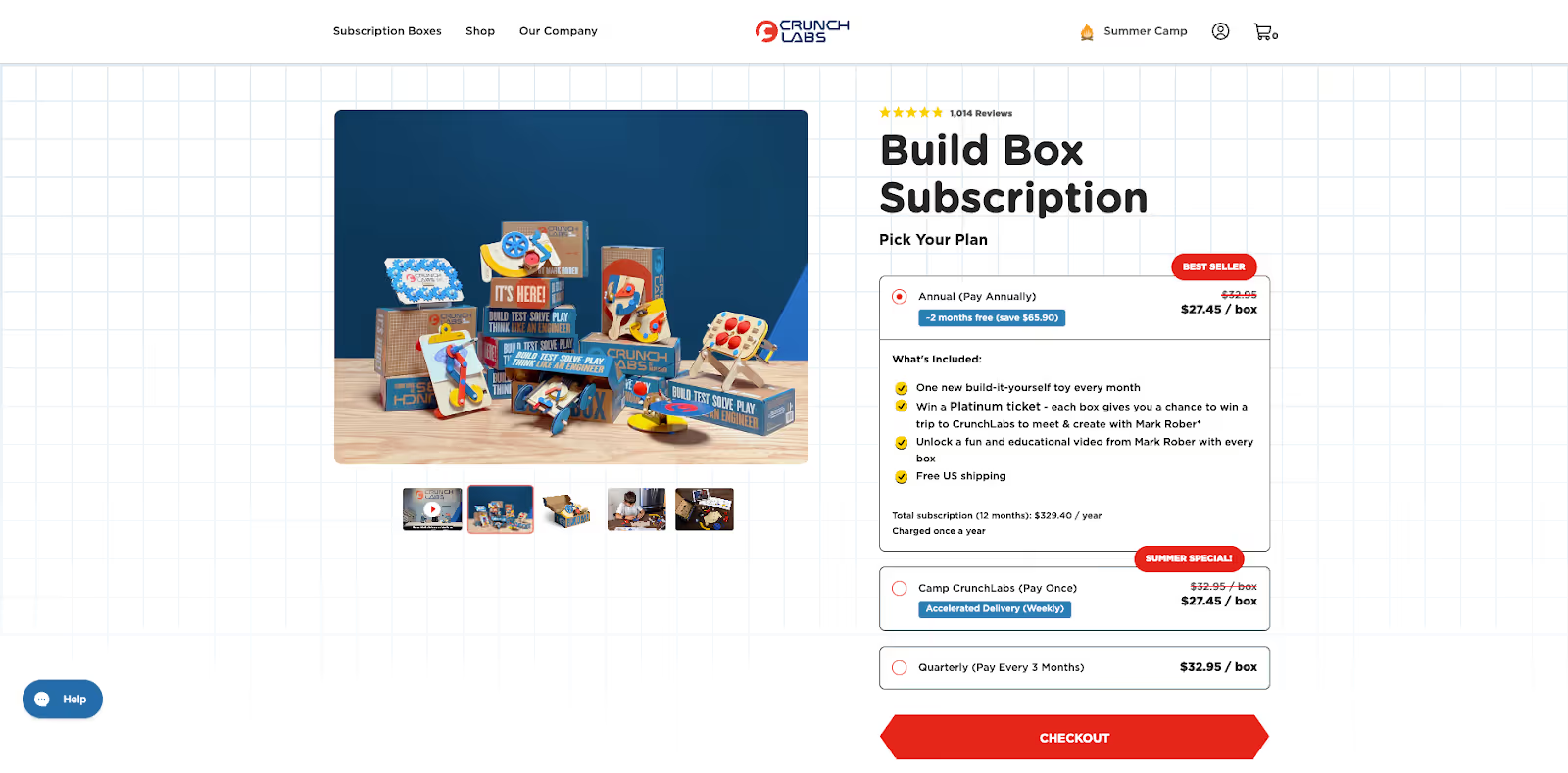
Subscription boxes ship to customers monthly. Shoppers subscribe over a course of time, like every quarter, six months, or year. For example, CrunchLabs offers a prepaid Build Box option for kids and adults who want to tinker like engineers.
Meal kits are weekly food delivery services that either include pre-packaged ingredients to cook a dish or fully cooked dishes.
For brands that are selling higher-cost or unique items, subscriptions to purchase the same product over and over might not be the best way to gain subscribers.
The better option is a curated box, also known as a "subscribe and delight" or “mystery” box. It’s a unique way to cater to customers who prefer trying out different products, rather than receiving the same product on a recurring basis.
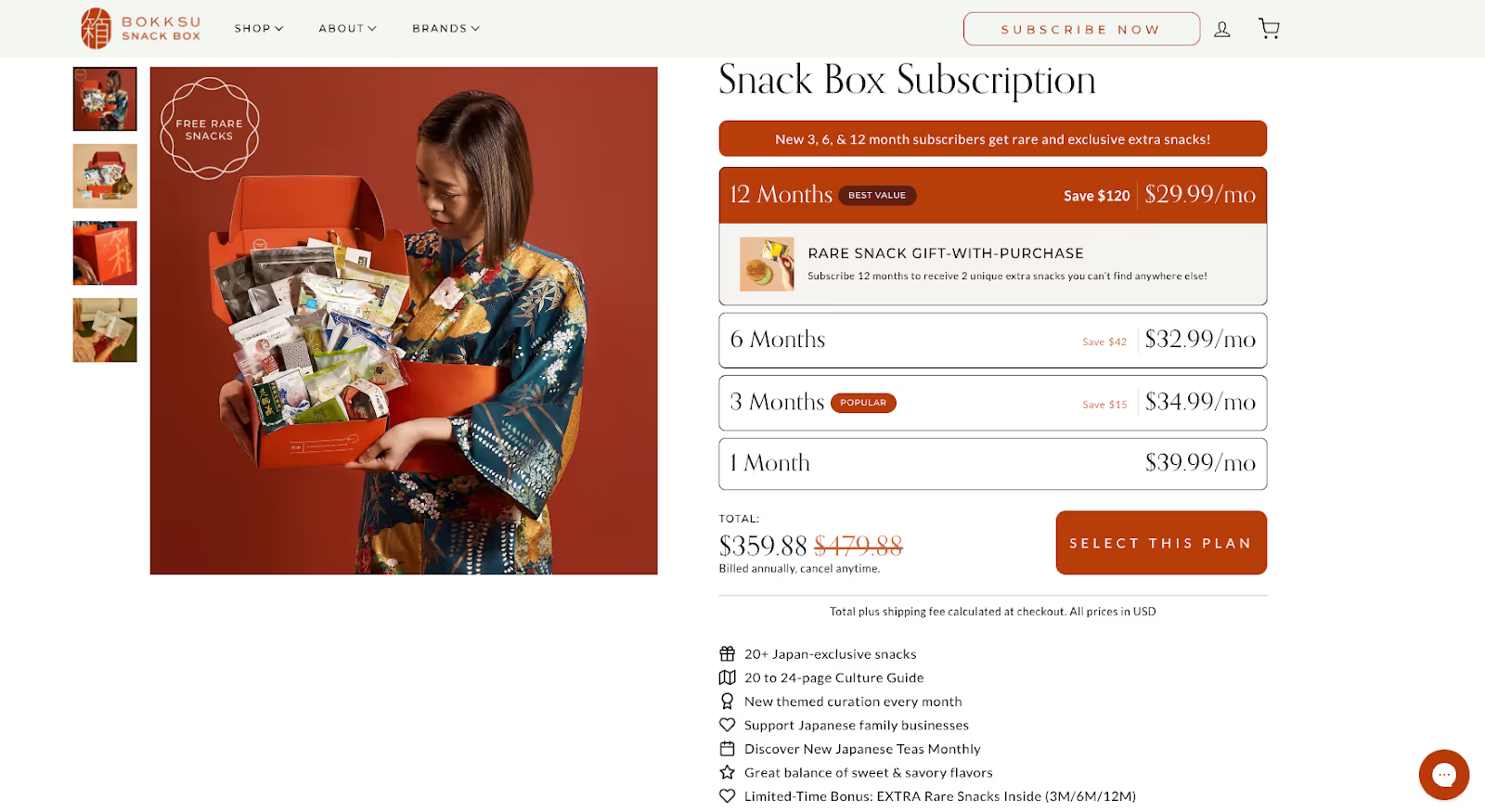
For example, premium snack box brand Bokksu specializes in shipping Japanese snacks. Rather than packing the same treats each month, the brand curates different items with every package. This creates both excitement and differentiation each time a customer gets a delivery.
Subscriptions are the original relationship between a brand and its customer. In fact, subscribers drive three times more value than the one-time buyer. That's because a one-time purchase is really just that—a moment in time—while subscriptions are a journey.
“When you have a customer and they subscribe, you get to see that moment they fell in love with your brand,” says Vanessa. “You get to see when they have those moments where they made you a part of their routine. Every time they engage with you and purchase something new, you learn their rhythms. You learn their preferences. It's impossible to do that with one-time buyers for the most part.”
Subscribers drive three times more value than the one-time buyer, and that's because a one-time purchase is really just that—a moment in time—while subscriptions are a journey.
Subscribers can only drive growth if you can get those customers to subscribe in the first place. This is what Recharge does: it takes customer interactions and turns them into a customer journey, allowing you to act on those signals in a personal way at scale.
It all starts the moment a shopper browses a product. Each touchpoint is an opportunity to turn that shopper into a subscriber—from the product description page to the subscription widget to checkout.
Vanessa’s tip? Make subscriptions the default option on a product description page. When you present customers with the better and more convenient option, and they see this information at the right time, they're more likely to subscribe.
Now, it’s time to test. Here's a checklist you can follow to A/B test your subscription journey:
When customers see the right information at the right time, they're more likely to subscribe. That's because it's the better and the more convenient option.
Let's say you have a customer who starts on a product description page. They decide not to subscribe—no worries. You can catch them in the cart.
When they add a product to their cart, you can upsell them with different subscription benefits so they know what they're missing out on. Do it again when they review their cart, and then again when they go to checkout, showing them complementary products that they might be interested in.
And don’t forget to take advantage of that post-purchase "your order is confirmed" high—offer customers cross-sell products, complementary products to their order, or similar items to what they've purchased in the past.
By creating multiple touchpoints for conversion, you’ll increase the possibility that they’ll make a purchase.
Set up automations in the subscription tool –– like Recharge –– you use. That means adding on upsell and cross-sell tools, and perfecting the times they trigger for customers. Test out different copy and cross-sell/upsell offers to see what resonates the most.
Just as important as acquiring customers is keeping them around.
The Recharge team names three core customer moments that might actually diverge from what brands expect to happen in the customer journey:
And while they might seem like hiccups in the process, these moments are actually hero moments. They’re moments that give you the opportunity to actually win those customers back.
For browsing shoppers, educational and informational resources are the best way to meet their needs, hesitations, and objections.
For regular subscribers, it’s providing them with direct control over their subscription, whenever they want.
The goal is to reach customers where they already are and respond instantly to their needs in a personalized way.

Gorgias’s Shopping Assistant does exactly that—meeting customers where they are by answering customer questions and even initiating conversations based on browsing activity.
This AI sales tool detects a shopper's intent, cart contents, and browsing behavior to initiate conversations, recommend products, and even send discounts as they make a decision.
Modern bidet brand TUSHY saw a 20% increase in chat conversion rate after implementing the tool.
Decide how you’d like to leverage AI and automation to meet customers where they are. That might be by providing a phone number that customers can interact with via SMS, or implementing a tool like Shopping Assistant to strike up conversational AI chats. Using AI and automation will help you better meet your customers where they are and at scale.
Rather than using AI to come up with problems your brand can solve, Vanessa recommends looking at the challenges your brand has already seen with subscriptions.
The key is to view AI as a tool that drives three core areas:
Vanessa says the most effective strategy starts with leveraging AI-powered tools, such as Recharge’s Concierge SMS.
Typically, SMS tools use template auto responses like, "How do you want to manage your subscription? Type one to cancel, type two to skip." But these aren’t compelling enough for customers to respond. What if they want to do something that doesn't fit in those two options?
Concierge SMS enables brands to build stronger relationships with their customers through conversations powered by pre-trained AI. It personalizes SMS support with customers, so relationships can expand into loyalty.
Implement an AI-driven subscription management tool that allows customers to interact and ask questions via SMS, rather than only being able to confirm or deny upcoming shipments.
Gorgias and Recharge are a powerful combination when it comes to integrating subscription management with top-notch customer support.
With Recharge, efficiently convert one-time buyers into subscribers, retain subscribers through intelligent interventions, and connect every customer touchpoint into one cohesive journey.
With Gorgias, sell more and resolve support inquiries with conversational AI.
{{lead-magnet-1}}

TL;DR:
Your CX team talks to customers every day. They know what’s confusing, driving purchases, and causing returns, because they hear it firsthand.
But all too often, those insights stay siloed in support tickets and live chat transcripts instead of informing the campaigns that shape the customer journey.
This post is here to change that. We’re breaking down the most valuable questions marketing teams should be asking their CX counterparts. When marketing and CX work together, you get more relevant messaging, smarter product positioning, and campaigns that convert.
Whether you’re planning a big seasonal push or just want to improve product education, this is where to start.
{{lead-magnet-1}}
Your CX team knows what makes shoppers hesitate. They’re the ones fielding questions like: Does this come in a larger size? Is it final sale? Will it arrive in time?
Beyond being pre-sale inquiries, they’re signals. They reveal what your customers care about most, and where your messaging may be falling short. When marketing teams tune into this, they can proactively address objections in landing pages, product detail pages (PDPs), emails, and top-of-funnel content.

At luxury jewelry store Jaxxon, Director of Customer Experience Caela Castillo saw firsthand how important it is to address these questions early.
“Chat used to be a support tool for repetitive questions and problem-solving, but now AI Agent takes care of that for us,” she said. Once those friction points were handled upfront, the CX team could focus on more meaningful conversations, and conversions improved.
And when AI recommended the wrong products? Conversions dropped. It was a clear signal that relevance matters, especially before the sale.
Ask your CX team:
“What do customers most often need to know before they buy, and how can we answer that earlier in the journey?”
Your best-selling product isn’t always your hero product. Sometimes, it’s that under-the-radar item that customers can’t stop talking about. The one that shows up again and again in reviews, chats, and post-purchase surveys.
The insight is gold for marketers. The key is to find out why people love it. Is it the fit? The feel? The results?
At online fashion brand, Princess Polly, Alexandria shared that her team expected Gen Z shoppers to lean on AI for recs, but what really influenced them was customer feedback. Reviews, not bots, built trust. That’s why campaigns built around real customer language and experiences often outperform the most polished product copy.
Shopping Assistant can turn those rave reviews into real-time action. It highlights top products using your Shopify product catalog to make personalized recommendations, proactively assists shoppers by using behavior signals, and even offers tailored discounts when they’re ready to convert. That means less guesswork, greater relevance, and an easier path to purchase.

Ask your CX team:
“Which product do customers rave about most, and what exactly are they saying?”
When customers are frustrated, it’s easy to blame the product. But in many cases, the issue isn’t quality, it’s communication.
At Shinesty, a men’s underwear brand, Molly Kerrigan, Senior Director of Retention, observed that high return rates often stemmed from unmet customer expectations.
She noted the importance of maintaining clear and consistent communication as the company grows, “We get a lot of praise from our customers, and they talk highly of our CX team after 1:1 interactions. We can’t lose that as we scale.”
Molly notes that using Gorgias AI Agent enables Shinesty’s customers to receive quick answers, freeing her team's time for more complex or sensitive issues.
Similarly, Princess Polly saw that delivering a standout customer experience meant being fast, consistent, and helpful at every stage. After switching to Gorgias, their support performance improved dramatically:
Before changing the product, try updating the messaging. Use insights from CX to rewrite descriptions, add size guides, include user-generated content, or even build a quick-fit quiz. Small tweaks help set clearer expectations and reduce unnecessary returns.
Ask your CX team:
“Which products are driving the most complaints, and what do customers wish they knew before buying?”
Confusion is a conversion killer. If a customer isn’t sure about how something works, what’s included, or whether it’s right for them, they’re more likely to bounce.
That’s why it pays to ask your CX team where customers get stuck. Is it a product feature that needs more context? A vague store policy? A missing detail on a bundle?
The good news is that most confusion is fixable. Start with the following steps:
If you’re using Shopping Assistant, you can go even further. It can detect when shoppers are hesitant and provides real-time nudges. Like an assistant who knows all your needs, Shopping Assistant automatically surfaces the questions customers are likely to ask when evaluating a product, so they’re equipped with the clarity they need to proceed to checkout.
TUSHY, a modern bidet brand, faced similar challenges. As bidets aren't mainstream in North America, shoppers often had concerns about product compatibility and installation. They’d ask questions like:
Without immediate answers, many potential buyers would abandon their purchase. To address this, TUSHY implemented Shopping Assistant, providing instant support. Taking this approach resulted in an 81% higher chat conversion rate compared to human agents and a 13x return on investment.
“The Shopping Assistant has been a game-changer for our team, especially with the launch of our latest bidet models. Expanding our product catalog has given customers more choices than ever, which can overwhelm first-time buyers. Now, they’re increasingly looking to us for guidance on finding the right fit for their home and personal hygiene needs,” said Ren Fuller-Wasserman, Sr. Director of Customer Experience at TUSHY.
Ask your CX team:
“Where do customers get confused most often—and how can we clear that up sooner?”
Your CX team picks up on patterns that analytics sometimes miss. They hear which items customers ask about in the same chat, which products get added to carts together, and which pairings people reorder time and time again.
That intel is a goldmine for bundling and upselling. It helps you build smarter campaigns that feel relevant and drive real value.
Zoe Kahn, owner of Inevitable Agency and former VP of Retention and CX at Audien Hearing, emphasizes the importance of using AI to enhance customer interactions.
“A lot of that revenue was potentially missed revenue because these were customers sitting on the site, asking questions about the products, and wanting an answer now so they could purchase…Now, AI can answer those questions immediately and convert those customers.”
With Shopping Assistant, you can act on these insights in real time. It will surface personalized product pairings, bundle suggestions, or accessories based on customer behavior. All before they hit the checkout page.

Returns cut into your margins and chip away at trust. Most of the time, they’re not caused by poor-quality products. They happen because expectations weren’t met.
Your CX team already knows which items come back the most and why. Maybe the color doesn’t match the photos. Perhaps the fit runs small, or the product description left out a crucial detail.
Instead of pushing the product harder, reframe how you present it. Add real customer photos. Include fit notes or a sizing chart. Call out anything that might surprise the customer post-purchase. A little clarity upfront goes a long way in reducing returns and boosting retention.
At Pepper, an intimates brand specializing in bras for small-chested bodies, they recognized the importance of pre-sale education. When customers have sizing questions, their AI Agent, Penelope, can provide immediate assistance.
“Penelope takes the information we give her and responds better than a Macro. She tailors it so that it sounds like a natural conversation between two people,” said Gabrielle McWhirter, CX Operations Lead at Pepper.
By proactively providing instant support, Pepper improved customer satisfaction and saw an 18% uplift in average order value.
Ask your CX team:
“Which products get returned the most—and what could we do upfront to change that?”
Before you launch your next campaign, start with a quick sync with your CX lead. They already know what your customers need to hear. You just have to ask.
From fixing messaging gaps to surfacing the right products at the right time, these insights help you connect with customers in personal, timely, and relevant ways.
Tools like Shopping Assistant make it easier than ever to act on this data in real time. You can turn CX knowledge into dynamic recommendations, personalized nudges, and smarter discounts.
Ready to see how you can improve your online shopping experience? Book a demo to see how Gorgias Shopping Assistant engages customers in real-time.


