An interview with Max Pruvost, Gorgias SVP of Product, the engineer behind the Gorgias AI Agent Benchmark.
Everyone evaluating an AI agent today is working from a different scorecard.
Gorgias wanted something a buyer could actually interrogate, so we built one. The AI Agent Benchmark tests AI agents on 200+ live ecommerce stores, has evaluated more than 8,000 conversations, blind-scores the quality of each one against a public rubric, and ranks 12 vendors over a rolling 90-day window.
We sat down with Max Pruvost, the engineer who built the benchmark, to talk about why the standard was needed, how it actually works, and what it took to make the numbers reliable and unbiased.
Most vendors publish some kind of AI performance number. Why wasn't that enough?
Max: Because the numbers don't mean the same thing. "Automation" can mean resolved, contained, or merely answered. The customer might have gotten what they needed, or they might have been pushed to a contact form, and both get counted the same way. "Fast" can mean the first word of a response or the complete answer; those are wildly different experiences for a shopper. And the way that vendors rate quality has been subjective or not at all standardized.
We wanted a single rubric, applied identically to everyone, that describes the two jobs an ecommerce AI agent actually has: helping a shopper buy, and resolving support without needing to pass it off to a human because the team is busy dealing with more complex tickets.
Why split shopping and support instead of one score?
Max: A storefront assistant does two very different jobs, and they punish different weaknesses. A shopping conversation is revenue-critical and impatient. If the recommendation takes twenty seconds, or the shopper can’t get a good recommendation at all, they’re gone. If the buyer doesn’t feel confident about their purchase decision, the agent hasn’t done its job. It’s important that shoppers get all their questions about the product and the brand’s policies answered quickly and accurately, before they drop off.
A support conversation is about containment: did the customer get their refund question answered without anyone touching a ticket? Speed matters far less there.
If you average the two, a vendor that's excellent at policy answers and useless at recommending products can look identical to one that does both. So the benchmark measures the two lanes separately and weights them differently: shopping is 40% automation, 35% quality, 25% speed; support is 50% automation, 40% quality, 10% speed.
Walk us through how a conversation actually gets captured.
Max: Every conversation runs against the live widget on a real storefront, using the same AI deployment customers actually interact with. Each conversation starts completely fresh, with no browsing history or prior context, and our test shopper types every question in its own words. That matters: quick-reply buttons can trigger canned answers that make speed and automation look better than they really are.
The questions are deliberately hard: compound, multi-constraint, and built on earlier answers, with objections and edge cases along the way. Support scenarios include things like splitting a refund between a gift card and credit card or changing an address mid-transit. Shopping scenarios go from open-ended discovery through comparison and objections, all the way to add-to-cart.
Quality is where benchmarks usually become opinions. How did you make the judge trustworthy?
Max: We made three design decisions to make it more trustworthy.
First, blindness. Before judging, we strip out vendor and store identity, so the judge sees behavior, not brands. The information that links a conversation back to its vendor is kept separate and never reaches the judge.
Second, each lane's rubric breaks down into simple yes/no checks, twenty-six of them across the two lanes. The LLM judge answers yes or no per check, and the score out of 100 is calculated from those answers by a fixed formula. A judge can't "feel" an 82.
Third, every passing check must quote the actual transcript, and the quote is verified against the stored transcript in code, an invented quote is demoted to a fail. And the objective parts are even stricter: whether a reply really contains a price, a link, a review quote or a product option is detected by code straight from the transcript, not judged by feel.
Automation rate is the headline metric for most buyers. How is yours different?
Max: The benchmark counts a conversation as automated only when the AI handled it with zero human touch, no handover to a person, and no deflection out of the channel. No "email us," no contact form, no "call us." If more than half of an agent's replies in a conversation push the customer out of the channel, we count the conversation as unresolved.
And importantly, the questions are designed so no turn ever asks for a human. Any handover the AI initiates is its own choice, attributable to a capability gap, not a scripted escape hatch. Also: early bails count against the vendor, and broken widgets are reported separately, never silently dropped or scored as zero. None of that flatters anyone. It's the same measure for every vendor.
Making the methodology fully public is unusual. Why do it?
Max: Because a competitive benchmark nobody outside can check is only an assertion. The rubric is downloadable; the scoring rules, quality gates and neutrality policies are documented. Every scoring decision is written into code as a separate, tested rule, 145 of them, and before any board goes live an automated check blocks it from publishing if it breaks its own rules. The whole thing runs automatically every day: capture, judge, audit, verify, publish. No vendor-specific store exclusions exist.
We would rather someone find a flaw in our method than trust a number they can't inspect. The point is not that our methodology is beyond debate, the point is that the debate should happen around a visible, repeatable standard instead of around marketing claims.
What should a buyer take away from all this?
Max: Three things. First, demand the definition behind every number, what counts as automated, what stops the latency clock, who picked the quality score. Second, configuration beats model: the same vendor scores well on one store and near zero on another, so the deployment you'd actually run is what matters, and testimonials and demos hide that. Third, the most common failure in the field isn't a wrong answer, it's a wall or a loop: authentication demands, repeated clarifying questions, handing everything to a human. Those are guardrail problems, and they're cheap to fix once you can see them.
The full methodology, rubric and live scoreboard are public at evals.gorgias.com. Every number in this piece comes from the September 9, 2026 board, ranked over its 90-day window.
Gaia for Zendesk is a free Chrome extension that analyzes your Zendesk ticket history and identifies gaps in your AI Agent setup.
It generates ready-to-review guidances, instructions, voice-of-customer analysis, and Copilot procedures — nothing is applied without your approval.
Install it in five minutes and run your first analysis in under a minute.
Getting more out of your Zendesk AI Agent comes down to better configuration. The problem is that auditing your own setup requires time you don't have.
Gaia for Zendesk is a free Chrome extension from Gorgias that clears that backlog in minutes. It connects to your Zendesk account, reads your tickets, and generates the components your AI Agent needs to resolve more conversations without escalation.
Below, you'll find everything you need to get started: how to install Gaia, what it can do, and the use cases teams are already putting it to work for.
Zendesk Suite admins and agents who want to set up or improve their Zendesk AI Agent (and, optionally, Zendesk Copilot).
Throughout this article, "AI Agent" refers to Zendesk's own AI Agent feature, not Gorgias's product. Gaia is the Gorgias-built Chrome extension that helps you configure it.
What is Gaia for Zendesk?
Gaia for Zendesk is a free Chrome extension built by Gorgias that connects to your Zendesk account and analyzes your real ticket history.
It autonomously transforms that data into the core components your Zendesk AI Agent needs to resolve more tickets without human intervention: guidances, instructions, voice-of-customer insights, and Copilot procedures.
Gaia opens automatically as a side panel on any .zendesk.com page. You choose a workflow, Gaia runs the analysis and generates structured drafts, and you review and approve what should be applied to your Zendesk workspace.
What Gaia can do:
Improve your Zendesk AI Agent: Scans escalated tickets, identifies gaps in your existing setup, and proposes targeted updates to your guidances.
Create your first instructions: Generates 15 best-practice AI Agent instructions, adapted from Gorgias templates and tailored to your ticket data.
Analyze your tickets: Produces a voice-of-customer report covering ticket volume, intents, and escalation patterns from the last 90 days.
Create your first procedures: Drafts 10 Copilot procedures using the Gaia WHEN/IF/THEN format (requires the Copilot add-on in Zendesk).
Good to know: Gaia is autonomous in how it analyzes your data and generates recommendations, but nothing is applied without your approval.
Why use Gaia instead of configuring it yourself?
How well your AI Agent performs comes down to how well it is configured. Clear instructions, well-defined intents, and up-to-date procedures are what separate an AI Agent that resolves tickets from one that escalates them — and building that foundation manually takes time most teams do not have.
Gaia removes that constraint by turning your existing support data into structured, ready-to-review outputs:
Skip the blank page. Start from drafts generated from your own ticket history instead of building from scratch.
Get from setup to first results faster. Gaia analyzes up to 90 days of tickets in minutes and produces implementation-ready content, so you move from setup to value in hours, not weeks.
Stay in control. Every output is surfaced for review so you can validate accuracy and alignment with your policies.
Keep improving over time. Re-run Gaia regularly to capture new intents, identify gaps, and maintain coverage as your business evolves.
Tip: Teams that define five or more strong guidances typically see a meaningful lift in the share of tickets their AI Agent resolves without escalation. Gaia is designed to help you reach and expand beyond that baseline quickly.
How to install Gaia for Zendesk
Installation takes about five minutes. You'll need admin access to your Zendesk account to generate an API token.
Make sure you're using Google Chrome or another Chromium-based browser (such as Edge or Brave). Gaia is not available for Safari or Firefox at launch.
Follow these steps:
1. Install the Gaia for Zendesk extension. Go to the Chrome Web Store listing for Gaia for Zendesk by Gorgias and click Add to Chrome. Confirm the permissions to complete installation.
2. Generate a Zendesk API token. In Zendesk, navigate to Admin Center › Apps and integrations › Zendesk API. Enable Token access if needed, then click Add API token. Copy and store the token securely (it will not be visible again).
3. Open the Gaia extension and add your credentials. Click the Gaia icon in your Chrome toolbar, then open Settings. Enter:
Zendesk subdomain: the part before .zendesk.com in your account URL (for example, acme if your URL is acme.zendesk.com).
Email: the email of the Zendesk admin who created the API token.
API token: paste the token you generated in step 2.
4. Click Save. Gaia will validate the connection.
5. Open any Zendesk page. Navigate to any page in your Zendesk account. Gaia will appear as a side panel where you can select a workflow and begin.
Four ways to use Gaia for Zendesk
Here are the four most common ways teams use Gaia for Zendesk.
1) Audit and improve an existing AI Agent setup
Best for: Teams already using Zendesk AI Agent or Answer Bot but not reaching their automation goals
Select Improve my AI Agent. Gaia analyzes escalated tickets against your current guidances to identify missing intents, unclear instructions, and outdated logic, then proposes prioritized improvements.
2) Bootstrap AI Agent from a blank slate
Best for: Teams starting without an established AI configuration
Select Create my first instructions. Gaia generates a foundational set of 15 instructions covering common ecommerce scenarios (order status, refunds, cancellations, shipping, returns).
3) Run a voice-of-customer analysis
Best for: Support, CX, and operations teams planning improvements or reporting on performance
Select Analyze my tickets. Gaia summarizes ticket volume, top intents, and escalation drivers to highlight where automation or process improvements will have the greatest impact.
4) Roll out Copilot procedures
Best for: Teams using Zendesk Copilot who want consistent, scalable agent workflows
Requires the Copilot add-on in Zendesk. Select Create my first procedures. Gaia converts real agent behavior into structured WHEN/IF/THEN procedures that standardize how common scenarios are handled.
Your AI Agent is resolving less than it should — and it’s costing you
Gaia connects to your Zendesk account, reads your ticket history, and shows you exactly where your setup is falling short. Install the free Chrome extension and run your first analysis in under a minute.
Learn what ticket volume is, how to calculate contact rate, and which categories to target first to reduce unnecessary tickets.
By Gorgias Team
0 min read . By Gorgias Team
TL;DR:
Ticket volume is your support workload: It counts every customer inquiry across every channel in a given time period.
High volume signals friction in your business: Spikes usually point to unclear policies, product issues, or gaps in your website experience.
Every ticket has a real cost: Agent time, tooling, and overhead add up fast — and they compound during peak seasons.
Automation reduces volume without reducing quality: AI tools and self-service deflect repetitive questions while keeping customers satisfied.
Measurement drives improvement: Tracking volume by channel, category, and time period reveals exactly where to focus your efforts.
Your ticket volume number is probably wrong. If customers are reaching you through email forwards, Slack DMs, or channels that bypass your helpdesk, those tickets aren't being counted, and your SLA reporting is built on incomplete data. This guide covers how to get an accurate count, break it down by channel and category, and use your vertical benchmark to figure out whether your volume is actually a problem or just normal for your industry.
What is ticket volume?
Ticket volume is the total number of customer inquiries your support team receives across all channels — email, live chat, phone, social media, and contact forms — within a specific time period. It is the most direct measure of your team's workload.
Do not confuse it with contact rate. Contact rate = tickets ÷ orders (or customers). That normalized number is more useful for benchmarking and planning because it accounts for business growth. Raw ticket volume tells you how busy your team is. Contact rate tells you whether support demand is outpacing your business.
How to calculate your ticket volume
Start by looking at the last 30 days of customer conversations, no matter where they currently live.
Pull these four numbers:
Total customer questions received across all channels
Breakdown by channel (email, chat, social DMs, phone, contact forms, etc.)
Breakdown by category (shipping, returns, product questions, account issues)
Tickets or conversations per order during the same period — this gives you your contact rate baseline
Here’s how to pull that data depending on your setup:
Gmail or Outlook
Open your inbox or Sent folder and filter by the last 30 days. Count how many customer conversations came in during that period. You can also copy subject lines into ChatGPT or Claude to group conversations by topic.
Shopify Inbox
Go to Inbox > Conversations and review your recent conversations. Count how many messages you received and look for repeated themes or questions.
Any helpdesk (Gorgias, Zendesk, Freshdesk, Help Scout, etc.)
Most helpdesks have ticket reporting or exports built in. Search “export tickets” or “ticket report” in your platform’s help center. From there, you can pull:
Total tickets
Channel breakdown
Top ticket categories
Tickets over time
If a large portion of customer questions are still happening in untracked places like Slack DMs, personal inboxes, or Instagram comments, your reporting is incomplete. Before optimizing support operations, route customer conversations into one shared system so you can accurately measure volume, response times, and recurring issues.
Why your volume breakdown matters more than the total
A raw ticket count tells you how busy your team is. The breakdown tells you what to fix.
Category
What high volume signals
What to do
"Where is my order?"
No proactive shipping updates; poor tracking page
Automate WISMO with AI Agent; add tracking link to order confirmation
Returns and exchanges
Confusing return policy; no self-serve portal
Add a clear returns page; enable self-serve exchange flows
Sizing and product questions
Weak product page content
Add size guides, FAQs, and fit notes directly on product pages
Account and subscription issues
Customers can't self-serve basic account changes
Build or improve your Help Center; enable self-serve account management
Payment and billing
Checkout friction or unclear pricing
Fix at the source — this is rarely a support problem
Run this categorization for your last 30 days. Your top two or three categories are your highest-leverage targets.
Track volume alongside these KPIs
Ticket volume only tells part of the story. Track it alongside:
Contact rate (tickets ÷ orders) — so you know if volume is growing faster than your business
Average handle time (AHT) — high AHT + high volume = a capacity problem
Cost per ticket — total support costs ÷ total tickets, the clearest financial measure
Backlog size — a growing backlog is the earliest warning sign that volume is outpacing capacity
Deflection rate — tickets resolved through self-service or automation without agent involvement
How to reduce ticket volume without reducing quality
Once you know what is driving your volume, address each category at the source. The goal is to eliminate unnecessary tickets.
Automate the highest-volume, lowest-complexity tickets first.WISMO inquiries, order status checks, and basic return initiations require no agent judgment. An AI Agent connected to your ecommerce platform can handle these end-to-end without a human stepping in. When a question is too complex, the AI escalates it with full context attached.
Build self-service content around your top categories. A Help Center that directly addresses your most common ticket types is the highest-leverage tool for sustained volume reduction. Start with your top five categories. Write one article per category. Surface those articles on relevant product pages, in checkout, and in post-purchase emails — before customers need to search.
Send proactive messages at the moments that generate the most tickets.Post-purchase is the single highest-value touchpoint: an order confirmation that includes a tracking link, estimated delivery window, and a clear link to your return policy eliminates a large share of inbound questions before they are ever submitted.
Measure deflection, not just volume. Deflection rate, the percentage of issues resolved through self-service or automation, is the metric that tells you whether your volume reduction efforts are actually working. Track it weekly alongside CSAT for automated interactions to make sure quality is holding.
Ticket volume benchmarks
The all-industry average is not your benchmark. Ticket volume per 100 orders varies 2.4x across verticals, so comparing yourself to a cross-industry number will either make you complacent or create false urgency.
According to Gorgias platform data from March 2026 across 14 verticals at the $10M GMV band, here is what tickets per 100 orders actually looks like by vertical:
High ticket volume is not always a sign of poor CX — it often reflects product complexity. Electronics brands generate nearly one ticket per two orders because customers have more pre- and post-purchase questions about technical products. Food and Beverage brands generate about one in five. That gap is not a performance difference; it is a category difference.
The right question is not "are we below 10 tickets per 100 orders?" It is "are we above or below our vertical peers?" Find your row. That is your baseline. Then use the reduction tactics above to move below it.
How to predict ticket volume if your tool charges per ticket
If your ticketing tool uses usage-based pricing, where your bill scales with ticket volume rather than agent headcount, forecasting volume directly affects your budget.
So if you expect 2,000 orders next month and your vertical median is 22 tickets per 100 orders, your forecast is approximately 440 tickets.
But a flat monthly estimate misses the real risk: peak seasons. A volume spike during BFCM that triples your order volume will also triple your ticket count — and your bill — unless you have guardrails in place.
To build a more accurate forecast:
Use your contact rate, not raw volume. Divide your tickets by orders for each of the last 12 months. This gives you a stable ratio that accounts for business growth and seasonal swings.
Apply that ratio to your order forecast. If your marketing team has a sales projection for November, multiply it by your contact rate to estimate support volume.
Separate your AI-handled tickets from agent-handled tickets. Some platforms bill differently for automated resolutions versus human ones. If you're using an AI Agent to deflect WISMO and returns, those deflected tickets may not count toward your billable volume at all — which changes the math significantly.
Build in a buffer for peak periods. Your contact rate tends to rise during high-demand periods, not just your order volume. First-time customers generate more tickets than repeat buyers, and BFCM brings a disproportionate share of first-timers.
Before signing any usage-based contract, ask two questions: What counts as a billable ticket? And is there a hard cap on monthly charges? Variable billing only works in your favor if you have clear definitions of what triggers a charge and a ceiling on how high costs can go during an unexpected spike.
If your platform bills per ticket resolved by a human agent (not AI), your deflection rate becomes a financial metric, not just an operational one. Every percentage point of additional deflection directly reduces your bill.
Start reducing ticket volume today
Begin by identifying your top ticket categories, then work backward to find the root cause of each one.
From there, layer in self-service content, automation, and proactive messaging to address those root causes directly. The result is a support operation that handles more customers and a team that spends its time on the work that actually requires human judgment.
Book a demo to see how Gorgias helps ecommerce brands reduce ticket volume and improve customer experience at the same time.
Learn how Gorgias AI Agent pricing works, what counts as a billable interaction, and how to choose the right plan for your store.
By Gorgias Team
0 min read . By Gorgias Team
TL;DR:
AI Agent is priced per resolved interaction, not per seat or per message. You only pay when the AI fully resolves a conversation on its own.
Most plans are $0.90 per resolved interaction. Starter plans begin at $1. Plans include 90 to 2,500+ automated interactions per month.
If you go over your plan, overage fees apply per additional interaction. Rates vary by tier and are lower on annual plans.
Your automation rate emerges from usage over time. Start by estimating your ticket volume and pick an interaction allotment that fits.
AI Agent runs on email, chat, and SMS, and includes tone of voice customization, Actions, multi-language support, vision, and performance reporting.
If you're wondering what it costs to add AI Agent to your Helpdesk, you're in the right place. This article walks through how pricing works, what counts as a billable interaction, and how to think about the investment before talking to anyone on our team.
The good news: there are no seat fees, no per-message charges, and no token-based billing. You pay for conversations your AI actually resolves. If you've looked into other AI tools for customer support and found the pricing models confusing or hard to predict, Gorgias AI Agent works differently.
What is a billable interaction?
A billable interaction is counted when the AI resolves a customer conversation entirely on its own. The customer asks something, the AI handles it, the conversation closes. That's one interaction.
If the AI can't fully resolve a conversation and hands it to a human agent, that ticket shifts over to your regular Helpdesk plan. It becomes a standard resolved ticket. You're not charged for both.
A few things that don't count as billable interactions:
Emails that come in but no one replies to
Spam or filtered messages
Conversations resolved by a human agent
This matters most for brands coming from seat-based tools. With Gorgias, your whole team can work in the platform. Agent seats are unlimited. Pricing scales with what your AI is actually doing, not with how many people have access.
AI Agent is an add-on to your Gorgias Helpdesk plan. The two are priced separately but work together. Your Helpdesk plan covers all the conversations your human agents resolve. Your AI Agent plan covers the interactions the AI resolves on its own.
When you choose a plan, you select how many automated interactions you want included per month. Depending on your plan, that ranges from 90 to 2,500+ interactions, with custom interaction numbers available for enterprise. You can see the full breakdown on the Gorgias pricing page.
Each resolved conversation costs $0.90 on most plans. Starter plans begin at $1 per resolved conversation. You only pay for fully automated interactions, meaning conversations the AI handles from start to finish without a human stepping in.
Choosing the right plan
The main input is your average monthly ticket volume. From there, you estimate how many of those conversations AI could realistically handle on its own.
Order status updates, return requests, and shipping questions tend to be the highest-volume ticket types AI resolves well. AI Agent actions shows the full range of what it can handle, which makes it easier to estimate your starting number.
Your actual automation rate, meaning the share of total tickets the AI ends up resolving, emerges from usage over time. Most brands start with their most repetitive ticket types and expand from there as they see results.
You're charged an overage fee for each additional automated interaction if you exceed your plan's baseline in a given month. The exact rate depends on your plan tier and whether you're on a monthly or annual subscription.
Generally, the higher your plan tier, the lower your overage rate. Annual plans also carry lower overage rates than monthly plans. So if you're regularly going over, upgrading to a higher tier or switching to annual often works out cheaper than paying overage fees month after month.
If you're on a Support + Shopping Assistant plan, the overage rate is $1.50 per interaction across all paid tiers. If you're on a Support-only plan, rates range from $1.00 to $2.00 per interaction on monthly plans, and $0.83 to $1.67 on annual plans, depending on your tier.
At $0.90 per resolved interaction on most plans, each AI resolution costs less than a human agent handling the same ticket. Once you know what a human-resolved ticket costs your business, the comparison becomes straightforward.
AI Agent comes with everything you need to set it up, customize it, and improve it over time:
Knowledge training — AI Agent learns from your Shopify data, store website, Help Center articles, URLs, documents, and custom guidance. The more content it has, the more accurately it responds.
Tone of voice — set instructions for how AI Agent sounds, whether that's professional, friendly, or something else, and it stays consistent across every conversation.
Actions — connect AI Agent to your other tools so it can complete tasks like cancelling an order, processing a return, or modifying a subscription without a human stepping in. See what AI Agent can do.
Multi-language support — AI Agent detects the language a customer writes in and replies in the same language automatically.
Vision — AI Agent can read and understand images, so it can handle tickets where customers share photos of damaged items or order issues.
Performance reporting — track automation rate, CSAT, first-response time, and ticket topics directly in the dashboard.
Testing — preview how AI Agent responds to real customer questions before going live or after making changes.
Handover to humans — AI Agent automatically passes conversations to your team when it lacks confidence, detects frustration, or encounters a topic you've marked for human handling.
Curious what AI Agent would automate for your store?
The best way to get a sense of what AI Agent will cost is to look at your own ticket volume and the types of questions your customers ask most. From there, the right plan becomes much clearer.
If you want to talk through the numbers with someone from our team, book a demo and we'll walk through it with you.
If you'd rather keep exploring first, here are a few good next reads:
We rebuilt the Gorgias workspace around how agents actually work. Here's what changed and why.
By Christelle Agustin
0 min read . By Christelle Agustin
TL;DR:
Built directly from agent feedback, Helpdesk 2.0 fixes real workflow pain points. The redesign focuses on reducing friction and helping agents handle more context-heavy tickets.
A chat-style interface replaces the old email layout. Conversations are easier to follow and resolve in one view.
Customer context is shown beside the conversation in a right-side panel. Agents can view history, orders, and details without leaving the ticket.
AI handoffs come with clear summaries. Agents instantly see what happened, what was tried, and what to do next.
Navigation is simpler and faster across teams. Clean menus, structured queues, and multi-store access keep agents moving efficiently.
Helpdesk 2.0 starts with the people who use it most: the agents.
We spent time understanding customer support from the agent's seat. What do they reach for constantly? What slows them down? What does a better workday look like?
In customer support, this means customers expect context to remain intact wherever they reach out, whether a conversation starts on social, moves to email, or ends on a call.
This new approach to support has also changed the agent's role. Recurring tickets, like order status checks, shipping updates, and returns, are now handled by AI. What lands in the agent inbox are edge cases that require human judgment and troubleshooting, or tickets that require the full picture.
However, the original Helpdesk was built for a different era of support.
Context was separated across views rather than built into the conversation itself. It's something one in five Gorgias customers flagged, through support tickets, NPS surveys, and conversations with our team. So, we got to work.
Helpdesk 2.0 is the result.
What's new in Helpdesk 2.0
Here's a look at everything that changed.
Read conversations the way they're meant to be read
Conversations have a natural rhythm, one that’s already found in every messaging tool we use. We brought that same layout into the helpdesk.
Say goodbye to the 2000s email interface and hello to chat bubbles. This updated design changes how quickly you can orient yourself and resolve the ticket in one go.
Chats with customers now look like real conversations, using the speech bubble style you’re familiar with on popular messaging apps.
Check customer history without losing your place
Checking a customer's history used to mean leaving the conversation, an extra step that interrupted what should have been a smooth workflow.
Now, past conversations open in a sidebar next to the active conversation. You can view a customer’s full history, search through their timeline, and open prior tickets without going to a new page.
Check past conversations, orders, and customer details in the brand-new Customer Timeline.
See order details the moment you open a ticket
Order information is easier to reference than ever. Open a ticket, and you instantly see the customer's recent orders, marked with product images and invoice details at a glance. Need to dig deeper? Click on an order, and the expanded information appears in the same panel.
For teams using custom integrations, apps are fixed in a quick-access integration menu on the right.
See order details, product images, and totals at a glance on the right panel, without leaving the conversation.
Pick up where AI left off
You shouldn't have to dig through a thread to figure out what AI already tried. Now you don't have to.
When AI Agent escalates a conversation, it includes a concise handover summary that mentions the issue, what actions were taken, and why it was passed to your team.
Escalated tickets include a brief AI-generated handover summary, marked in yellow, for quick reference.
Move faster across every store and team
We restructured and simplified the navigation. The left sidebar organizes everything into clear categories: Inbox, AI Agent, Marketing, and Analytics, so anyone on your team knows exactly where to go.
To quickly update your knowledge base or adjust a workflow, both now live right in the sidebar. For teams managing multiple stores, switching between them is just as straightforward, accessible from the sidebar, so agents can move between inboxes without breaking their flow.
Agents can switch between stores and their corresponding inboxes directly from the left menu.
A workspace that works the way agents do
Support comes down to the person on the other end of the conversation. We built Helpdesk 2.0 is to make sure they have everything they need to show up for that moment.
The best way to see the difference is to work in it. Start a free trial today.
Your customer service team's performance can have a major impact on the customer experience and the overall success of your brand. Like any employee, though, customer service agents sometimes need motivation and direction to achieve the best results.
We put together this guide to help you develop an employee incentive program with incentive ideas to boost employee morale, employee satisfaction, and overall performance. We also chatted with Caela Castillo, Director of Customer Experience at men’s jewelry retailer Jaxxon, and share some best practices from her team’s incentive program.
Why are customer support incentives important for your team?
There are a couple of reasons why incentive plans for customer support teams can offer this degree of value. The first and most obvious benefit of these programs is that they are proven to boost agent performance: Properly structured incentive programs can improve employee performance by as much as 44%.
Customer support incentive programs are especially beneficial when you can align your incentive programs with company goals and channel that performance boost toward the areas that matter most.
Along with improving agent performance, customer support incentive programs can also improve employee retention. The cost of replacing an employee is typically one-half to two times the employee's annual salary, and employee recognition programs can help mitigate turnaround and boost retention.
Here’s what Caela says about the impact of customer support incentives at Jaxxon:
Agents love having these goals because it keeps morale high, allows them to show off their performance, and comes with a prize if they hit their goals! We do switch things up often so that the agents don't feel like they have to hit certain goals only when a prize is attached and we have yet to see those scores decline.
7 great ways to incentivize customer support
The final step in designing an incentive program is choosing the rewards you will provide to your team and individual agents when they reach company goals. The sky's the limit here, and there's a lot of room to create creative goals that will best motivate your agents.
To help you get started choosing the rewards for your incentive program, here are a few great ideas for how to incentivize customer support agents:
Issue an extra paid day off to the top performing team member
Reward the team with a free lunch after hitting a goal
Create an internal team Slack channel to celebrate wins
Give out cash bonuses
Offer flex time to your customer service teams
Create a customer service team member of the month incentive
Award top performers with company swag or other gifts
1) Issue an extra paid day off to the top performing team member
Issuing rewards to the top performing team member during a given period encourages healthy competition that inspires agents to do their best work. Extra paid time off is an especially great incentive for companies without budget for monetary compensation.
Why we love this idea
Issuing an extra paid day off to your top performing team member recognizes the individual efforts of the agents that contribute the most to your company. Those kinds of results deserve to be recognized, and everyone loves paid time off! The biggest benefit of this incentive, though, is that it encourages (healthy) competition. In many cases, the friendly competition and desire to be the top performer will be even bigger motivators than the reward itself.
2) Reward the team with a free lunch after hitting a goal
Along with rewarding individual performance, it's also important to reward team-wide performance in order to encourage teamwork and collaboration. Treating your support team to a free lunch (or a gift card for a local restaurant for remote teams) is a simple and affordable way to reward your entire team for reaching a team-wide goal.
Why we love this idea
Treating your support team to lunch lets you reward your entire team in one easy, relatively affordable event. It also encourages more team bonding and provides your team with an opportunity to celebrate their accomplishments.
3) Create an internal team Slack channel to celebrate wins
Slack is a great platform for project management and team communication, but you can use it to celebrate accomplishments, too. By creating an internal Slack channel to announce and celebrate individual and team-wide accomplishments, you can ensure that all your agents feel recognized for their hard work.
Why we love this idea
Recognition alone is sometimes all it takes to motivate an employee — and recondition is free. Setting up an internal Slack channel to celebrate wins provides a medium for recognizing agent performance and allows agents to celebrate together, further encouraging team bonding.
Here at Gorgias, have a #wins channel for informal praise and use Lattice to give employees official recognition:
It might not be the most original or creative incentive, but that doesn't mean it's not effective. No matter who it is that you are rewarding, you can rest assured that they are going to appreciate a cash bonus. Offering bonuses when agents meet individual goals or even team-wide bonuses for team goals is guaranteed to provide your agents with a strong source of motivation.
Why we love this idea
Cash is king, and few things will incentivize an employee more than cash bonuses. Cash bonuses are also the most straightforward type of reward and don't require extra effort or planning.
5) Offer flex time to your customer service teams
The ability to set their own hours is something that employees have come to value more and more, so offering flex time to your support agents can be a great incentive. You can offer this incentive as a one-time reward (for example, letting an agent set their own hours for one week after reaching a goal), or you can provide agents who continually meet their objectives with the option to set their own hours on an ongoing basis.
Why we love this idea
This is another simple and affordable way to provide support reps with a desirable incentive. Best of all, offering flex time may actually improve your team's performance on its own; according to a 2021 Gartner survey, 43% of employees say that having flexible working hours helps them achieve greater productivity.
6) Create a customer service team member of the month incentive
There's a reason why "employee of the month" programs are so popular. Recognizing the top performer on your support team each month won't cost your company anything, and it'll promote healthy competition within your team.
Why we love this idea
Again, recognition alone is often the best reward and most powerful source of motivation. By making something of a spectacle out of recognizing your top performers (company announcement, plaque, etc.), you can incentivize your support team with minimal effort and expense.
7) Award top performers with company swag or other gifts
Cash is great, but there's still something special about receiving a physical gift. Offering company swag, such as branded t-shirts, pens, and coffee mugs, to top performers is one great option to consider (if your company has swag to offer). Letting employees choose their own gifts from a catalog of available options is another commonly employed method of rewarding employees with physical gifts.
Consider an employee gifting platform like Guusto to recognize employees with a wide variety of gifts. And with Guusto, a dollar of every gift goes toward providing clean drinking water for someone in need:
Gifts are often valued more by the receiver than their monetary value. As a bonus, rewarding your top performers with company swag means that they will be promoting your brand everywhere that they take their new gifts.
{{lead-magnet-1}}
How to design a customer service incentive program
If you would like to design an incentive program that will reward your team's hard work and provide them with intrinsic motivation to offer the best customer service possible, here are the six steps that you should follow:
1) Identify a core company goal based on demonstrated problem
One benefit of customer service incentive programs is providing recognition and improving employee engagement and satisfaction. However, the biggest benefit of such programs is that you can use them to steer support teams toward accomplishing key company goals.
Before you can create a program that will incentivize your whole team to work toward important company goals, you first need to define what those goals are. Attracting new customers, generating referrals, and improving customer loyalty or customer retention rates are just a few measurable goals you can build your incentive program around.
One best practice is to design your goals around a demonstrated problem. For instance, if your resolution times are longer than you'd like them to be, creating an incentive program to reward helpful response times may improve customer satisfaction.
Don’t be afraid to think outside the box here. Most customer service teams will default to metrics like first-response time, which is a great option. But as you develop your program further, remember that customer support has a large impact across the customer journey. Don’t be afraid to think about goals related to on-site conversion rate, proactive conversations with customers, conversations on public social media channels, educational content in your knowledge base, and beyond.
For example, Gorgias incentives employees to refer friends and former colleagues to improve our hiring effort. If you are in the midst of customer service hiring, consider using a program like Trusty for employee referrals:
2) Search for a customer service metric that has room for improvement (and aligns with the company goal)
Goals are only beneficial if they are measurable. You can't hand out performance-based awards unless you can keep score, which requires you to identify and track measurable customer service metrics. So once you have an overall company goal in mind, do some digging to see which metric will have the biggest impact:
Customer satisfaction score (CSAT), response and resolution times, net promoter score (NPS), and retention rates are a few of the measurable customer service metrics that you can use to evaluate the performance of individual agents and the performance of your whole team. By pinpointing metrics that align with the company goals you set for your incentive program, you can create a data-based system for measuring and rewarding agent performance that will encourage progress toward essential company objectives.
Here are a couple of examples of the kinds of customer support metrics Caela’s team lowered with incentives:
We used to have Live Chat FRT around 45 seconds. With this program, we have brought it down to under 30s even hitting 15s. With phone answer times our goal used to be 80% answered within 30s and now it's 90% answered within 15s.
3) Consider individual and team-wide rewards programs
Individual and team-wide incentives both have their place in a customer service incentive program. Team-wide incentives encourage teamwork and collaboration and can focus your entire team's efforts toward a common goal. Meanwhile, individual incentives encourage personal responsibility and individual agent performance and ensure that each agent is recognized for their contributions.
As you create your incentive program, developing a rewards system that encourages individual and team-wide performance will deliver the best results.
Here’s how Caela thinks about individual vs. team goals:
We have both individual and team goals. We switch these up month to month or depending on what we want to focus on. I have seen more success with team goals because it keeps everyone motivated and encourages them to hold each other accountable. Team goals are hit almost consistently every month. When we do individual goals, we typically have an 80% success rate.
4) Set up a system to track your metrics in real time
We've already mentioned the importance of choosing measurable metrics that are aligned with company goals. In many cases, actually measuring those metrics on an ongoing basis is easier said than done.
Helpdesk software such as Gorgias makes tracking key customer service metrics in real time easier than ever before. With Gorgias, you can access detailed metrics and analytics about individual agent performance and team-wide performance — metrics that you can use to form the scoring system for your incentive program.
With a unified dashboard that clearly showcases key metrics regarding revenue generation, customer satisfaction, response times, and much more, Gorgias makes it easy for ecommerce stores to track the performance of their support teams in real-time.
We mostly use Support Performance: Overview, Agents, and Revenue to track those goals. But, we also use Self-Service and occasionally tags. (I’m interested to learn how to use these more efficiently and explore the Macros and Intents stats as well).
Here’s a glance at the Overview of Support Performance Statistics in Gorgias, which you can filter by agent, period of time, channel, and much more:
Gorgias also has other analytics views, including a Revenue Statistics view (which we’ll cover below) and a Customer Satisfaction view to track improvements in CSAT over time:
5) Create a policy and announce your new incentive program
Like any new program, your customer service policy will only succeed once employees understand how to participate. To get started, keep the program as simple as possible. Simple perks — Jaxxon offers Amazon gift cards, for example — for simple improvements.
If you have a human resources department, consider consulting them to make the policy airtight. Otherwise, here’s a template to get you started:
Purpose: [Company name] is launching a customer service incentive program to make strides toward two company goals: improving employee engagement and customer experience. The program provides monetary bonuses to team members who meet team goals set at the beginning of each quarter. We understand that our customer service team is a large contributor to loyal customers and company revenue, and are thrilled to have a formal employee recognition program to reward these important efforts.
Incentive structure:
The Director of Customer Support sets individual and team goals at the beginning of each quarter
Each agent’s level (L1, L2, L3) determines their individual goal for the quarter
The team
Individuals who meet their goal qualify for an individual reward (e.g. $100 Amazon gift card)
If the team meets the goal, all agents will receive a team reward (e.g. $25 Amazon gift card)
Eligibility:
Only full-time employees of [Company name] are eligible for incentives
Part-time and outsourced call-center agents do not qualify for the program
Employees eligible for other company incentive programs do not qualify for the program
Employees on performance improvement plans (PiPs) do not qualify for the program
Procedure to claim rewards:
Agents do not need to reach out to redeem rewards: the Director of Customer Support will distribute rewards by the 15th of the following month
If you do not receive your reward by the 15th, reach out to the Director of Customer Support to resolve the issue
6) Revisit your chosen metrics often and tweak them as needed
Incentive programs are at their best when they are dynamic, continually adapting to meet new goals and address new challenges. By tracking customer support metrics in real time using Gorgias' helpdesk software, you can easily revisit the metrics you chose for your incentive program and adjust the program's goals as needed.
Ideally, your customer support incentive program will enable you to improve key customer support metrics and move on to new goals as previous goals are met. However, there may also be cases where you determine that a metric might not be the best one to base your program around, and you need to change it. In either case, continually tracking customer support metrics and tweaking your incentive program enables you to keep the program aligned with company goals as your company scales and new challenges and opportunities arise.
Why customer support incentives are a great way to drive revenue
One of the best metrics to base your customer support incentive program on is revenue generation. While customer support teams are often viewed as problem-solvers, the reality is that your customer support team can greatly impact your ecommerce store's bottom line in a lot of ways. Generating referrals, promoting customer loyalty, reducing cart abandonment, and driving conversions via upsells and personalized product recommendations are just a few ways that excellent customer support can create revenue for ecommerce stores.
Most brands have trouble understanding the amount of revenue customer support brings in, which is why we developed the Revenue Statistics dashboard in Gorgias. You can see real-time metrics like the conversion rate of customer support conversation and the total sales driven by support:
Track and reward customer support performance with Gorgias
Creating an incentive program for your customer support team is one of the best ways to motivate team members and focus their efforts toward company goals. But to create an incentive program around measurable, impactful metrics, you need the right tools by your side.
Your social media presence serves many purposes, from creating a brand image to testing out new product ideas. And whatever type of social media posts your brand creates, one thing is certain: people are going to reach out to you there.
Using social media as a support channel can be unwieldy and time consuming for ill-equipped teams. Customer inquiries pop up in many different places, like in the comments on your paid ads, in direct messages, or as comments on your posts. The tricky part is keeping up with the customer service issues that arise while still maintaining a positive, engaging presence.
However, the benefits of social media customer service outweigh the negatives, especially with the right tools and approach.
Below, learn how to leverage your social media channels for customer support in ways that stand out to your customers and support your team.
What is social media customer service and how can it benefit your shop?
Social media customer service is when brands answer support queries through one or more social media platform. Support tickets often come in through direct messages (DMs) or as comments on paid ads or organic posts. This differs from social media marketing, as it’s a largely reactive type of engagement.
How social media is used in customer service
Service interactions on social media usually happen:
As part of an omnichannel approach to meet customers where they are
To manage brand reputation and resolve public comments privately
To offer support in the format and on the channels people like to use
1) As part of an omnichannel approach to meet customers where they are
Social media can be used as a way to further connect with your customers and potential customers in the spaces they’re already active in. When teams answer support across different channels that seamlessly connect, that’s part of an omnichannel customer service approach. And, according to research from Shopify, 58% of people claimed that their purchase decision was influenced by getting support on their preferred channel.
2) To manage brand reputation and resolve public comments privately
Beyond answering direct messages from customers on social media platforms, maintaining a brand presence on social media helps you keep tabs on mentions of your brand, as well as engage and provide customer support via comments or threads.
Showing customers that your brand is available whenever they have an inquiry builds trust. In fact, 69% of Facebook users in the U.S. who message businesses report that it makes them feel more confident about the brand, according to Meta for Business.
In addition, social media is a public form where anyone can view comments, whether they’re positive or negative. Everyone who looks at your brand’s social page will be able to take a look at what people are saying. Because of this, it can define what people think of you and change your brand’s perception.
These customer queries get the most eyes on them by far as compared to a one-on-one channel like email, direct messages, interacting with a chatbot, or making a phone call.
3) To offer support in the format and on the channels people like to use
Not everyone wants to make a phone call when they need help.
Shoppers are more likely to actually reach out to you if they can do it on a channel they like, as opposed to not reaching out and just being upset and posting about that publicly, telling their friends, or simply never purchasing from you again.
Differences between social media customer service and traditional methods
It’s (sometimes) public
Customer support via social media differs from traditional email or phone support because it’s public, so your customer support team members’ responses are on display for others to see.
While emails, phone calls, or direct messages are handled privately, Instagram comments, public tweets, or Facebook comments are public to your entire audience. The way your support team handles these customer interactions could influence your future sales and brand perception.
High-volume requests across many channels can get lost
Customer service requests on social media can get out of hand quickly because they can come in through many different channels in many different ways. If your team isn’t using some level of automation or a tool to capture each query, it’s easy to lose comments and ignore upset customers who really need support.
Each social media platform is different
To provide excellent customer service on social media, your social media customer support reps have to consider the nuances of each social media platform as well. Depending on your brand, you may use LinkedIn, TikTok, or even Snapchat for customer service. Below, we focus on three of the most common social media channels.
Facebook (and Facebook Messenger)
According to research by the Pew Research Center, Facebook is the second most popular social media channel with 69% of US adults saying that they use it. The research center also found that Facebook is popular with all different demographics, so chances are you’ll find some of your target audience there. Because Facebook is such a large platform, it’s important that you have some sort of presence there.
When answering customer questions on Twitter, opt for speed. Twitter is built on the idea of immediacy and short-form in-the-moment takes. According to a study conducted by Twitter, one in four people Tweet at a brand because they want a faster response.
Note: Gorgias no longer supports Twitter interactions. But you can manage Facebook, Instagram, Messenger, SMS, and WhatsApp posts from within Gorgias.
Instagram
Instagram has pivoted into a shopping platform. People are scrolling through family photos just as much as they’re shopping for items and discovering new ecommerce stores. According to Shopify’s Future of Commerce report, 30% of US internet users now make purchases without leaving the social platform they’re on. Now, Instagram claims that half of users use Instagram Shopping to make a purchase weekly.
5 strategies to improve your social media customer care
There are four major strategies you can implement in order to use your social media customer service channels in the most successful ways possible.
1) Have genuine conversations with your customers
As mentioned above, social media is casual and customers will reach out on social media instead of a traditional method because they want a genuine answer without the formalness of an email. Use Facebook, Instagram, Twitter, TikTok, or even WhatsApp to build relationships with your customers by having engaging conversations.
When a customer feels that your brand is being genuine they are more likely to trust you, become a loyal customer, and write a review or recommend your brand to their family and friends. This can lead to more new customers because 60% of consumers believe customer reviews are trustworthy, according to HubSpot Research. Even more, SuperOffice finds that 86% of customers are ready to pay more if it means they get a better customer experience. What all of this means is that building relationships with each and every customer will lead to the further success of your brand.
When you’re replying quickly to a lot of questions, it's sometimes easy to forget that you’re essentially in a public forum. Make sure you have systems in place to prevent customers’ personal information like phone numbers, shipping addresses, or order numbers from being viewed by the whole internet. Additionally, in the event of more complicated issues, you can comment publicly and ask the customer to private message (DM) you to help them resolve their issue. This shows that your brand is responsive to customer comments, but also that you value your customers’ privacy.
If you’re using a helpdesk like Gorgias, you can send and receive DMs on Instagram, WhatsApp, and Facebook Messenger from right within your helpdesk. You can create a template, called a Macro in Gorgias, for moving public social media conversations to DMs.
Another great use for your brand’s social media account is sharing self-service content. Oftentimes, customers ask the same questions over and over again. To help them get their questions answered quickly and efficiently, it can be beneficial to track which questions are very common and put together a document or self-service page to direct them to.
Information that can be common to include in this type of document is contact information, return policy information, shipping information, and location information if your brand has brick-and-mortar locations. This proactive information also helps keep customer support freed up for the more complicated, in-depth customer inquiries coming through social media.
Branch
If you’re interested in setting up a self-service customer service page, consider working with an ecommerce helpdesk platform like Gorgias.
Consider sharing your most popular FAQ page on social media
Though it can be extremely beneficial to direct customers on social media to a separate webpage that allows for self-service options, consider sharing your most popular FAQs on social channels. This will create more ease of use for customers and potentially get their questions answered even quicker.
4) Create a handle specifically for customer service support
Depending on the size of your business, it may be a good idea to consider creating separate social media handles dedicated to customer support. This can be especially helpful for customers who have specific support needs. You can cross-promote your two different social pages on both accounts for ease of use. This way customers will be able to identify where to go for the quickest answer. In the event that a customer contacts the wrong social media account, it is important that a customer service rep responds to them from the correct account. This way, they’ll know where to reach out in the future.
This practice can also be beneficial for your internal teams, if you have two different teams within your organization managing social media. For example, your marketing team may be running ads and posting content, while your customer success team is sifting through comments and messages to tend to customers’ needs. Having two separate accounts can make it way easier on your internal teams, as well as keep everything more organized.
5) Reply quickly to exceed customer expectations
As mentioned previously, quick responses are vital to a great customer service experience. This is especially true in the context of social customer service. Social media moves extremely fast, and customers expect speedy replies.
The longer a customer service agent waits to reply, the less likely the customer will be satisfied with the support you provide. However, it can be a tricky balance to respond quickly (which you can measure with metrics like average response time and resolution time) while also maintaining quality (which you can measure with metrics like customer satisfaction or net promoter score).
If you’re first starting out with customer service on social media, it may be helpful to understand what your customer base expects. To do this, you can consider asking them to fill out surveys. Surveys can also be used to continuously track customer satisfaction.
Pro tip: Aim to respond within 15 minutes (if possible)
This can be difficult outside of business hours, but if you have customer care team members who already work at night or on the weekends, this could help immensely. You can also dedicate space in your social profile’s bio to business hours and typical response times. This is a great way to manage expectations if you have a smaller team or are in an extremely busy time period.
How Gorgias helps ecommerce stores offer helpful, efficient customer service on social media
When it comes to support, social media management gets challenging quickly. Even though your marketing team could attempt to keep up with comments or messages that require support, as your brand grows, it’ll only get harder.
A helpdesk like Gorgias has functionality that helps you to keep track of all social support mentions in one place, lets you create pre-written templates for common questions, and can even automate responses or like and hide posts on your behalf. It helps create workflow automations for your team to deal with high amounts of volume.
What can you respond to from within Gorgias?
Before you implement a helpdesk like Gorgias, you’ll likely want to let your social team research what kind of responses do and don’t work for your target audience, and then start getting good results. Then, that’s where Gorgias comes in: Take those learnings, manufacture efficiency with Gorgias, and pass the support side of the channel onto your support team to set channels more on autopilot.
Here’s what you can respond to on each channel from Gorgias’s central platform.
Facebook and messenger: Respond to comments, ad comments, mentions where you’re tagged, and direct messages.
Instagram: Respond to Instagram messages, comments, ad comments, and mentions from posts and Stories.
WhatsApp: Respond to WhatsApp messages and calls.
Leverage autoresponses
Especially on paid ads, sometimes there are just too many comments for a small team to manage without letting support quality falter.
Gorgias lets you autorespond to posts based on sentiment, so you can like promoter posts or auto hide angry or inappropriate comments. Auto-liking shows engagement without spending tons of time on going through each post on every channel daily.
This has helped themed party apparel brand Shinesty increase revenue. “The Facebook ad commenting has been very interesting,” says CX Manager Cody Szymanski. “People have been converting right there thanks to a simple social interaction.”
See all customer interactions in one central place
“Having quick access to the side bar is super convenient and helps us turn our support agents into sales people. For instance, if a potential customer asks a question about sizing, the agent can quickly have a look at their previous order info,” the team at MNML shared.
This way, you can also see the customer’s entire history, including order info, past support interactions, and comments on social channels.
Create Macros for common social interactions
Most likely, you’ll start to see the same questions or comments come in across social channels. Gorgias lets you create Macros, or templates, for the most common customer service messages you get on social media. This saves time for your support team and gets resolutions to your customers faster.
Like a Facebook comment, send a shipping status in a private Instagram message, or answer questions on Instagram – all from Gorgias’s centralized helpdesk.
Essential tools for social media customer service
Now that you have some solid social media customer service strategies, the next step is to understand how to streamline the process through social media customer service tools. Below we’ll cover how Gorgias, Chatdesk, Gatsby, ShopMessage, and Octane AI could help your brand.
Through the platform, you can manage all of your organization’s customer service channels in real time, from live chat to email to social media. When it comes to social media specifically, there are many integrations Gorgias has that can allow your team to transition to social media customer service while keeping sales flowing and without slowing down support.
Learn more about how Gorgias can help you manage social media customer service with ease.
Chatdesk
Chatdesk is a social media monitoring app that allows your customer support team members to manage social moderation across Facebook, Instagram, and TikTok. It also integrates with email and chat.
Gorgias’ Chatdesk integration could be perfect for your brand if you strive to respond quickly — and around the clock — to all your Facebook comments, Instagram comments, DMs, and more. The app even allows for in-depth response personalization for your U.S.-based super fans.
The next tool within Gorgias that will help your brand with social media customer care is Gatsby. Gatsby is a type of social listening app that allows your customer success team to view and track insights specifically on Instagram when responding to tickets, as well as track mentions and engagement for your brand. This tool can also be used to automate ecommerce influencer workflows
Here’s how it could work for you: With Gorgias and Gatsby integration, the tools can help you identify influential fans among your customer base. So, if someone is reaching out to support, you’ll be able to see if they are of “influencer status” thus, taking into account how they should be prioritized. This information can also be extremely valuable if you’re running customer engagement or customer satisfaction surveys.
ShopMessage
If your organization is heavy on Facebook Messenger — or if you’re hoping to expand in that area — ShopMessage could be a worthwhile tool you can integrate within your already-existing Gorgias platform. This tool sends messages to customers that can drive sales. It can contact customers via Facebook Messenger about things like abandoned carts, browser abandonment, welcome communications, upsells, shipping notifications, and custom Messenger menus.
ShopMessage also has the capabilities to help your customer success team with Facebook Messenger Marketing by making it simple to set up automatic, personalized messages to your customers.
Octane AI
Octane AI works as a messenger bot platform to help you and your team automate your brand’s conversations on social media channels. It works like this: When a customer sends a message to your brand via social media, Octane AI will automatically create an open ticket in Gorgias.
Real-life examples of social media customer service
Finally, to complete your understanding of social media customer service, we’ve rounded up some real-life examples of companies using social media for customer service. We hope these leaders of industry can inspire your future strategies.
Graza
Trendy squeezable olive oil shop Graza has become the choice for influencers filming content in their kitchens. The fun bottles are filled with liquid gold: high quality olive oil for sizzling and drizzling. With 24k followers on Instagram, the brand is growing, and its audience is highly engaged.
Recently, the brand ran a big promotion — but a loyal customer missed out because they had made a big order before the sale started. Graza responded to their comment, asked them to send in a DM, and implied that they would honor the promotion on that order.
Nike currently has 9 million followers on its main Twitter page, @Nike, and about 202,000 followers on its customer service Twitter page, @NikeService. Nike is a perfect example of a brand utilizing both types of social media accounts to its advantage. For example, the brand often receives complaints from upset customers on its main Twitter account, but responds to the customer with its @NikeService account.
Here’s an example of a recent Twitter exchange where Nike handled a negative comment from an unhappy customer with ease and professionalism.
Nike
This post is a truly stunning example of responding quickly in the public eye but directing the customer to a DM in order to understand their situation in more detail.
GoPro
Technology company known for its action cameras, GoPro is another great example of solid social media customer service. The brand doesn’t have dedicated customer service accounts on social media, but is highly active and quick to respond to customers posing questions in the comments on their Instagram, Twitter, and Facebook pages.
For technology companies especially, it’s highly beneficial to have customer success reps who can answer customer questions with precision and accuracy. However, regardless of the industry your company is in, quality should always be a priority when responding to customers on social media. This also helps signal to other customers that you take your social media seriously, thus making others feel more comfortable to reach out there if they have a question or concern.
Here’s one recent example of an in-depth response to a vague GoPro customer inquiry.
GoPro
Starbucks
Beyond staying on top of customer inquiries and troubleshooting on social media, the opportunity social media presents when it comes to building customer loyalty and brand identity can’t be overstated. Starbucks is a great example of a brand that is doing just this. The company has a distinct voice on all of its social media pages (Facebook, Twitter, Instagram, and TikTok) as it interacts with customers on a daily basis. Even something as simple as a heart emoji on Instagram comments, or a quick, sweet encouragement when a customer comments about how much they love a signature Starbucks creation can do a lot to create a brand that customers want to interact with. This also helps customers feel more connected to the brand.
Starbucks also takes this approach further when it comes to responding to customer suggestions. For example, the Facebook post below shows a concerned customer sharing their ideas about creating more accessible Starbucks stores after the brand shared a post about its commitment to inclusivity and accessibility. Starbucks responds promptly and thanks the customer along with more information about how the company is sticking to its inclusivity and accessibility goals.
Starbucks
Wayfair
Online home decor and furniture retailer Wayfair is another brand with standout social media customer service chops. Though the brand doesn’t have separate customer service social media channels, it is constantly keeping up with customer comments. Wayfair currently has 78,000 followers on Twitter, over 7 million likes on Facebook, and 1.7 million followers on Instagram.
Through its social channels, the company displays another great way to interact with customers on social media about its products. Because the brand sells home goods, many social posts are interior design photos featuring their furniture, which elicits a lot of customer questions about which pieces are which, and where they can purchase them. Wayfair does a great job of responding to customers’ product questions with clear and concise information. Take a look at one example below:
Wayfair
Xbox
Lastly, we want to highlight the video game console company Xbox. The worldwide success of the company means there are also a lot of customers who have questions and want their voices heard. Xbox does a great job responding to customer complaints and questions via Facebook, Twitter, and Instagram, however, the brand also makes it a point to have some fun with their responses, too — further connecting with customers on a personal level.
It can be really challenging for massive brands to show personality and remind customers that there are people behind the scenes who actually care and like to have fun, but social media is the perfect channel to make this fact known. The brand recently launched a marketing campaign featuring actor Andre Braugher where he is promoting Xbox’s new All Access monthly subscription service. The video was posted to all of Xbox’s social channels, and the brand took the opportunity to connect with customers in the comments.
Here are a few snapshots of how they are doing it:
Xbox
Xbox
Enhance your social media customer service with Gorgias
From troubleshooting customer issues and answering their questions to simply showing off your brand's personality, social media customer service can be an extremely effective avenue to explore to boost your company’s customer experience quality.
Jumping into social media customer service for the first time can be exciting but also a lot of work, so to help make the process a bit easier, we recommend checking out Gorgias for an all-in-one solution for your customer service team that also has standout live chat tools and amazing integrations.
As an ecommerce store owner, the prospect of losing 70% of your sales probably makes your heart drop. But according to the Baymard Institute, that’s exactly what’s happening: 69.82% of online carts are abandoned.
Even with the ecommerce shopping cart best practices in place, brands of all sizes struggle to get customers to place an order. The good news is that a handful of tweaks to your site’s user experience can greatly reduce cart abandonment.
Below, we’ll dive into some actionable solutions — ranging from offering free shipping to simplifying your checkout process — to lower your abandonment rates and boost your sales.
What is Shopify cart abandonment?
Shopify cart abandonment occurs when a customer who’s online shopping on a Shopify store adds items to their cart but leaves the website before making the purchase. Ecommerce businesses that track cart abandonment do so by determining the rate of customers who add items to their cart against the rate of purchases.
How to calculate your cart abandonment rate
The formula to calculate your cart abandonment rate is:
Online shopping is a bit like browsing a shopping mall because you can browse a wide variety of stores without much buying intent. You may carry a few items around the store while you consider buying them, but you may put them down on a shelf and leave for another store — especially if the store associate doesn’t catch you in time to close the sale.
Shopify cart abandonment represents the online version of that lack of commitment — with even less commitment because online shoppers can get distracted by a text message or leave your store without moving an inch. Fortunately, you can tweak your Shopify store to reduce cart abandonment, just like the in-store associate.
But before we share the steps you can take, let's explore the frequency and impact of the overall Shopify cart abandonment problem.
{{lead-magnet-1}}
9 strategies for decreasing Shopify cart abandonment
Use your data to prioritize changes
Offer free shipping (or low-cost) shippin
Create a rewards program and offer discount codes
Use proactive live chat to guide customers through checkout
Offer as many payment options as possible
Simplify your checkout process
Ditch the mandatory account registration form
Use exit-intent pop-ups to catch shoppers before they leave
Use push notifications, SMS, and abandoned cart emails to recover abandoned carts
Reducing shopping cart abandonment is one of the most effective ecommerce growth tactics. Rather than spending tons on ads to get new audiences to your site, you’re instead maximizing the value of the visitors you already get. (And what’s the point of more visitors if they don’t end up placing orders?)
Here are nine of our best tips for reducing cart abandonment to grow your ecommerce business.
1) Use your data to prioritize changes
You could pick one of the tactics below and cross your fingers that it improves your cart abandonment rates. But you’ll see much better results by using your store’s data to come up with a strategy based on the highest potential impact for your unique store.
Dig into your cart abandonment data to strategize where you can make the most impactful changes. Specifically, you’ll want to pull data like:
Date and time of cart abandonment
Total abandoned order amount
Items abandoned
Shopper information (e.g. new vs. repeat)
With information like this, you can better identify trends that can affect other areas of your ecommerce strategy. For example, if you notice that the majority of your carts are abandoned before the winter holidays, you may want to consider running a Black Friday promotion. Alternatively, you may also learn that your abandoned carts:
Usually contain the same item, indicating you might want to revisit that item’s pricing or the product page
Don’t meet your threshold for free shipping, indicating you might want to lower that threshold
Are from first-time shoppers, indicating you may need more social proof like testimonials and positive reviews to boost new shopper confidence
2) Offer free shipping (or low-cost) shipping
As we mentioned above, unexpected taxes, fees, and shipping costs are the most common reasons shoppers abandon carts. For context, 82% of shoppers say they’d rather have free shipping than expedited shipping. And shoppers are used to free and fast shipping because of services like Amazon Prime, so it’s becoming an even bigger disadvantage to require paid shipping.
For some ecommerce stores, especially new or small ones, free shipping for the entire site catalog isn’t always a sustainable option. So instead, offer free shipping for carts that meet a free shipping threshold.
Once you have a compelling shipping offer, use it as a marketing tool. Mention your free shipping in website banners, on checkout pages, and even on product pages. Look how Jaxxon, a luxury men’s chain retailer, clearly lets the shopper know how much they’ll have to spend to unlock free shipping right from the product page:
3) Create a rewards program and offer discount codes
Rewards, timely discount codes, and other incentives can push customers over the edge to make a purchase.
Parade, a DTC underwear brand known for its referral programs, uses a refer-a-friend program to get discount codes into the hands of people who haven’t yet shopped at your store. This is particularly smart because first-time shoppers tend to be the most hesitant (and therefore abandon the most carts). But the discount code and social proof from the referring friend work together to push shoppers toward a purchase:
Discount codes and referral programs available to everyone will likely reduce cart abandonment but you should target customers with items in their cart (or customers who recently abandoned a cart) for the greatest impact. Live chat can help you target customers still shopping while exit-intent pop-ups and follow-up SMS or email can help with customers who already left your site. We’ll cover both strategies below.
4) Use proactive live chat to guide customers through checkout
Incorporate live chat, including proactive chat campaigns, as a way to help your customers during the checkout process and boost sales. A whopping 79% of stores that have live chat enabled report its positive impact on their sales and customer experience.
Every store should enable live chat for support because it’s such a fast, appealing option for customers, especially when they’re actively considering a purchase. Say that a customer isn’t placing an order because they’re not sure whether a small or medium size would fit. If you have a visible (but not intrusive) live chat option in your ecommerce store, the customer can quickly type in their question and ideally have a resolution from your support team or chatbot in minutes:
With certain live chat apps, you can also take a more proactive approach to drive sales through your live chat widget. You can automatically reach out to certain customers (like shoppers hovering on the checkout page for more than a minute, or shoppers with a certain amount of merchandise in their cart) to ask if they have questions, offer discount codes, or remind them that you offer free shipping if they reach a certain amount (to drive upsells).
With Gorgias’ live chat campaigns feature, you can customize your greetings — the below example gives a friendly welcome to people who visit a specific product page:
One simple way to reduce cart abandonment is to offer as many payment options as possible. If customers make it to your checkout page only to find they have limited options to pay — especially if those options require them to divulge personal information — they are more likely to abandon the purchase.
If you have a Shopify store, you can use Shopify Payments to easily accept a wide variety of payment options like credit cards, Apple Pay, and Google Pay without any third-party fees. If you don’t have Shopify Payments enabled, you’ll still be able to use major payment providers (like Paypal) to accept payments, but you may be stuck with limited payment options and fees.
Reducing friction throughout your checkout process is another way to reduce abandoned checkouts. Get rid of unnecessary forms, fields, and questions that may turn your customers away from your store. Likewise, create large checkout buttons that make it obvious how to complete a purchase with the fewer clicks possible. If you’re still creating your store, you may want to try finding a Shopify theme with a streamlined checkout page.
One tip to optimize your checkout process is to include a Buy Now button on the product page itself. This streamlines the buying process and gives shoppers fewer off-ramps away from your website. Check out CROSSNET’s clear button guiding users to make a purchase — not just add items to a cart that will later get abandoned:
This is technically an additional tip to simplify your checkout process, but it’s impactful enough to warrant its own section. While you want customers to create an account for future marketing opportunities, forcing shoppers to create an account in order to place an order halts momentum during the checkout process and turns people off from your store.
Instead, offer a guest checkout option with the choice to make an account for easier purchases next time they come to your store. Or, to make checkout even easier, consider adding one of Shopify’s dynamic checkout buttons. With an express checkout option like Amazon Pay, customers can complete a purchase without even typing out their billing and shipping information by retrieving that information from another service.
Check out CROSSNET’s store, which offers multiple express checkout options:
8) Use exit-intent pop-ups to catch shoppers before they leave
Making your checkout experience simple is a great start, but some customers may need one final push to place an order. Exit-intent pop-ups, or pop-ups that appear when a customer attempts to leave your store, can be the last-minute nudge (or discount code) that convinces customers to place an order.
You can add a pop-up to your Shopify store through a Shopify app like Privy or Pop-Up Window. However, practice caution with any sort of pop-up. Some customers will get frustrated if pop-ups interrupt their browsing experience, so make sure you provide value with each pop-up and keep a close eye on your purchase data to ensure they don’t hurt your store’s performance.
9) Use push notifications, SMS, and abandoned cart emails to recover abandoned carts
Personalized push notifications can also be a helpful follow-up tool to help customers return to their carts. Push notifications give the customer a visual of the products still in the cart with clear calls to action. This helps remind customers that they still have unpurchased items waiting to be checked out.
SMS and email are other great options to reach customers even if they don’t return to your store. You can even create a full SMS or email campaign with an automated workflow that triggers emails to customers after a certain amount of time has passed, or after they revisit your website.
Check out this example of a cart recovery email from Braxley Bands, which is a great example of how you can recover carts with humor and attitude — or whatever your brand voice may be.
10) Consider retargeted ads to remind customers about what they left behind
Another technique you can consider to help bring customers back to their carts in your online store is retargeted ads. Retargeting allows you to get ads in front of customers who visited your website and gave you their information — but didn’t purchase an item.
Most retargeted ads appear in the shopper’s social media feeds in the days after the abandoned checkout. They typically feature an image of the abandoned product, a new-and-improved discount, and a clear call to action (CTA) to purchase the item.
Take a look at this example of a retargeted Facebook ad from Pact Apparel:
While retargeted ads work better than most ads, they still have a clickthrough rate of only .7%, so they may cost more than they provide in terms of recovered purchases.
{{lead-magnet-2}}
8 tools that help decrease Shopify cart abandonment
To limit shopping cart abandonment and encourage customers to make their purchases, you might need the help of some additional apps and tools.
1) Gorgias
A better overall customer experience can significantly lower your business’s cart abandonment rate. Why? Customers depend on things like an FAQ page, clear returns policies, and customer support to gain the information and trust they need to make a purchase.
Gorgias is a customer service platform specifically designed to help ecommerce merchants boost revenue through customer experience. Some of the features that help Shopify stores reduce cart abandonment include:
Live chat: For proactive chat campaigns and targeted discounts, when customers are hovering on a checkout page or have items in their cart for a certain number of minutes
Shipping and returns integrations: Lets you offer free/easy shipping, and promise returns if the customer isn’t happy
SMS and email: On top of being great support channels, you can use SMS and email marketing campaigns to remind and incentivize shoppers to complete an abandoned purchase
Sign up for a demo of Gorgias to see how we can help you reduce cart abandonment rates, improve customer experience, and drive revenue.
2) Recart
Recart is an app specifically designed to help you recover sales from cart abandonment. It uses Facebook Messenger to send out push notifications on social media to your customers. It can send out reminders for abandoned carts and order-related messages like shipping notifications and receipts, and has pre-written templates for messages to help you save time and optimize your ecommerce cart recovery processes.
LoyaltyLion is a loyalty-building tool that helps you stand out from your competitors and offer great benefits and rewards to your customers. When a customer is happy with your brand and knows that checking out leads to great rewards down the line, they are much less likely to abandon their carts and instead will return due to the positive experience and relationship you have established with them.
Smile is an app and platform that helps with customer retention. It gives points and rewards to customers that invite others to join them and sign up for your ecommerce rewards program. This helps to increase your customer retention rates and expand your ecommerce business’s customer lifetime value. You can also use Smile to nurture your customers and encourage them to engage with your rewards program.
Bulk Discount Code Generator allows you to save time and effort while reducing coupon abuse. You can generate reliable discount codes and coupon codes to use with orders on your ecommerce site without difficulty. You can then use those codes in pop-ups, email sequences, win-back strategies, loyalty programs, and more.
6) PushOwl
PushOwl is a push notification app that directly sends push notifications to mobile devices or desktops. You can quickly get out short, punchy messages that readers can easily consume and respond to. PushOwl is also a great tool with functionality for gathering important data and information from users and is especially effective for mobile shoppers, which are responsible for the highest rate of abandonment per platform.
7) Omnisend
Omnisend is a complete marketing app for Shopify. It offers advanced segmentation, pre-built automated emails and workflows, email templates, drag-and-drop editors, email list-building capabilities, and powerful analytics. In addition to all of this, Omnisend also has SMS marketing and push notification tools that you can use to create a sense of urgency for your abandoned carts with limited-time deals and time-sensitive rewards. You can also use A/B testing on your email subject lines and track open rates for your cart abandonment emails. Omnisend takes a lot of the work out of using Shopify and increases checkout purchases.
Privy is an ecommerce marketing platform that helps ecommerce store owners increase their store’s conversion rates. The platform offers SMS, email marketing, and pop-ups to stop customers before they leave without making a purchase (or draw them back if they’ve already left).
The type of device your customers are shopping on can play into your company’s cart abandonment rate. According to the study linked above, the average cart abandonment rate per device is:
Desktop: 69.75%
Smartphone: 85.65%
Tablet: 80.74%
The time of year impacts cart abandonment as well. For example, the surge in people shopping online during Black Friday and Cyber Monday typically results in a higher cart abandonment rate due to the higher number of shoppers.
Some people who abandon their carts do eventually come back to buy the items. Statista’s 2021 study of U.K. shoppers uncovers the following interesting information about consumers’ post-abandonment behavior:
31% return at a later date to purchase on the same website
26% purchase the item online from a different retailer or ecommerce business
23% weren’t looking to purchase and didn't return to buy
8% go to a physical store for an item
In order to know where the majority of your customers fit into these numbers, it’s important for you to first understand why your customers are abandoning their carts and leaving your ecommerce site before they can checkout.
Top reasons shoppers leave items in their cart
Understanding why customers leave your checkout page in the first place is key to reducing your number of abandoned shopping carts. According to Baymard Institute, there are five top reasons why online shoppers abandon their carts without making a purchase:
Extra costs too high (48%): Shipping costs can be a major turnoff to customers, along with other fees like taxes and handling charges. These types of extra fees can sometimes be almost as expensive as the item or items themselves. This can turn away customers and cause them to abandon their carts.
An account is required (24%): Customers simply want to buy their items and avoid friction or irritation at checkout. Forcing people to create an account and give out their personal information can seem like too high a price to pay for the items in the cart.
Delivery too slow (22%): Today’s customers expect expediency when it comes to deliveries. With so many huge ecommerce stores offering next-day or same-day delivery, you can expect to lose potential customers if your shipping takes longer than a few days.
Don’t trust the site (18%): Customers today are rightly concerned about problems like digital theft and identity fraud. If a site appears untrustworthy, many customers will get cold feet and abandon their carts when credit card information or other personal information is required at checkout.
The checkout process is too long or complicated (17%): Long forms with many different fields and requests for information are another turnoff for customers at checkout.
Gorgias helps you put a stop to cart abandonment by providing world-class customer support
Despite how frustrating cart abandonment is, there are solutions to help guide your customers to complete your checkout process and boost your bottom line. Take a look at how Gorgias customer, Lillie’s Q, was able to increase total sales by 166% with cart-saving support:
“Gorgias' chat allows us to respond to our customers in real time. We can answer customers' questions about a product and how to place an order without them leaving the site or abandoning their cart. We have seen a 75% increase in direct sales as a result of this quick communication.” - Nicole Mann, Marketing Director
Gorgias is an ecommerce helpdesk platform that turns your customer service team into a revenue-generating machine. With Gorgias, you can create an exceptional customer experience that not only encourages your customers to check out, but to come back to your ecommerce business for future purchases. To learn more, check out our case study of three businesses that increased sales with live chat or sign up for Gorgias today.
Live chat software helps ecommerce brands convert browsers into buyers, reduce support load, and increase customer satisfaction
The best live chat tools for ecommerce integrate with Shopify or BigCommerce, offer AI automation, and provide revenue attribution
Key features include omnichannel support, proactive messaging, and self-service workflows
Gorgias leads for Shopify stores with deep platform integration, AI Agent, and revenue tracking built in
Live chat software gives ecommerce brands a direct line to shoppers. It helps you connect when they're browsing products, stuck at checkout, or waiting for order updates. The right tool converts more visitors and reduces repetitive support tickets. It also helps your team deliver personalized experiences at scale.
But these benefits only happen when you choose the right tool and use it strategically. This guide breaks down the top live chat software for ecommerce, the features that drive results, and how to choose the right fit for your team.
{{lead-magnet-1}}
Why live chat matters for ecommerce
Based on 2025 Gorgias data, brands receive nearly twice as many chat interactions as email. This indicates that shoppers value real-time conversations. For brands, failing to provide instant channels such as chat means missing the opportunity to build trust with shoppers, new and old.
Here’s why live chat is a must-have for any ecommerce brand.
Convert browsers into buyers
Live chat reduces friction at high-intent moments, whether shoppers are viewing product pages, sitting at checkout, or comparing options. Real-time support answers questions that would otherwise lead to abandoned carts.
Proactive messaging takes this further by triggering conversations before customers even ask. A simple "Is there anything I can help you with today?" on a product page can increase conversions by offering personalized recommendations or addressing concerns about sizing, shipping, or returns.
Customers who engage with live chat before purchasing see higher average order values. They're more confident in their decisions, more likely to add complementary products, and less likely to abandon their carts.
Reduce support workload with self-service
Repetitive questions like "Where is my order?" drain agent time and slow response times for complex issues. Self-service flows automate these interactions by letting customers track orders, initiate returns, or check product availability without waiting for an agent.
Self-service can deflect up to 50% of tickets, freeing your team to focus on conversations that drive revenue and loyalty. Chatbot handoff ensures customers can still escalate to a live agent when automation can't resolve their issue.
Increase customer satisfaction (CSAT) and retention
Faster response times directly impact customer satisfaction. Live chat reduces first response time from hours to seconds, and omnichannel support — chat, email, phone, and social — lets customers reach you on their preferred channel. Personalized support builds trust and encourages repeat purchases.
Arc’teryx saw a 75% lift in conversions from support conversations after implementing AI chat with self-service capabilities. When customers feel heard and supported, they come back.
Top three picks by use case
Not all live chat software is built the same. Your best choice depends on your platform, team size, and goals. Here are our top picks for common ecommerce scenarios.
Best for Shopify stores
Gorgias is the only Shopify Premium Partner for customer service, with deep integration, two-way sync, and order management built in.
Best for automation and AI
Gorgias AI Agent automates up to 60% of repetitive tickets, from 'where is my order?' (WISMO) inquiries to returns.
Tidio’s Lyro offers similar capabilities at a lower price point.
Best free option
Tawk.to offers free live chat with basic features, ideal for small teams testing the channel.
Note: No revenue attribution or advanced AI.
Best live chat software for ecommerce in 2025
We've narrowed the field to five live chat platforms that excel for ecommerce stores. Each offers deep integrations, automation capabilities, and the flexibility to scale with your business.
Tool
Best For
Starting Price
Key Feature
Gorgias
Shopify stores
$10 USD/month
AI Agent + revenue attribution
Tidio
Affordable AI
$25/month
Lyro chatbot
LiveChat
Automation
$16/month
200+ integrations
Zendesk Chat
Enterprise
Custom
Zendesk Suite integration
Re:amaze
Multichannel
$29/month
Omnichannel inbox
Tawk.to
Small teams
Free
Simple UI
Gorgias: 4.6 ⭐ (488 reviews)
Gorgias is a conversational AI platform built for ecommerce, with deep Shopify integration, AI Agent, and revenue tracking. It's the only Shopify Premium Partner for customer service, meaning it's designed from the ground up for online stores.
Best for
Gorgias is best for Shopify stores that want to automate support, increase sales, and track revenue from chat conversations. Works seamlessly with BigCommerce and Magento as well.
Key features
Shopify Premium Partner with two-way sync — view and edit orders directly from chat
Display extensive customer data next to each ticket including order history and preferences
Revenue attribution dashboard shows which conversations lead to purchases
Omnichannel inbox consolidates email, chat, SMS, and social into one view
Responsive mobile app for support on the go
AI features
AI Agent automates up to 60% of tickets by resolving WISMO, returns, and FAQs, allowing support teams to evolve toward more strategic, high-value work
Shopping Assistant increases AOV and conversion rate with proactive messaging that upsells and guides customers to products they’re looking for
Create custom auto-responses, templates, and Macros for swift responses to frequently asked questions
Pricing
Pricing for Gorgias includes multiple tiers. Starter plans start at $10 USD/month. Gorgias also offers a customizable Enterprise plan for clients handling more than 5,000 tickets per month.
TL;DR:
With a wide range of plans to choose from and affordable pricing, Gorgias is an excellent solution for both small to medium-sized ecommerce businesses and larger brands. Its built-in chat works seamlessly with Shopify, BigCommerce, and Magento.
Gorgias's live chat solution is part of a large customer experience ecosystem. This makes it an excellent option for anyone who wants a fully featured customer service solution.
Tidio: 4.7 ⭐ (1,314 reviews)
Tidio combines live chat with Lyro, an AI chatbot that handles common questions and qualifies leads. It's an affordable option for small to midsize teams looking to add AI automation without enterprise pricing.
Best for
Small to midsize teams looking for affordable AI automation.
Limitation: Less robust reporting and revenue attribution than Gorgias.
Key features
Set automated messages targeting website visitors based on their activity
Multichannel support including email, chat, and Facebook Messenger
Visual chatbot builder for creating custom flows
Store visitor info such as tags, locations, and preferences
AI features
Tidio's AI features are centered on its Lyro chatbot. It handles FAQs, qualifies leads, and learns from past conversations to improve over time.
Pricing
Tidio is free to download and use for basic features. Paid plans start at $25/month and include premium features such as chatbot templates and visitor monitoring.
TL;DR:
As one of the more capable free-to-use live chat solutions, Tidio is one of the better options for anyone who wants to offer live chat support without having to pay a subscription fee initially.
LiveChat: 4.5 ⭐ (745 reviews)
LiveChat is a mature live chat platform with 200+ integrations and strong automation features. It's more general-purpose than Gorgias, but less ecommerce-specific.
Best for
Teams that need deep integrations with CRM, email, and marketing tools beyond ecommerce platforms.
Key features
Add tags to chat conversations for improved sorting and analytics
Push longer conversations and more complex issues to a customer support ticket
Share files such as screenshots and documents between customers and support agents
Add integrations, add-ons, and APIs into your chat window from LiveChat's integrations store
AI features
Basic chatbot builder for automating simple workflows
Pricing
LiveChat starts at $16 per month per agent billed annually for the Starter plan and moves up to $50 per month per agent billed annually for the Business plan. LiveChat also offers a customizable Enterprise plan.
TL;DR:
The per-agent fee structure may not be cost effective for businesses with medium or large customer support teams. LiveChat is a good option if you can justify the cost. The per-agent fee starts at a minimum of $16 per month.
Zendesk Chat: 4.3 ⭐ (5,388 reviews)
Zendesk Chat is part of Zendesk Suite, designed for enterprise teams with complex support needs. It's a solid choice if you're already using Zendesk for ticketing.
Best for
Large teams already using Zendesk for ticketing and help desk management.
Note: Typically more expensive and complex than Gorgias or Tidio.
Key features
Respond to customer support tickets via web, phone, email, SMS, and social media messaging from a single dashboard
Automatically route customers to helpful resources or the appropriate agent via AI-powered triggers
Quickly and easily integrate Zendesk with common ecommerce platforms such as Magento, Shopify, and BigCommerce
Enterprise-grade security and compliance features
AI features
Answer Bot for resolving FAQs automatically
Pricing
Zendesk offers several different plans that range from free to $59 per agent per month. Custom pricing is available for enterprise needs.
Who it's best for
If you only have one agent handling live chat customer support tickets then Zendesk is a great solution to consider since you will be able to access all of its features free of charge. Zendesk is also a great live chat option for Shopify store owners since its Shopify extension is well-polished, according to user reviews.
Re:amaze 4.5 ⭐ (176 reviews)
Re:amaze offers multichannel support including chat, email, SMS, and social in one inbox. It's a solid choice for teams that want omnichannel support without a high price tag.
Best for
Teams that want omnichannel support at an affordable price point.
Key features
Omnichannel inbox consolidates all customer conversations
Shopify and BigCommerce integrations for order management
Automated workflows for routing and responding to common issues
AI features
Basic chatbot for simple automation tasks
Pricing
Re:amaze starts at $29/month with multiple tiers available based on features and team size.
TL;DR:
Small to midsize ecommerce teams looking for multichannel support without enterprise-level complexity or cost.
Tawk.to: 3.0 ⭐ (88 reviews)
Tawk.to is a free live chat platform that offers unlimited agents, unlimited chats, and basic CRM features. It's designed for small ecommerce stores testing live chat without upfront costs, though user reviews on Shopify are mixed.
Best for
Small teams or solo entrepreneurs who need basic live chat functionality without monthly fees.
Limitation: Users report inconsistent support and functionality issues. No revenue attribution or advanced ecommerce analytics.
Key features
Free forever plan with unlimited agents and chats
View and manage Shopify orders directly from chats and tickets
Personalize greetings with triggers based on visitor location, past visits, and browsing behavior
Canned "shortcut" message templates for fast, consistent responses
Built-in CRM for managing unlimited customers and organizations
iOS, Android, Windows, and Mac apps keep you connected on the go
24/7 support team for live assistance
AI features
Tawk.to offers Smart Reply, an AI feature that generates response suggestions based on your knowledge base and conversation context. Agents click a button to see what the AI suggests, then can send it as-is or edit before replying.
However, Smart Reply is not fully autonomous — agents must be online and actively monitor conversations to use it.
Pricing
Free for all core features including unlimited messaging, ticketing, and agent seats. Optional paid add-ons include:
Removing Tawk.to branding ($19/month)
Hiring Tawk.to agents to staff your chat ($1/hour per agent)
AI assistant (custom pricing)
TL;DR:
Tawk.to offers truly free live chat with Shopify order management and unlimited seats—ideal for budget-conscious stores. However, the 3.0-star rating on Shopify reflects concerns about reliability and support. It's worth testing for basic chat needs, but stores serious about conversational commerce may want to invest in more robust platforms like Gorgias or Tidio.
Core features to look for
Not every live chat platform offers the same capabilities. When evaluating options for your ecommerce store, prioritize tools that include these essential features:
Feature
Why It Matters for Ecommerce
Shopify integration
Edit orders, view customer history, and resolve issues without leaving chat
AI automation
Deflect repetitive tickets and free up agents for high-value conversations
Revenue attribution
Track which chat conversations lead to purchases and calculate return on investment (ROI)
Ecommerce platform integrations
Your live chat software should integrate directly with your ecommerce platform — Shopify, BigCommerce, WooCommerce, or Magento. These integrations let you see order data, edit orders, and view customer history without switching tabs.
Example: A customer asks to change their shipping address. With Gorgias, you can update it directly from the chat window without logging into Shopify separately.
Deep platform integration also means your support team has context for every conversation. They can see what products a customer viewed, their order history, and whether they've contacted support before, without asking the customer to repeat themselves.
AI and automation (chatbots, AI agents)
AI automation handles repetitive inquiries so your agents can focus on complex issues and revenue-generating conversations. The most common use cases for chatbots in ecommerce include order tracking (WISMO), returns and exchanges, and frequently asked questions about shipping policies or product details.
AI agent features take automation further by automatically replying, detecting sentiment, auto-tagging conversations, and escalating conversations to team members based on content. This speeds up response times and ensures consistent answers across your team.
AI Agent can automate up to 60% of tickets by pulling order status from Shopify, processing return requests, and answering policy questions — all without human intervention.
Revenue attribution links chat conversations to purchases, letting you prove the ROI of your live chat channel. Without this capability, your support metrics lack context. You might see fast response times, but you won't know if those conversations actually drive sales.
How to add live chat to your ecommerce site
Install the widget
For JavaScript snippet installation, copy the code from your live chat provider and paste it into your site footer before the closing </body> tag. This loads the chat widget on every page of your site.
For Shopify or WooCommerce stores, the easier route is installing the app from your platform's app store. No coding required. Gorgias, for example, installs in one click from the Shopify App Store and automatically syncs customer and order data.
Configure workflows and triggers
Once your widget is live, set up proactive triggers and self-service flows to maximize its impact. Proactive triggers start conversations based on visitor behavior — for example, triggering a chat after 30 seconds on a product page or when a shopper adds an item to cart.
Example trigger rule: If a customer is on the checkout page for 60 seconds, send: "Need help completing your order?"
Self-service workflows automate common requests like order tracking and returns. When a customer types "Where is my order?" the chatbot pulls tracking information from your ecommerce platform and displays it instantly. This deflects tickets and reduces wait times.
Reporting and revenue attribution
Live chat analytics fall into two categories: support KPIs that measure team performance and sales metrics that show business impact. Track both to understand how well your live chat channel performs and where to invest resources.
Metric
Definition
Why It Matters
CSAT
Customer satisfaction score
Measures how happy customers are with chat support
FRT
First response time
Faster responses lead to higher satisfaction and conversion
AHT
Average handle time
Lower AHT means agents can handle more chats efficiently
Resolution rate
% of tickets resolved on first contact
Higher resolution rate reduces follow-up volume
Attributable revenue
Revenue from customers who chatted before purchasing
Proves ROI of live chat channel
Support KPIs (CSAT, FRT, AHT, resolution)
Customer satisfaction (CSAT) measures how happy customers are with your support. Live chat typically achieves higher CSAT scores than email or phone because responses are faster and more convenient. Aim for CSAT above 90%.
First response time (FRT) tracks how long customers wait for an initial reply. Live chat reduces FRT from hours (email) to seconds (chat). Target FRT under two minutes for live chat conversations.
Average handle time (AHT) shows how long it takes to resolve a conversation. Lower AHT means agents can handle more chats efficiently. Use Macros and AI-suggested replies to reduce AHT without sacrificing quality.
Resolution rate measures the percentage of tickets resolved on first contact. Aim for a resolution rate above 70%. Higher resolution rates reduce follow-up volume and improve customer satisfaction.
Sales impact from chat (AOV, attributable revenue)
Revenue attribution shows which conversations lead to purchases. If 100 customers chat before purchasing, and their average order value is 10% higher than non-chat customers, you can quantify the revenue lift from your live chat channel.
Prove ROI with revenue attribution by connecting your live chat platform to your ecommerce platform. Gorgias shows which conversations led to purchases and calculates attributable revenue automatically. This helps you make data-driven decisions about staffing, automation, and channel investment.
How to choose the right live chat software
Choosing the right live chat software depends on your ecommerce platform, team size, support volume, and budget. Use this checklist to evaluate options:
Does it integrate with your ecommerce platform (Shopify, BigCommerce, WooCommerce)?
Does it offer AI automation for repetitive tickets?
Does it track revenue from chat conversations?
Does it support omnichannel (chat, email, SMS, social)?
What's the total cost of ownership (seat pricing, usage-based, etc.)?
Does it meet your data privacy requirements, like SOC 2 compliance or the General Data Protection Regulation (GDPR)?
Team size, service level agreements (SLAs), and concurrency
Team size affects your pricing model. Per-seat pricing works for small teams; usage-based pricing scales better for high-volume stores.
If you promise two-minute response times, choose a tool with proactive triggers and AI automation to help your team meet that service level agreement (SLA).
How many concurrent chats can each agent handle? A five-person team handling 100 chats per day needs a tool that supports multiple concurrent chats per agent and intelligent routing to prevent overload.
Data, privacy, and ecommerce stack fit
If you serve EU customers, choose a tool with GDPR-compliant data handling. Look for SOC 2 certification and understand where your customer data is stored.
Does it integrate with your existing tech stack? Check for integrations with your email platform (Klaviyo, Mailchimp), shipping provider (ShipStation), and returns app (Loop). The more connected your tools, the more context your support team has for every conversation.
The best live chat app is part of a comprehensive customer service platform that includes features such as phone support and a helpdesk with a ticketing system. If you'd like to provide your customers with plenty of support options and optimize your CS team's internal workflows, look for all-in-one platforms.
Still looking for the right live chat app? Check out our list of the best live chat apps in general, not just for ecommerce.
Turn every conversation into a sale with Gorgias
Gorgias is the only live chat platform built for ecommerce, with deep Shopify integration, AI Agent, and revenue tracking built in. While all of these solutions offer great chat boxes, only Gorgias makes design decisions based on conversations with ecommerce brands and integrates with all the ecommerce tools you already use.
Shopify Premium Partner with two-way sync for editing orders directly from chat
AI Agent automates up to 60% of tickets including WISMO, returns, and FAQs
Revenue attribution dashboard shows ROI by tracking which conversations lead to purchases
Omnichannel inbox consolidates email, chat, SMS, and social into one view
See how Gorgias can help you convert more browsers into buyers. Book a demo today.
Customers expect real-time order tracking. Allow customers to track their orders from anywhere—from their email to your website—at any time to increase their sense of security, reduce returns, and build trust.
Helpdesk + order tracking = efficient. Choose a solution like Aftership, ShipBob, or ShipStation that integrates with your CX platform. This lets you link shipping data with your customer data, resulting in faster support.
Offer self-service tracking options. Ensure your shipping information is easily accessible to customers through email, live chat, SMS notifications, and on your website.
Today, order visibility is table stakes. Around 50% of consumers actively track their order status to confirm it's progressing smoothly and staying on schedule.
Whether it’s order anxiety or excitement, shoppers want to see their order's status and location at any given time. Even better when they can get real-time alerts via SMS or at each point in an order’s journey.
So if you haven’t set up order tracking yet, now’s the time, because your customers already expect it. Here’s everything you need to know about the benefits of tracking customer orders and how to implement an order tracking tool for your Shopify store.
{{lead-magnet-1}}
Why is order tracking so important for ecommerce?
Ecommerce vendors like Amazon have normalized order tracking. Today, most, if not all, customers expect to know where their order is.
Offering real-time tracking data for orders benefits both your customer and your business in five distinct ways:
Peace of mind: Real-time tracking reassures shoppers and helps businesses monitor fulfillment.
Fewer support tickets: Cuts down WISMO inquiries (18% of tickets) with automated updates.
Lower returns: Accurate timelines reduce late-delivery returns and protect revenue.
Stronger loyalty: Reliable tracking builds trust. Late or incorrect deliveries push shoppers away.
Easy planning: Consumers need to know that an order is on its way to plan their day.
How to set up order tracking for your Shopify store
Here’s how to set up order tracking for Shopify stores:
Choose an order tracking tool
Integrate your order tracking tool with Shopify
Configure your order tracking app’s settings
Integrate your order tracking app with your CX platform
As an example, we’ll show you how to set up order tracking on a Shopify store with AfterShip Tracking.
1) Choose an order tracking tool
First, choose an order tracking tool like ShipBob, ShipStation, or AfterShip. These tools pull order information, tracking numbers, and shipment status to generate shipping updates for your customers.
Pro Tip: It’s best if your order tracking app integrates with your helpdesk, so that you can offer faster, context-rich customer support.
To complete the integration, go to the AfterShip Tracking dashboard. Click Apps > View more apps > Shopify > Install app. You’ll be redirected to your Shopify settings. Read through the privacy and permission details and click Install app.
Pro Tip: Not sure if you did it correctly? Your store URL will be labelled as “Connected” on the Shopify connection page.
Once you have connected your Shopify store and AfterShip Tracking correctly, the status will display as ‘Connected.’
3) Configure your order tracking app’s settings
Time to load your order tracking app with your Shopify data. This is a crucial step to ensure your app uses your courier and order details.
On Aftership Tracking, go to Apps > Store connections > Actions to set up these two actions:
Courier Mapping: This matches shipping company names between Shopify and AfterShip so tracking data flows correctly even when the same carrier has different names in each system.
Auto-import settings: This controls which orders automatically sync from Shopify to AfterShip based on criteria like date range, payment status, and fulfillment status, so you only track the orders you want.
Shopify and your chosen order tracking tool may name couriers differently.
4) Integrate your order tracking app with your CX platform
Finally, connect your order tracking app to your helpdesk.
When customer messages, shipping data, and tracking information are connected, your team can:
Get the full contextwith instant access to tracking numbers, shipping addresses, and estimated delivery dates
Eliminate the need to switch tabs or copy/paste information between tools
It’s important to make order tracking accessible to customers, wherever they are. And since more than 68% of orders are done through smartphones, it’s critical to design every tracking touchpoint with a mobile-first experience in mind.
Order tracking should be available in:
Emails (order confirmation and automated replies): Include the receipt, tracking number, and a link to the tracking portal. Automated replies should also provide updates when customers ask about order status.
SMS: Send the tracking number and portal link. Use for delivery updates, delays, or exceptions.
Conversational AI in chat: Provide the order status, tracking number, and delivery estimate directly in the response.
Self-service order management: Add a “track my order” button in the chat widget with order status, tracking number, and delivery date.
Help Center (FAQ page): Embed a tracking tool where customers can enter their order number or email to see status and carrier tracking.
Account portal: Show fulfillment status, tracking number, and carrier link in the “My Account” section for each order.
What are the best order tracking apps for ecommerce stores?
Depending on your needs and the ecommerce platform you use, choose from options that are both scalable and flexible.
ShipBob
ShipBob is a global logistics platform that helps ecommerce brands provide fast, affordable shipping and best-in-class order fulfillment. Its connected technology and fulfillment network improve delivery times, reduce costs, and elevate the customer experience.
Standout features:
Distributed global fulfillment centers shortens delivery times
Real-time inventory management and order tracking
Affordable shipping rates through carrier partnerships
Analytics tools to optimize fulfillment and logistics performance
AfterShip is a shipment tracking and notification platform that helps ecommerce brands keep customers informed and improve delivery transparency. It streamlines post-purchase communication and makes it easier to spot delivery issues before they affect customer experience.
Standout features:
Seven customizable notification triggers (e.g., in transit, out for delivery, delivered)
Easy-to-use email editor for branded tracking updates
Filter and monitor tracking data to detect delivery issues early
Branded tracking pages that keep customers on your site
Detailed analytics to measure delivery performance and customer engagement
ShipStation is a shipping software solution that helps ecommerce businesses save time and money by comparing carrier rates and delivery times in one place. It automates shipping workflows to ensure customers get fast, cost-effective delivery.
Standout features:
Compare rates and delivery speeds across multiple carriers
Automate shipping processes, from label creation to returns
Intuitive dashboards and user-friendly interfaces for efficient workflows
Batch processing for high-volume order fulfillment
Branded shipping labels, packing slips, and tracking pages
ShipMonk is a third-party logistics (3PL) provider that helps ecommerce businesses scale with fast, affordable fulfillment services. Its technology-driven platform streamlines order, inventory, and warehouse management to deliver a seamless post-purchase experience.
Standout features:
Distributed fulfillment centers for faster, lower-cost shipping
Real-time inventory and order management
Automated picking, packing, and shipping workflows
Scalable solutions tailored for ecommerce, subscription boxes, crowdfunding, and more
Detailed reporting and analytics to optimize logistics
Whether you ship 50 or 50,000 orders a month, Easyship can help you lower shipping costs and increase conversion rates. Use this extension to manage your post-purchase process in the most efficient way for your business.
The Mageworx Order Editor extension lets you edit customer errors. Quickly fix any mistakes customers make during checkout like incorrect street numbers, phone numbers, names, shipping, or billing details.
You can also add or remove products, change pricing, and add coupons after an order has been placed. This saves your customer support team from having to cancel the order and start it again from the beginning.
Use Gorgias to centralize order tracking, automate status updates, and deliver real-time delivery info, all in one place. By deflecting repetitive WISMO tickets, your team saves time, boosts CSAT, and focuses on higher-value conversations that drive retention and revenue.
Book a demo to see how Gorgias integrates with your order tracking system.
Keeping your customer support response time as low as possible is a key part of meeting customer expectations and providing a great customer experience. But as your brand grows, it's just not realistic to respond to every ticket the second it rolls in. This makes developing a system to quickly assign priority levels to support tickets an essential strategy for every customer service team to implement.
To help you develop a support ticket prioritization process that will support your business goals, let's take a look at why it's important to prioritize customer requests. Then we'll dive into nine best practices that your support team can use to strategically categorize the support tickets that it receives.
{{lead-magnet-1}}
What is customer service ticket prioritization?
Rather than responding to customer requests on a first-come-first-serve basis, ticket prioritization is the process of evaluating all incoming tickets to identify the most urgent. Once you prioritize tickets, you can triage — or assign — priority tickets so your team can respond to tickets that have the biggest impact on your company's revenue before moving on to low-priority tickets.
When prioritizing customer service requests, you should keep a few things in mind:
Is the request time-sensitive? If so, consider making those tickets a higher priority. Non-urgent tickets, like a general question about your business, shouldn’t be the first in your queue to answer.
Is the request on a live channel? If so, answer those tickets first. Customers naturally expect more time between emails than they do if they’re using a conversational channel like SMS or live chat to talk to your brand.
Is the request a pre-sales question? If so, that should be a high-priority ticket because your customer service team could make the difference between making or losing that sale.
Is the request automatable? If so, it should be low priority — at least for your human agents. Invest in self-service resources, like a help center or automated responses, so you can deflect these tickets that don’t need to take up your team’s time.
Is the customer VIP? If so, consider bumping up that ticket’s priority. Return customers generate 300% more revenue than first-time customers, according to our data, so don't delay when a regular customer reaches out.
Let’s take a closer look at the types of tickets that make for low, medium, and high-priority tickets.
Low-priority ticket requests
Low-priority tickets are issues that are not time-sensitive, escalated, or in the way of a potential sale. They are frequently asked questions that you could automate with your helpdesk software — more on that later — or general feedback that you can pass to the rest of the team for long-term improvements to the product or customer experience. If you can’t deflect these tickets with automation, they can live in your support backlog for a few hours (or even a day or two) while you handle more urgent tickets.
Low-priority tickets include:
Non-urgent customer needs like a request for a return label
Frequently-asked questions like questions about your refund policy
Automatable questions like customers asking about their order status
Tickets with customer feedback should be answered and shared with the larger team, but are not time-sensitive
Medium-priority ticket requests
Medium-priority tickets require some type of product support from a human agent, not a chatbot or auto-response. However, they may not need your immediate attention, either because the ticket isn’t time-sensitive or the customer isn’t VIP.
Tickets about the customer’s account, such as a customer having issues updating a shipping address
Questions about recent orders like helping resolve a lost shipment or investigating why a discount didn’t go through
Tickets on slower channels like email, where customers expect a bit of latency between responses
High-priority ticket requests
High-priority ticket requests include conversations with VIP customers, conversations on live channels, and questions that might enable a sale. Your team has a small window of time to answer these questions, so bump them to the top of the queue.
Tickets from VIP customers because repeat customers contribute 300% more revenue than first-time customers and you can’t risk losing customer loyalty
Escalated customers, especially if it’s a customer threatening to leave a bad review
Conversations on messaging channels, such as SMS or live chat, for which customers expect immediate responses
Pre-sale questions like someone asking for a recommendation for a gift or clarification about sizing
Tickets in which a customer is threatening to leave a negative review are high-priority because negative customer review can deter other potential customers from your brand
Questions placed shortly after an order, like a customer asking to change the product or update their shipping address before the order’s fulfilled
By breaking down tickets into these four categories for your reps, you can ensure that the tickets that will have the biggest impact on your company receive the swiftest attention.
{{lead-magnet-2}}
Best practices for prioritizing customer service requests
Prioritizing support requests is a key part of creating a customer journey optimized for maximum revenue. If you want to start using a ticket prioritization process that will boost both customer satisfaction and your bottom line, we've got nine proven best practices below:
Respond to your most loyal customers first
Tag repeat customers as high-priority tickets
Automate simple requests wherever possible
Mark tickets with urgent pre-sale activity as high priority
Prioritize messaging channels
Deprioritize (or auto-close) no-reply tickets
Bump up customer service requests where customers are threatening to leave a negative review
Mark any incoming tickets about recent orders as first-priority
Respond as quickly as possible (regardless of ticket prioritization)
1) Respond to your most loyal customers first
As we mentioned earlier, repeat customers generate 300% more revenue than first-time shoppers. VIP customers are even more valuable than your average repeat customer because they recommend your brand to their friends and leave positive reviews, both of which are highly valuable growth tactics for your brand.
Make sure these VIP customers are your highest priority to prevent customer churn, which is costly for your bottom line.
How Gorgias can help you respond to VIP customers
With Gorgias’ Rules, you can automatically tag tickets coming from customers who spend a certain amount or make a certain number of purchases within a certain time frame. Here’s a Rule that automatically tags tickets from customers who spend $100 or more within your store:
Then, you can create a high-priority view that automatically gathers all tickets with the tag “VIP customer” that your team can prioritize.
2) Tag repeat customers as high-priority tickets
Building on the previous section, it's a good idea to prioritize any tickets from repeat customers. Although repeat customers only make up 21% of the customer base for most brands, they contribute 42% of overall revenue. Based on our data, your repeat customers will, on average, contribute 300% more revenue than first-time customers over their entire lifespan.
So, even if a customer has only purchased one item before, jump on any future requests because you might have the chance to improve customer retention.
How Gorgias can help identify repeat customers
3) Automate simple requests wherever possible
Low-priority tickets might not be as important as others, but they still demand a timely response. If your customer service team has to spend a lot of time responding to common, repetitive requests, they might not have time to give high-priority tickets the attention they deserve.
Thankfully, tools such as Gorgias can enable you to respond to common support requests automatically so that your reps can spend their time focusing on higher priority tickets. With Gorgias, you can create canned responses, called Macros, and automatically send them with automation Rules to a wide range of common customer requests, including "Where is my order?" requests, questions about product variants, pricing, and sizing, questions about returns, etc. Gorgias also provides self-service tools such as a comprehensive knowledge base and chatbots to help reduce your team's workload.
Responding to these common customer requests via automation and self-service options offers numerous benefits. For one, it provides an immediate response and resolution to what is likely a large percentage of your tickets. It also eliminates a huge burden from your support team's workflow, giving them more time to focus on complex requests and high-priority tickets.
How Gorgias can help you automate answers to simple requests
With Gorgias, you can fire (still helpful) pre-written responses to customers who ask simple questions, such as questions about the status of their order.
When we mention this to some customer support professionals, they get nervous because they don’t want to offer low-quality automated support. And we agree, that’s not the goal. Gorgias’ automated responses are especially helpful because our templated Macros are dynamic – more on that below. Plus, we only recommend automating repetitive tickets that don’t actually need a human touch. Plus, automating these tickets frees up your agents to provide human support on tickets that need it most.
First, you’ll create a Macro, or a templated response, with dynamic fields that pull customer data directly from your Shopify, Magento, or BigCommerce store. You can pull order numbers, order statuses, and more.
Then, you’ll create Rules that automatically fire the appropriate Macro when customers ask an automatable question. Here’s a rule that gives customers their order number when they ask:
4) Mark tickets with urgent pre-sale activity as high priority
Good customer support, however, can go a long way toward reducing your cart abandonment rate. While there are several reasons why customers abandon their cart, questions or issues arising during checkout are a couple of the most common. Therefore, quickly addressing these questions and concerns can substantially boost your store's conversion rate.
Best of all, you don't even have to wait for the customer to contact you first. With Gorgias live chat, you can flag customers with best-selling items on their cart or customers lingering on the checkout page and contact them proactively to see if they need any assistance. But regardless of who contacts who first, pre-sale tickets should be marked as first-priority tickets.
How Gorgias can help tag pre-sales tickets
Depending on your brand, you may already start to recognize which tickets indicate a customer is close to making a purchase. If you sell footwear apparel, for example, this could look like customers asking whether they should buy a size 11 or 12 if they usually wear 11.5. With Gorgias, you can create Rules that automatically detect such questions and add tags to help you prioritize.
Here’s a rule that automatically tags any tickets asking about product sizing with “pre-sale” and sends a macro response that links the customer to your size chart:
5) Prioritize messaging channels (like live chat, SMS, and Instagram or Facebook messages)
One of the biggest reasons why live chat and other messaging support channels such as SMS and social media messaging applications have become so popular with consumers is because they offer swift support.
A customer who contacts your support team via one of these channels will expect a much faster response than a customer who sends you an email. This is why it's important to treat these messages more like phone calls you've put on hold than emails you haven't responded to yet.
While the exact categorization that these tickets fall under will depend on other factors (such as the customer they come from and the nature of their requests), customer service professionals should inherently give tickets from instant messaging channels a higher priority than email requests.
How Gorgias helps you automatically tag tickets from specific channels
As your team grows, you may dedicate agents to specific channels based on preference, competence, or the level of complexity you tend to see coming through one channel or another. For instance, you may assign a more general agent to SMS while an agent with more advanced product knowledge can handle in-depth questions over email.
Here’s a Rule in Gorgias that will automatically tag all incoming tickets in your SMS channel. You can then send all tickets with this tag to one agent’s dedicated view so they never have to go searching for tickets and can just focus on providing fast, high-quality answers.
6) Deprioritize (or auto-close) no-reply tickets
Customer support is a two-way street and requires back-and-forth communication in order to reach a resolution. If a customer isn't responding to your rep's messages, it's okay to go ahead and deprioritize that ticket or close it out completely. Likewise, your helpdesk might be turning spam messages or social media comments that don’t need a response into tickets.
How Gorgias can auto-close no-reply tickets
Using Gorgias to set up a rule that will auto-close no reply tickets is one great way to prevent these tickets from wasting your support team's time.
Here’s a rule that automatically detects comments on your Instagram ads and posts. Your customer service team shouldn’t ignore social media comments as a practice, of course. However, you might activate this rule after an Instagram giveaway if you’re experiencing an influx of unwanted tickets.
7) Bump up customer service requests where customers are threatening to leave a negative review
Few things damage your brand image and online presence more than negative customer reviews. If a customer mentions that they are considering leaving a bad review of your company, you should automatically bump their ticket to a higher priority.
In fact, you may want to bump up tickets from any upset or angry customer. With Gorgias' intent and sentiment detection features, you can automatically detect when a customer is upset and bump their ticket up to a higher priority level. Gorgias can also detect keywords that allow you to prioritize tickets from customers threatening a negative review.
How Gorgias helps you stop angry customers from leaving reviews
With Gorgias’ intent detection, you can automatically detect tickets with threatening, negative, or offensive sentiments in their tickets. You can also scan all tickets for words similar to “review” or “warn” (as in, “I’m going to warn my friends to stay away). The rule below scans all tickets from Facebook and Instagram comments for those words and tones, automatically tags them as negative comments, and escalates them by tagging “level 2”:
8) Mark any incoming tickets about recent orders as first-priority
If a customer submits an order and immediately sends a support request, they likely input the wrong address or purchased the incorrect item(s). If you can catch that request before you package and ship the item, you’ll save yourself the cost of shipping the product and handling the return or the exchange. Plus, you’ll save the customer from the negative experience of having to wait for an item they didn’t want in the first place, or having their item sent to the wrong address.
So, develop a system to flag any support requests coming from customers who placed an order within the last two hours.
How Gorgias helps you find tickets about recent orders
This is one example where Gorgias’ deep integration with Shopify is a huge asset. Gorgias’ Rules can analyze customer data and identify when a ticket is from a customer who placed an order within the last couple of days. The rule below does just that, and adds the tag “Urger Order Edit” to let your customer support team know they need to act before the order fulfillment team sends an incorrect order.
9) Respond as quickly as possible (regardless of ticket prioritization)
Forty-six percent of customers expect companies to respond to support requests in less than four hours, while 12% expect a response time of 12 minutes or less. To meet these ever-increasing customer expectations, you will need to keep your response time as low as possible for all types of tickets.
Using automation to instantly respond to common customer questions is the best way to speed up your response times. Along with providing an instant resolution and response to a significant chunk of the support requests your team gets, leveraging automation can also reduce your support team's workload so that higher priority, more hands-on tickets receive a faster response as well.
Once you develop a system for prioritizing tickets, you can create or refine your service-level agreements (SLAs) to reflect how fast your team strives to answer tickets based on question type, customer type, and channel. You may need to think about your staffing schedule to make sure you have agents ready during peak hours, especially for live channels like SMS and live chat.
How Gorgias helps with prioritizing service tickets
As your brand grows, prioritization without support from a helpdesk becomes nearly impossible. You could staff someone to field all incoming messages in your email inbox and social media accounts and manually triage, or label tickets with priority and send them to the right agent. But it’s much more time- and cost-efficient to use a tool that can streamline the process with the help of automation.
With advanced intent and sentiment detection features, Gorgias can analyze each incoming ticket based on natural language processing (NLP). Gorgias then allows you to create Rules that determine the ticket's priority level (among so many other things) and assign it to a specific agent by sorting it into agent-specific Views. This way, your team can focus on resolving important tickets rather than figuring out what that order is first.
Here’s how Gorgias processes the language on an incoming ticket and applies a rule to automatically take action – in this case, add a tag to cancel that person’s order:
From there, you can create a View that puts tickets with priority tags in a specific queue. Or, depending on your team’s setup, you can assign certain agents to handle different views, so every agent can focus on a certain channel, priority level, product line, or type of customer.
Gorgias also enables you to automatically respond to common customer questions and repetitive issues that make up a bulk of your support team's workload (like WISMO, or “Where is my order?” tickets), freeing team members up to spend more time focusing on higher-priority tickets. Never miss a ticket, never take too long on an urgent ticket, and never waste time clicking and dragging tickets to different agent views or manually labeling tickets.
Love Your Melon, an apparel brand that uses Gorgias, used to have an average first-response time of around 10 minutes before using Gorgias because they were swamped with tickets. With Gorgias’ automatic responses, they are now able to instantly answer 25% of their tickets with helpful automated responses, freeing agents up to handle more complex questions in the queue. Check out our full customer story on Love Your Melon:
“The level of automation provided by Gorgias, like the Rules that can auto-close tickets, has been proven successful. Love Your Melon team has increased their productivity and efficiency thanks to Gorgias.” - BerniDe Kolar, Customer Service Director at Love Your Melon
How Gorgias helps your team respond to all tickets quickly
Gorgias is full of features to help your tickets provide fast, helpful answers to customers across all customer service channels. Intent detection, Macros, and Rules — all described in detail above — help deflect low-impact tickets, get tickets in front of the right agent, and provide templated responses so agents don’t have to write messages from scratch.
On top of that, Gorgias can help you create self-service resources (like FAQ pages and help centers, chatbots, and self-service flows) to help customers help themselves, eliminating any wait time associated with reaching out to agents and reducing the volume of tickets your team receives.
Last, Gorgias’s integrations with ecommerce platforms (Shopify, Magento, and BigCommerce) and other top-rated ecommerce tools mean your customer service team won’t lose time throughout the day shuffling through tabs to copy/paste information between disconnected tools. You can see a customer’s entire order and conversation history in the sidebar, modify orders from within the helpdesk, and share data with 85+ tools you already use like Klaviyo, Attentive, and ShipBob.
Automate ticket prioritization with Gorgias
Prioritizing support tickets enables you to deliver the swiftest and highest quality service to tickets that will have the biggest impact on your business. And, with Gorgias, this otherwise tedious process can be completely automated.
“Using Gorgias helps us save some precious time, the time we can use to manage our business. It is beneficial, especially when you receive a lot of messages every day.” - Sophie Lauret, Co-Founder of Comme Avant
Whether you’re a brand-new store or an established enterprise, customer feedback is like gold for your brand. Customers have high expectations for your brand’s products, values, and customer service. And without any feedback from customers, you’re making guesses about those expectations.
However, collecting customer feedback is a challenge for many brands. Customers are difficult to get ahold of and, even when you get high-quality feedback, disseminating the information across your company often gets deprioritized.
Below, I list nine methods to gather customer feedback. Then, I deep dive into a step-by-step process for turning customer service conversations into actionable feedback that your entire team can access and implement.
Why is customer feedback important?
Customer feedback is your brand's most valuable resource for shaping your products and the overall customer experience. An excellent customer experience is key to customer loyalty and any ecommerce store's success: 58% of consumers are willing to spend more money when they have a good experience with a brand.
In other words, collecting and acting on customer feedback is a great way to understand what will keep customers around. And the importance of customer retention cannot be understated, especially given the value that loyal customers provide from referrals, reviews, and repeat purchases:
The insights you get from customer feedback can inform your roadmap for improving every aspect of a customer's experience with your brand, from your products to your customer support. Even your brand's marketing efforts can improve based on the insights that customer feedback provides.
Here are a few examples:
Feedback like “I didn’t want to buy it because I didn’t know if I’d be able to return it” could motivate you to make your brand’s returns policy more visible
Feedback like “I didn’t like how the product felt” means you may need to revamp your product photography and descriptions
Feedback like, “I called customer support but they didn’t have an answer for me” is a sign to put effort into improving customer service
So, how do you start collecting that feedback? Here are nine customer feedback methods:
9 customer feedback methods to learn about your customers
Feedback is a broad term:
You can collect qualitative (thematic) or quantitative (numerical) customer feedback
You can collect customer feedback that helps you improve what you’re currently doing or feedback to help you decide where to go next
You can collect deep customer feedback from a small sample size or shallow feedback from a large sample
All types of feedback have their own benefits and use cases, and most brands collect a variety of types of feedback to help them make all kinds of decisions. So, here are nine ways to gather customer feedback, suitable for a broad range of uses.
NPS surveys: Great to measure overall brand loyalty
CSAT surveys: Great to measure post-interaction sentiment
Long-format feedback surveys or interviews: Great for in-depth feedback
Social media exploratory surveys: Great to get quick feedback from many followers
Exploratory interviews: Great to understand a specific customer’s needs and preferences
Usability tests: Great for website optimization
Microsurvey pop-ups: Great to get many answers to one question at a time
On-site activity (Google Analytics or other website analytics)
Your company's helpdesk: Great to scale customer feedback collection
1) NPS surveys: Great to measure overall brand loyalty
Net promoter score (NPS) is a metric that tells you how likely a customer is to recommend a brand to a friend, family member, or colleague. As a result, NPS surveys typically consist of just this single question. Most often, an NPS survey will ask a customer to choose how likely they are to recommend your brand on a rating scale of 0-10. NPS questionnaires should typically be sent out following transactions or customer interactions but can also be sent periodically to your entire customer base.
NPS is also a great metric to understand whether you’re selling to the right people — whether you have product-market fit. For example, a brand that sells protein powder might see high NPS from athletes but low NPS from parents. That feedback might indicate the brand should focus its marketing efforts on the powder’s health benefits rather than the taste.
You can send NPS surveys manually, or use a tool to automate the process. If you’re interested in tools, check out any of the following tools, all of which integrate with Gorgias to bring NPS survey data into your helpdesk:
2) CSAT surveys: Great to measure post-interaction sentiment
Customer satisfaction score (CSAT) is a metric that gauges overall customer satisfaction with a brand and is one of the most important feedback metrics for ecommerce brands to track. Specifically, CSAT is a leading metric for customer support teams to understand the quality of service they provide.
Like NPS surveys, customer satisfaction surveys tend to consist of a single question asking customers to rate their satisfaction with a brand. CSAT surveys should be sent following a transaction or customer interaction but can also be sent out periodically to your entire customer base.
If you use customer service software like Gorgias, you can automate these surveys, too. With just a few clicks, you can program Gorgias to send a satisfaction survey as soon as (or a few hours after) a customer support conversation is completely closed:
Want to learn more about CSAT scores? Check out my guide to improving CSAT scores — and how that can boost your brand’s overall revenue by 4%.
3) Long-format feedback surveys or interviews: Great for in-depth feedback
The two feedback methods we've covered so far are single-question surveys designed to encourage high response rates by making it as simple as possible for the respondent to complete the survey.
But sometimes, it can be valuable to collect more in-depth feedback. Long surveys and interviews with open-ended questions give customers the freedom to provide more detailed, actionable feedback than numerical ratings and yes or no responses. They also let you ask follow-up questions to get to the root of a customer’s perspective.
Consider long-form surveys when you’re looking to deeply understand how a customer might feel about a new initiative. For example, if your product team is beta testing a new product, you’ll want to understand all angles of their feedback:
How does the product feel to touch, hold, and use?
How much would you expect to pay for something like this?
What’s the most exciting element of this new product for you?
What would you change about this product?
You can send these long-format surveys and interview invitations following transactions and customer interactions. Given their lower response rate, it's often best to send these long-form surveys and interview requests to your entire customer base to cast a wide net. Additionally, since these surveys take customers’ time, you might have more success by offering incentives (like a discount or gift card) for their time.
Tools like Typeform and SurveyMonkey are great for these kinds of custom email surveys. They offer automation features and templates you can easily tweak to get started.
4) Social media exploratory surveys: Great to get quick feedback from many followers
Whereas many customer feedback surveys are focused on collecting statistical data, exploratory surveys are more focused on ideas. Open-ended questions are common in these online surveys, allowing customers to expound on things you might not have thought to ask about directly. Feature requests on Instagram are one example of exploratory surveys where brands ask customers what new features they are most excited to see in a new product.
For example, furniture brand Sabai uses Instagram polls to gauge customer interest in new product designs:
Sabai
This is a great way to get a snapshot of whether customers (and potential customers) would be interested in a new product.
5) Exploratory interviews: Great to understand a specific customer’s needs and preferences
Exploratory interviews have the same objective as exploratory surveys but entail having a direct conversation with the respondents rather than asking them to fill out a form. Again, many customers will be more willing to provide elaborate responses when speaking in real time (though this isn't always the case). However, exploratory interviews are time-consuming for your team and — unlike surveys — there's no way to automate them.
A great use of exploratory interviews is to get holistic feedback from someone who matches your ideal customer profile (ICP). If you can identify a buyer who represents the type of person you want to attract to your store, buy that person a coffee and sit down to chat about why they choose to shop at your business, what would make them stay with your business, and what would cause them to leave. You can translate those insights into your upcoming marketing campaigns, product launches, and overall brand vision.
6) Usability tests: Great for website optimization
Usability tests are a form of user testing designed to help brands gather feedback on their products' functionality. These tests often occur in a focus group setting, with brands observing users as they engage with a product or website and asking them questions along the way.
If you sell software, usability tests are a great way to understand the user experience (UX) of your product. If you’re an ecommerce brand, you can use usability tests to understand how shoppers navigate your website. For example, usability tests can help you optimize product categorization: You can ask users to find a product — say, you’re best-selling men’s watch — starting from the home page. Then, you can see their behavior to understand how they might interpret your product categories and go about finding the item.
If you want to try usability testing, you can screen share with a customer and have them narrate their thought process. For more robust usability testing, try a feedback tool like Hotjar.
7) Microsurvey pop-ups: Great to get many answers to one question at a time
Microsurveys are usually in-app or on-website surveys that automatically pop up based on a visitor's actions. Exit intent pop-ups, or pop-ups that appear when a visitor attempts to navigate away from the site is a (rather intrusive) example. For customer feedback, you can use pop-ups to ask.
You might set up one of these pop-ups to ask customers how they found your site, what type of product they’d like to see next, or whether they have questions about the product they’re viewing.
Sprig and Sleeknote are two examples of tools that you can use to build these automatic survey notifications into your site or app. Alternatively, you can trigger a chat campaign to proactively send a short survey question in your site’s live chat widget for a less-intrusive experience:
8) On-site activity (Google Analytics or other website analytics): Great for qualitative data about customer behavior
You don't always have to reach out to customers directly to gather customer feedback: Every action a customer takes on your website is a point of data you can use to highlight valuable insights. With website analytics tools such as Google Analytics, you can track and analyze all of your ecommerce store's on-site activity.
Bounce rate, cart abandonment rate, average time on page, traffic sources, and devices used are just a few of the on-site activity metrics that can tell you a lot about your visitors and their experience with your brand's website.
Google Analytics
If your goal is to raise conversion rates, Google Analytics (or another on-site behavior tool) will be valuable.
9) Your company's helpdesk: Great to scale customer feedback collection
If your customer support team utilizes a helpdesk such as Gorgias, then your team is already gathering a lot of customer data and feedback without even realizing it. By tagging and organizing support tickets based on customer intent and sentiment, Gorgias enables you to analyze your tickets to spot recurring trends and themes.
You can glean many valuable insights by taking a deeper look at your support tickets, and a high-quality helpdesk makes it easy to analyze the wealth of customer feedback your support team is passively collecting.
Below, we’ll dive deep into how your team can turn helpdesk tickets into actionable, sharable feedback for the entire company:
How to organize and implement customer feedback from customer service conversations
Before you start investing in new tools and time-consuming interviews, I recommend looking for high-value feedback in your helpdesk, since you likely already have a pile of tickets to analyze.
Here’s an in-depth process for turning customer support conversations into an organized library of feedback you can easily share with the rest of the company:
1) Charge your customer service team with being the voice of customer feedback across the company
Your customer service representatives hear from customers more than anyone else at your company — if those conversations stay siloed, you’re not taking advantage of your best source of customer feedback. I recommend making your customer service team accountable for collecting and organizing customer feedback and distributing insights across the company.
Your customer service team’s day-to-day interactions are already an untapped source of high-value feedback. Here’s an example: If your customer service team experiences a spike in return requests, they can ask for more information from customers.
If customers say the products arrived late, the customer support team can notify the shipping and fulfillment teams
If customers say the product didn’t match their expectations based on the product description and photos, customer support can notify the website marketing team
If unhappy customers complain about how the product looked or felt, customer support can notify the product development team
While negative feedback is generally where you’ll learn about opportunities to improve the product, the customer service team can also share positive feedback to confirm teams are heading in the right direction. Also, agents can share positive feedback with the marketing team to use as product testimonials, and encourage happy customers to leave online reviews.
Of course, asking the team to share insights is easier said than done. The steps below explain how your team can develop and maintain an efficient process with a helpdesk like Gorgias.
2) Use Tags to label customer feedback
If you’re just getting started with sharing customer insights, you might forward messages from customers to an appropriate team member as they come up. But one-off messages get lost and deprioritized in the shuffle. For the sake of organization and longevity, use ticket tagging in your helpdesk to create an organized customer feedback library.
Here’s a great example from an apparel brand that uses Gorgias. They have tags for feedback about how the product fits. While a smaller brand might just use the tag “feedback-sizing,” this larger brand has more granular tags, like tight waistband (6tightwb) loose waistband (6loosewb), and rides up (6ridesup):
3) Create views that organize tagged tickets
Now that you’ve tagged tickets, you’re set to organize them into views that only show tickets with relevant tags. This way, when a team member logs into the helpdesk, they can click a view called something like “Marketing team” and get a curated collection of tickets.
We do this ourselves here at Gorgias. While the customer support team is our first line of defense for incoming tickets, we have views for most teams. The support squad can tag tickets to send them to each team’s view, which lets all of our team track customer feedback and also jump in on conversations that require specialized input.
The brand mentioned earlier does this as well. They created a View that consolidates all tickets with feedback about the product’s fit, which they pass along to the team that maintains their on-site sizing guide:
If you use Gorgias, you can also get a macro-level view of tags in the Statistics section. The view shows how many tickets have each tag in a given period and changes over time. One great use case of this is to see if a fix inspired by customer feedback was effective — if the fix properly addressed the problem, contact rate and ticket count should go down:
4) Lean on NLP to help you automate tagging
Adding a tag manually only takes an extra moment for your customer service team, but extra moments add up. That’s one reason advanced helpdesks like Gorgias use natural language processing (NLP): to auto-tag tickets based on customer intent without any manual work.
To do this, you have to set up a Rule, or an automation, which is based on logic. At its most simple, the logic is “If a ticket contains anything related to X, tag with Y.” NLP is how Gorgias understands whether the ticket contains anything related to X. Here’s an example:
All of this essentially says the following:
If a ticket’s related to shipping status, tag it with “Order status”
If a ticket contains a cancellation request, tag it with “Order cancel”
If a ticket contains a refund request, tag it with “Refund request”
Auto-tagging has several use cases, but you can easily set up Rules that auto-tag messages containing stock issues, product issues, or damaged orders to notify the relevant team.
5) Invite your team members to your customer service platform
So, you’ve set up your tagging system and built unique views with tickets containing valuable feedback for each team. Now, you need to find a way to get those teams into the helpdesk.
This is one of the main advantages of Gorgias’ unique pricing strategy, which gives you unlimited seats. Whereas most helpdesks base pricing around the number of agents who have access to the platform, we understand the immense value of giving your entire team access to customer conversations.
While a curated view is great, most teams benefit from recurring feedback digestion sessions, wherein they sit down to go through their unique view to learn from customer feedback. If possible, do this at least once a month.
During these sessions, focus on isolating just a few concrete takeaways. Of course, you’ll likely have more feedback than you can take action on. Focus on themes that pop up most often, quick wins, and feedback that tends to drive customers away from your brand entirely.
7) Remember to act on insights, not feedback
As you analyze customer feedback and put it into action, it's important to search out the insights within and act on those instead of just acting on the feedback itself.
Let's say, for example, that an online clothing store is receiving a lot of customer complaints that your hats are too small. The customer feedback might be that your hats are too small and should be larger. However, you have the best insight into your business.
The deeper insight might be that your product’s sizes are unclear — instead of Small, Medium, and Large, you could use a numerical system based on the circumference those sizes fit. Alternatively, it may mean that a sizing guide unique to your store could prevent people from accidentally ordering a size that won’t fit.
Bonus: Use onboarding quizzes to turn customer feedback into personalized product recommendations
According to research from Yieldify, 75% of customers state that they are more likely to purchase from brands that offer personalized online experiences, and creating personalized experiences is one of the best uses of customer feedback.
Providing customers with a survey as part of the onboarding experience that is designed to gather information on their interests, desires, and needs can enable you to offer personalized content from the very start of the customer journey. Note that this doesn't mean that you have to provide an experience that is personalized to each individual customer: Beyond basic personalization such as calling them by name, that simply isn't feasible. Instead, you can use a customer onboarding survey to segment your new customers into buckets based on their responses. This way, every customer gets content that matches their needs and interests without you having to tailor the experience to each customer.
For example, men’s soap brand Dr. Squatch has a quiz that asks customers for some information about themselves and offers a product recommendation in return:
Dr. Squatch
Collect actionable customer feedback with Gorgias
Collecting customer feedback and analyzing it for insights can provide your ecommerce store with an invaluable roadmap for improving every aspect of the customer experience. With Gorgias, you automate both the process of collecting customer feedback and the process of analyzing it. This way, Gorgias allows you to gather the most actionable insights with the least amount of manual work for your support team:
Auto-tagging tickets to collect and organize customer feedback
Sending CSAT surveys automatically following each customer interaction
Improve ROI through AI automation, self-service, and operational tools like QA and WFM
Prove value to leadership by connecting metrics to revenue outcomes
Customer service is often viewed as a cost center, but measuring ROI proves it drives revenue. When you track the right metrics, you can show how support reduces churn, increases CLV, and justifies budget.
Most companies focus on ROI for marketing and sales while overlooking the measurable impact of customer service. But during my time as VP of Success & Support at Gorgias, I've seen firsthand how good customer service delivers concrete returns. This guide covers what customer service ROI is, how to measure it, which metrics matter, and how to improve it.
What is customer service ROI?
Customer service ROI is a metric that measures the financial return from support operations compared to the cost of running them. It shows whether your investment in customer service generates value through retention, upsells, and reduced churn.
ROI = [(Revenue from customer service - Cost of customer service) / Cost of customer service] × 100
Revenue includes retained customers, upsells, and prevented churn. Costs include salaries, tools, training, and overhead. This formula gives you a percentage that shows return for every dollar spent.
Returns vs. costs
Returns include revenue from retained customers, upsells, cross-sells, referrals, and prevented churn. Costs include agent salaries, helpdesk software, training programs, and operational overhead. Tracking both sides accurately is essential for calculating meaningful ROI.
Why measuring customer service ROI matters
Measuring ROI shifts customer service from a cost center to a profit center. It's always important to measure the return of any investment you make in your company, and customer service is no exception.
Three core reasons to measure customer service ROI:
Proves value to leadership and secures budget
Guides resource allocation to high-impact areas
Connects support quality to business outcomes like retention and CLV
Lovevery used personalized support to increase retention and improve ROI by connecting service quality to customer lifetime value. Their approach shows how measuring customer service ROI helps you with forecasting and resource planning.
Budget justification and retention impact
ROI data helps you secure budget by showing leadership how support drives retention and revenue. When you prove that better service reduces churn and increases CLV, you can justify headcount and tools. Great customer service improves customer retention, which is especially important considering the cost to acquire new customers has increased by 60% in recent years.
How to measure customer service ROI
Measuring ROI requires three steps: establish baselines, apply the formula, and run testable experiments. Start by tracking current metrics before making changes so you can measure impact accurately.
Establish baselines and define outcomes
Before changing anything, track your current metrics: AHT, FCR, CSAT, churn, and cost per contact. Identify which customer behaviors you want to affect, like retention, upsells, or referrals. Baseline data lets you measure the impact of any changes you make.
Common behaviors to track:
Customer retention rate
Repeat purchase behavior
Referral generation
Upsell and cross-sell conversion
Apply the formula with tracked data
Calculate costs (salaries, tools, overhead) and returns (retained revenue, upsells, prevented churn). Plug these numbers into the formula: (returns - costs) / costs × 100
In practice, say that you spend $10,000 USD on your customer support program, including the cost of your team and tools. In turn, you make $15,000 USD. Your ROI would be 50%. Here's what the calculation looks like:
Run testable ROI experiments
Test small changes, like adding conversational AI or launching a Help Center, and measure the impact on ROI. Create a hypothesis (e.g., "Conversational AI will reduce AHT by X, lowering costs"), track results, and adjust. Small experiments are easier to measure and less risky than big changes.
Experiment ideas:
Implement conversational AIfor common tickets
Launch a self-service Help Center
Add a new support channel
Automate workflows with Macros and Rules
Customer service ROI metrics
Track three categories of metrics to measure ROI: cost and efficiency, revenue and CLV, and satisfaction and retention. Each category connects to a different part of the ROI formula.
Cost and efficiency (AHT, FCR, cost/contact)
Average handle time (AHT) measures how long each interaction takes. Lower AHT reduces labor costs.
First call resolution (FCR) tracks issues solved on the first contact, and a higher FCR lowers repeat ticket volume.
Cost per contact is the total support cost divided by ticket volume. A lower cost per contact improves ROI.
Revenue and CLV
Customer lifetime value (CLV) measures total revenue from a customer over their relationship with your brand. Good service increases CLV by driving retention, upsells, and referrals. CLV gains directly improve the returns side of the ROI formula.
In addition to helping you retain the customers you already have, great customer service can also improve your company's net promoter score (NPS). This means that your existing customers are more likely to recommend your company to their friends and colleagues.
CSAT, NPS, churn
Customer satisfaction (CSAT) measures happiness after each interaction. Net promoter score (NPS) tracks the likelihood a customer will recommend your brand.
Churn rate shows the percentage of customers who stop buying. These metrics are leading indicators of ROI because they predict long-term retention and revenue.
Customer satisfaction (CSAT) functions as a proxy for customer lifetime value (CLTV).
Each incremental increase in CSAT represents a higher likelihood of customers coming back to your brand and buying more.
You can gather this kind of customer feedback with a simple post-interaction CSAT survey. Most helpdesks have built-in survey features. I recommend you use them to gain invaluable data about your customers' experience and your customer support team's performance.
After a customer service interaction, ask customers to rate their experience on a scale of one to five (with one being a horrible experience and five being an exceptional experience). You can then divide the total number of satisfied responses (ratings of 4 or 5) by the total number of responses and multiply that number by 100.
CSAT = (Total number of satisfied responses (4 or 5 rating) / Total number of responses) × 100
Your CSAT score will be a whole number between 0 and 100. A higher score is always better. This is an essential metric to keep an eye on as you experience customer service challenges and experiment with new tools and strategies.
A good customer service platform should highlight your live CSAT score for easy tracking, with additional details for context. Here's what that would look like in Gorgias:
Calculating your NPS is easy if you're already collecting customer feedback. In your post-interaction survey, include a question like, "On a scale of 1-10, how likely are you to recommend us to a friend?" From this feedback, pull out the following information:
Total number of responses
Number of promoters (people who give you scores of 9 or 10) and their percentage of the total responses
Number of detractors (people who give scores of 1-6) and their percentage of the total responses
Lush used AI and automation to improve efficiency and achieve strong ROI by reducing ticket volume and improving satisfaction. Their approach demonstrates how the right tools can transform support operations.
AI, automation, and self-service
Use Gorgias AI Agent to handle repetitive tickets like order tracking and returns, which reduces agent workload. Launch a Help Center with FAQs and guides so customers can find answers without contacting support.
Set up Macros and Rules to automate common workflows and speed up resolutions. Deflecting tickets and reducing handle time lowers costs and improves ROI.
Sentiment analysis uses machine learning to evaluate the overall sentiment of datasets. Analyzing your customer service data to see if your customers' overall sentiment is positive, negative, or neutral is a quick and simple way to get a broad sense of your customer service quality at scale.
Intent analysis also uses machine learning to understand the underlying request of an incoming message. Most other customer service platforms rely on keywords. In contrast, Gorgias's intent analysis understands a customer's common request even if they don't use a pre-selected keyword. The platform automatically handles the ticket, whether that means auto-responding with a Macro or assigning the ticket to a specialized agent with a Rule.
Customer self-service options such as knowledge bases, FAQ pages, and automation like AI chatbots can improve your customer service ROI in two key ways. For one, self-service options can reduce your customer service expenses by eliminating many customer support tickets you'd otherwise pay a human agent to handle.
In addition to reducing expenses, lowering your support ticket volume can also free up your team to spend more time focusing on complex customer issues that require more personalized service.
If contacting a call center is the only customer service option you provide to your customers, you are probably missing out on many opportunities to make your customer service more convenient and accessible. Omnichannel customer service turns communication channels such as SMS, social media, email, and Live Chat into customer support channels, making it as easy and convenient as possible for customers to reach out to your company for assistance.
I remember a company that added a phone contact option. This simple change significantly increased their conversion, average order value (AOV), and repeat purchase rate. The return was more than enough to pay back the initial $1.2 million USD investment.
Phone was a better channel for specific instances like billing and urgent issues. For example, we were notified faster about address changes. This saved expenses by reducing the number of messages required to solve the issue.
Remember that every time a customer reaches out for help is an opportunity to create a positive experience. Be sure that your omnichannel support strategy is convenient and consistent, so customers can expect the same support quality no matter what communication channel they choose.
QA, WFM, and analytics
Use QA tools to score interactions and identify coaching opportunities, which improves quality and reduces errors. Workforce management (WFM) tools optimize staffing levels to reduce overtime costs and improve efficiency.
Analytics track metrics in real time to spot trends and make data-driven improvements. These operational tools improve both quality and efficiency, driving ROI from both sides of the formula.
Post-experience surveys aren't just for measuring satisfaction. Open-ended questions allow customers to communicate what they loved about their experience and, more importantly, what they didn't. Comb through those responses to find areas of opportunity for your customer experience.
Most feedback will fall into two categories:
Policy: e.g., your company doesn't accept returns
Experience: e.g., the customer had a difficult or complicated process to resolve their issue
Take note of patterns in customer feedback to guide you toward the most high-impact opportunities. You may not be able to act today, but this qualitative feedback is very valuable as you set your long-term roadmap.
I remember a company that made a special effort to reward agents with high CSAT scores. During our Support All Hands meeting, we would read tickets with exceptional support out loud.
For example, an agent responded to a customer in Old English to match their humorous tone. The customer loved it and became a loyal, repeat shopper.
That agent was recognized for their clever replies, which boosted team morale.
While rewards such as this may seem trivial, everyone loves being recognized for their hard work. Even something as simple as a few words of appreciation can significantly boost your customer service team's morale and performance.
Turn customer service into a revenue driver
Measuring customer service ROI proves that support drives retention, CLV, and growth, not just costs. Track the right metrics, apply the formula, and use data to guide investment in AI, automation, and operational tools. When you consider the rising cost of acquiring customers, it puts the cost of investing in your support to retain customers into perspective.
Before you can achieve an optimal customer service ROI, you'll first need to convince your company's management team that customer service is a worthwhile investment. To this end, you can highlight several key metrics when proposing your customer service ROI strategy, including:
Percent of revenue on the expense side
Cost per ticket
Cost per order
By comparing these metrics against metrics such as NPS, CSAT, and churn rates, you can present a compelling argument for investing in customer service. Gorgias helps you demonstrate the importance of customer service ROI by providing access to a wealth of customer service data, including revenue statistics. You can customize and quickly pull all of this data from your Gorgias dashboard.
Book a demo to see how Gorgias turns support into a revenue driver.

.png)

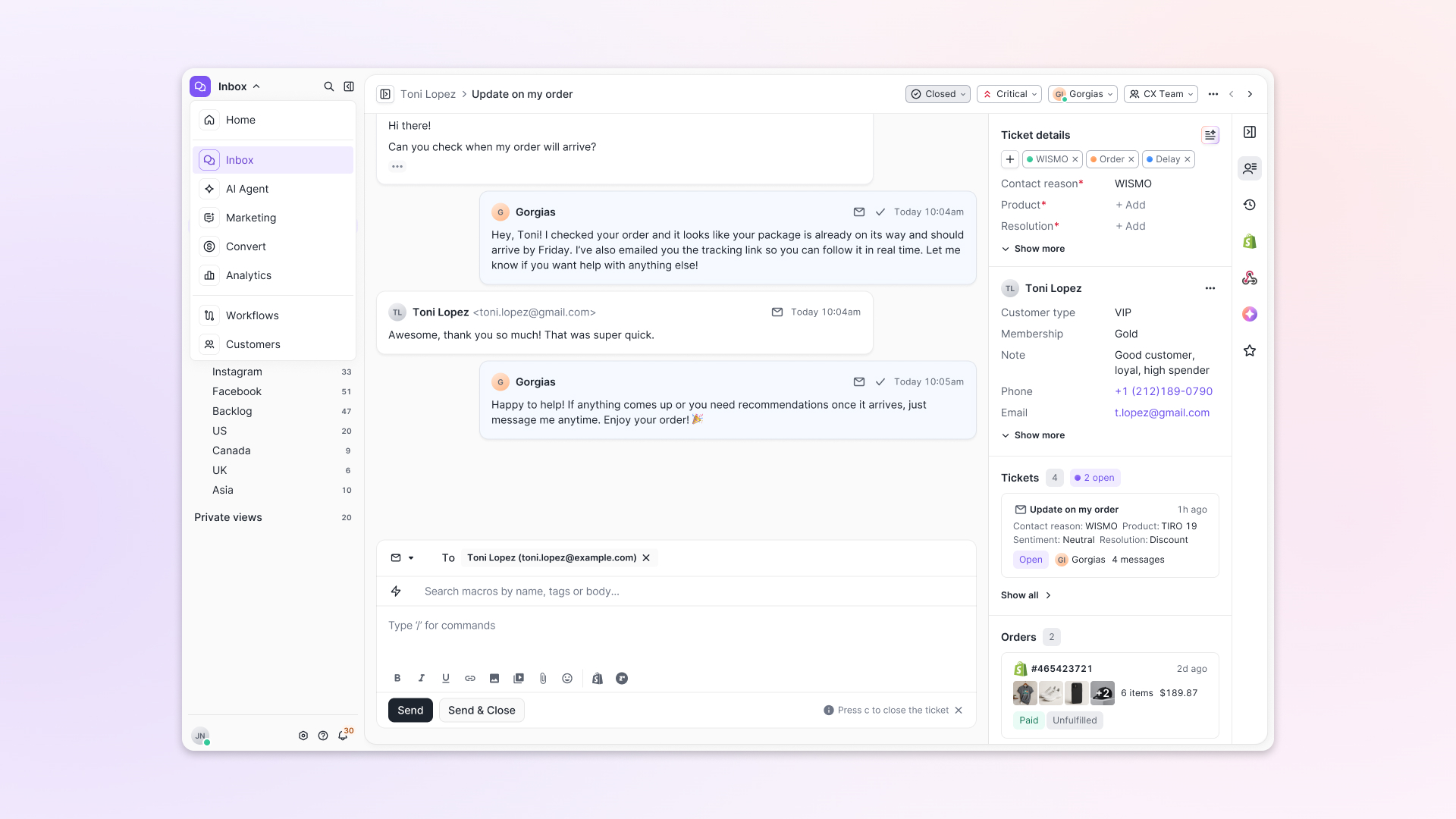
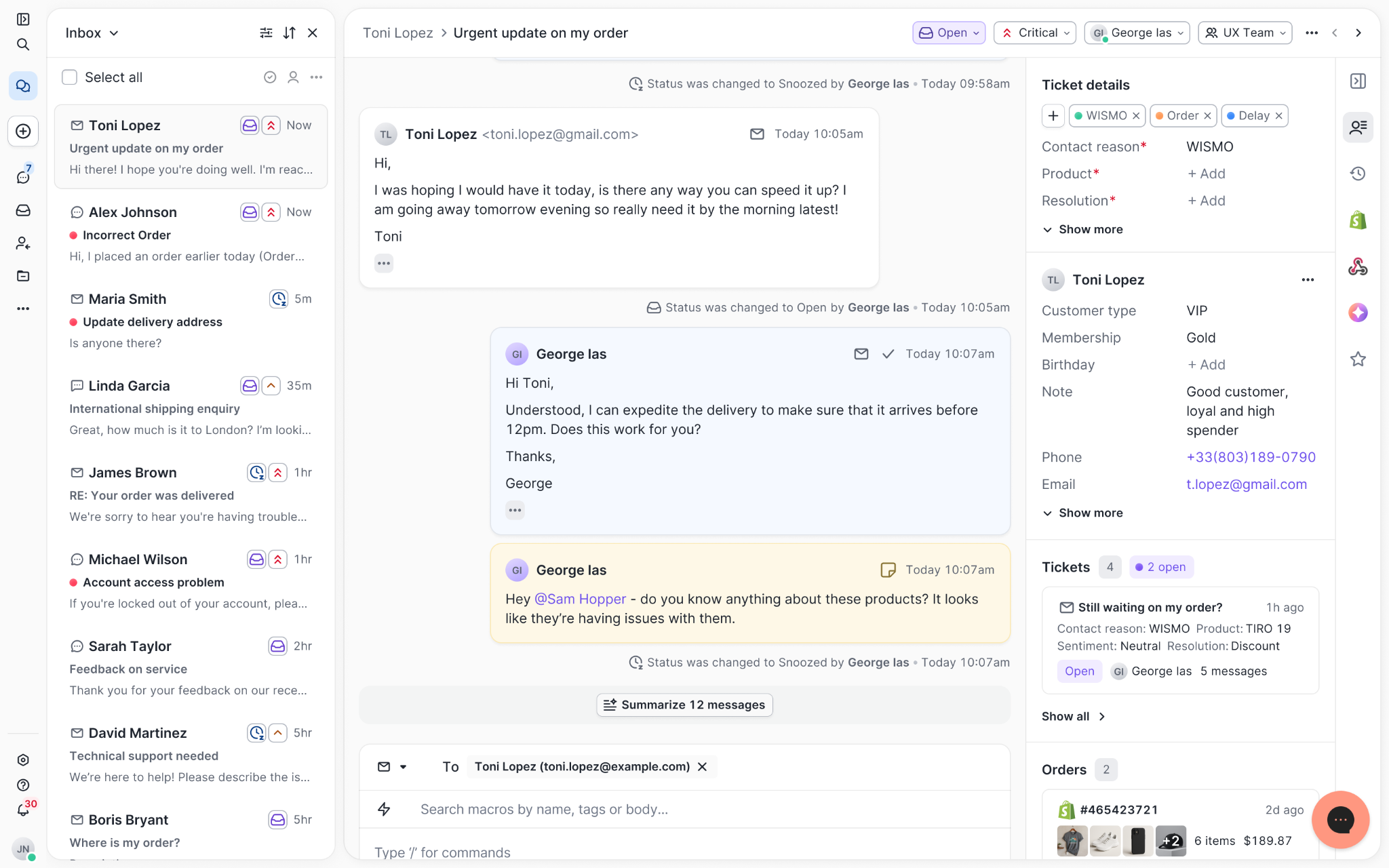

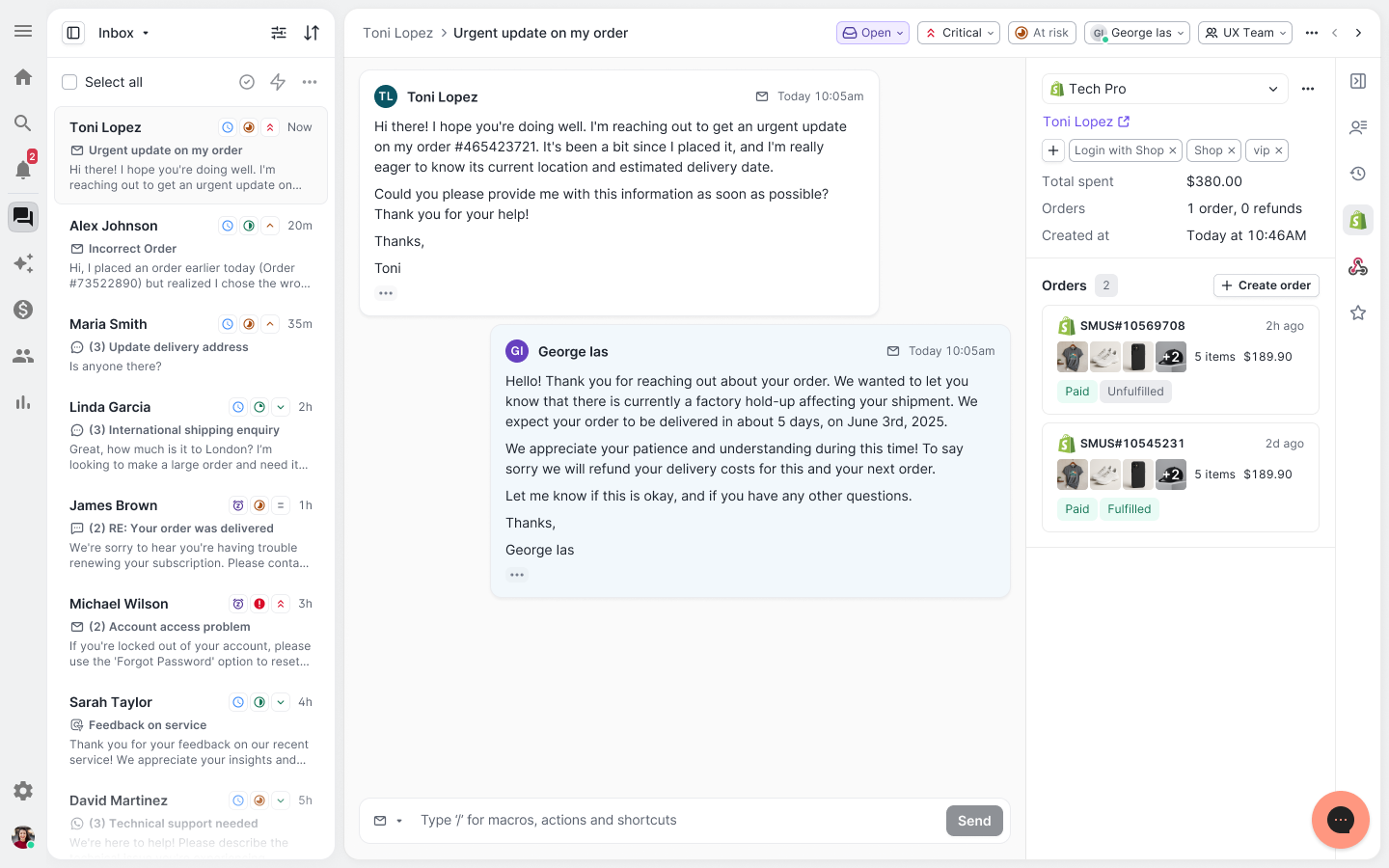
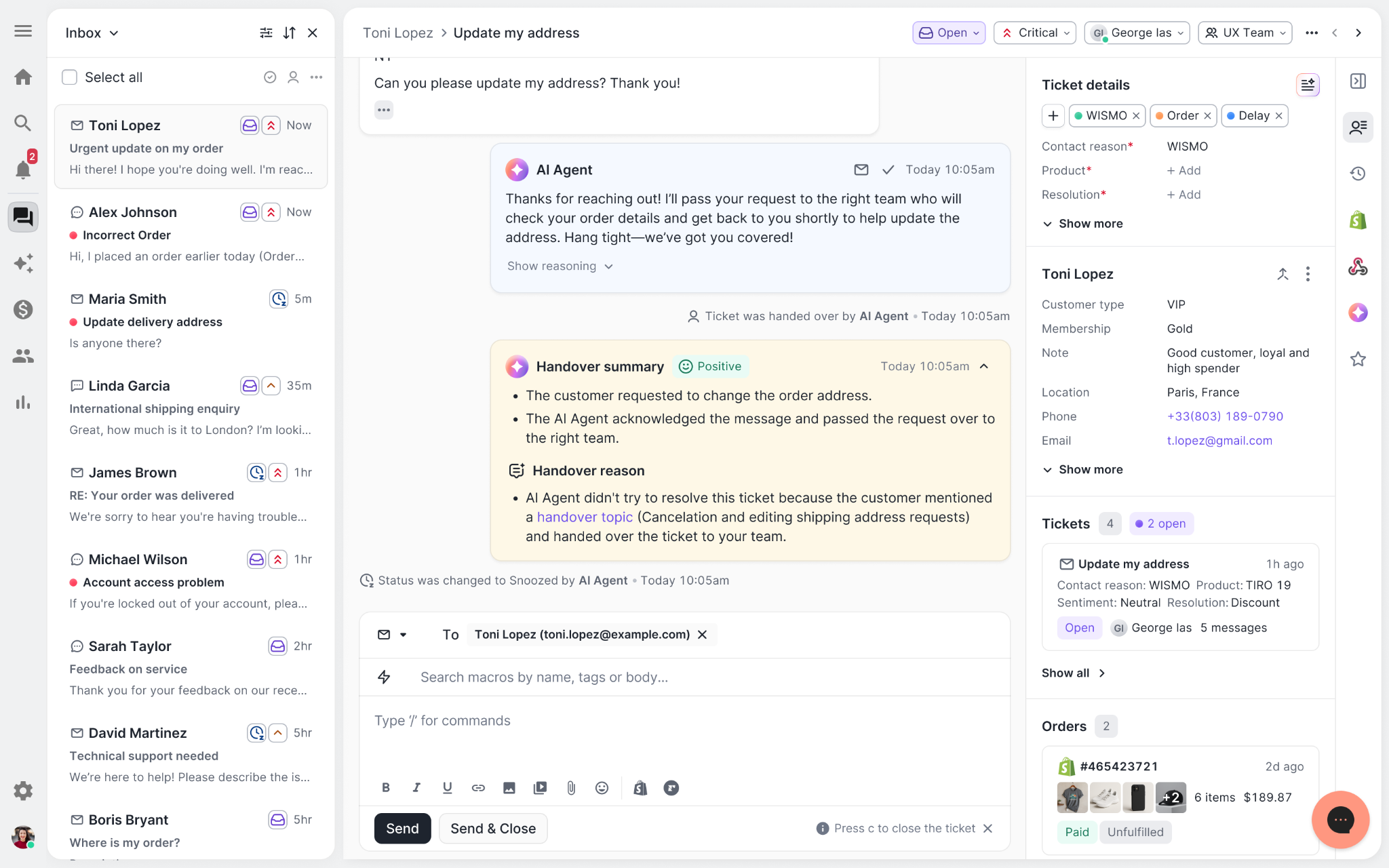
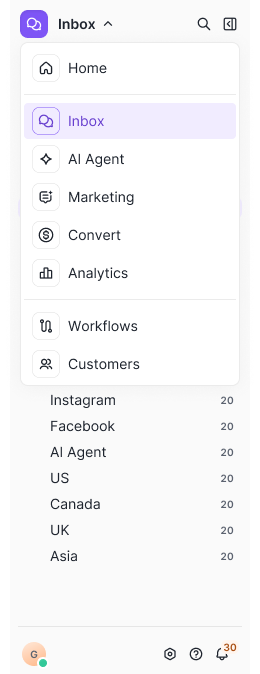




%2520(1).webp)